



The 2026 FIBA World Cup will conclude with the United States trying to win a fifth-straight gold against France, striving for their first World Cup gold (2 p.m. ET, TNT).
To reach this final stage, the French continued their impressive run in Berlin, knocking out the host country in the semi-finals. Following a closely contested first half, France established separation over Germany in the second half before unleashing a closing kick that confirmed their eventual 86-64 victory.
Gabby Williams, the
best performer in the tournament, again led the French, scoring 22 points, dishing five assists, grabbing five rebounds and claiming four steals. Janelle Salaün and Marine Johannès likewise turned in the kind of terrific efforts characteristic of their time in Berlin. Salaün contributed a 14-point and 11-rebound double-double, as Johannès added 13 points, including three 3-pointers.
The French win was not easy, but it was definitive. The same cannot be said for the Americans.
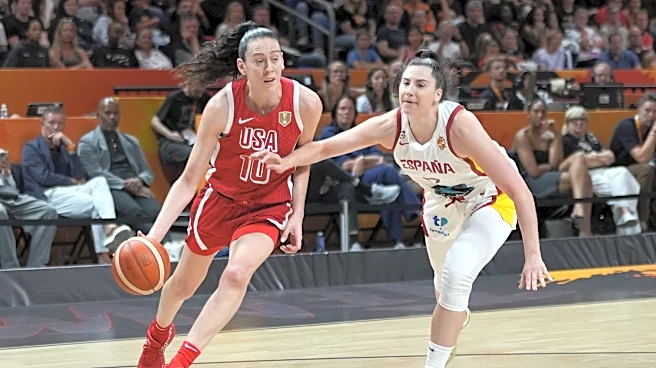
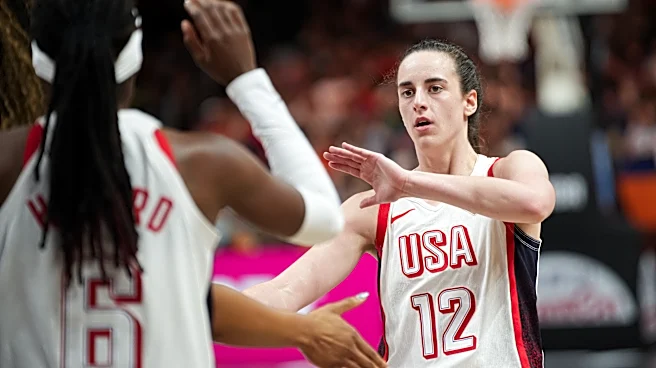
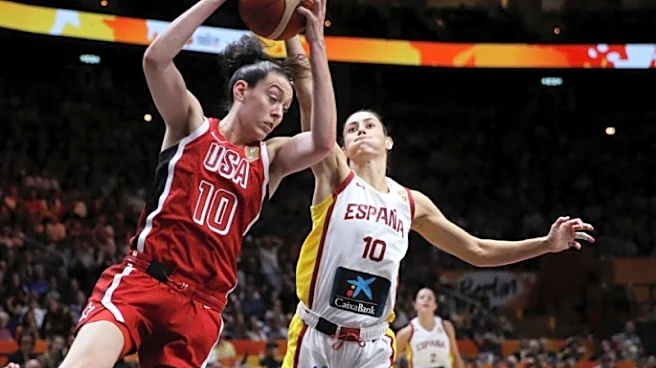
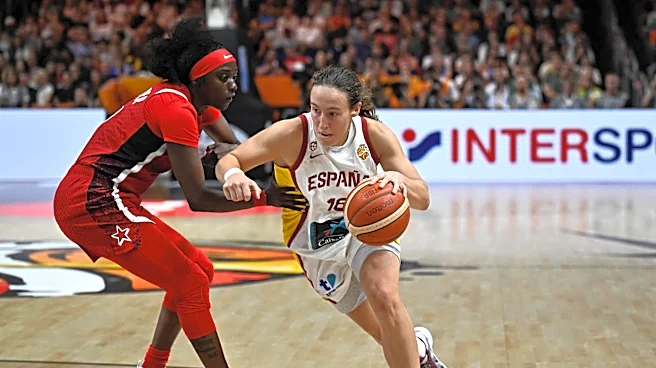
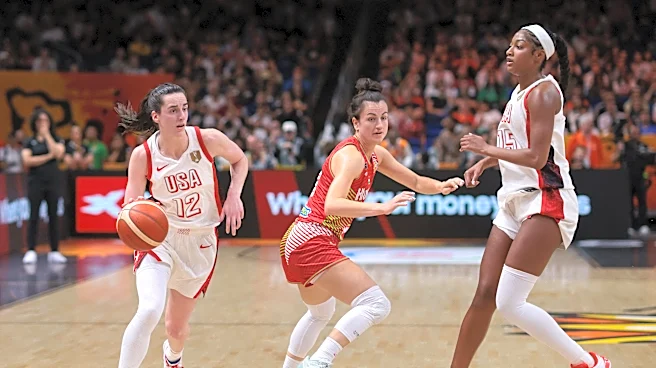
The focus Team USA demonstrated in the quarter-finals against Hungary had faded, as the Americans not only allowed the Spanish to jump out to an early lead but to remain in the game until Team USA’s vets, finally, raised their level midway through the fourth quarter, resulting in the Americans’ capturing the 76-66 win.
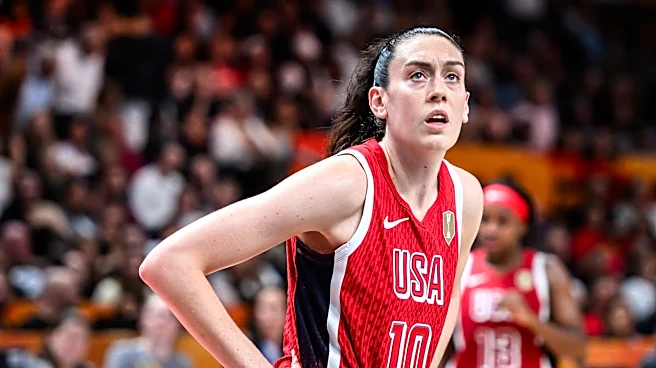
The most-experienced American, Breanna Stewart, steered Team USA through the too-tense moments, stepping up as a defender and scorer in late-game situations. Stewie finished with a team-best 16 points, with Jackie Young and Kahleah Copper, who scored 12 and 13 points, respectively, likewise earning crucial baskets in the final frame.
That Team USA had 15 turnovers compared to only 13 assists is indicative of the stagnancy and indecision that defined much of the Americans’ offensive process. On the other end, the Americans’ lack of activity is reflected in their six steals and two blocks, numbers that should be much high considering their athletic advantages. Even the Americans’ area of strength, 35 trips to the foul line, was diminished by eight misses. Team USA also was again ice cold from behind the arc, going 3-for-18.
Head coach Kara Lawson already had to deliver one of her signature speeches to rally her squad. It appears another is needed. However as former Team USA legend Tina Charles suggested during TNT’s halftime coverage of the semi-final, it doesn’t matter what Lawson says to her team in the locker room; only their response matters.
Tina is right. Actions, not words, will determine if the United States wins gold, or France upends the longstanding women’s basketball world order.
So, here are two simple-yet-crucial questions about that on-court action. In the comments, let us know how you think these questions will be answered on Sunday in Berlin, while also sharing any other questions you have about the gold medal game.
1. Will the 3s fall for France or Team USA?

It’s not particularly complex, but it’s critical.
Overall, Team USA has shot the 3 poorly throughout the tournament, converting less than 32 percent as a team. France, in contrast, has been on fire, hitting better than 44 percent of their 3s. Those percentages, combined with volume, have meted out t0 seven made 3s per game for the United States and 14 triples per game for France.
If that holds on Sunday, France has a 21-point advantage.
Team USA has the quality of shooters required to compete with France from behind the arc. The key is generating quality shot attempts for the those shooters.
There’s no need to rely on difficult off-the-dribble or stepback 3s, especially early in possessions. Can Team USA establish a dynamic halfcourt attack that creates the easy, open 3s that their shooters should be able to drain? Paige Bueckers, Rhyne Howard and Chelsea Gray have been the Americans’ best 3-pointer shooters, while Aliyah Boston should look to more aggressively fire away when she has the ball at the top of the key.
With the way Team USA has shot, or not shot, the 3-ball, praying France is off from deep, or better yet, playing the defense required to reduce the French’s 3-point attempts, might be the better strategy. Containing Johannès and Salaün, in particular, has to be a priority. If Team USA can’t make their 3s, can they also make sure that France, finally, misses theirs?
2. France has an offensive hierarchy. Does Team USA?

If the game is close late, this is the most important question.
France is going to go to Williams. When the game is on the line, it’s Gabby’s time.
Did the win against Spain reveal Team USA’s hierarchy? Are the Americans going to go to Stewart, with Young, Copper and Gray serving as her clutch time co-pilots? Or maybe, Team USA can NOT wait until the pressure peaks before leaning into their hierarchy?
As Charles emphasized after the semi-final, “Everything started and ended Stewie.” Possibly, instead of trying, mostly ineffectively, to play egalitarian offense for three and a half quarters, where too many American players seem to vacillate between not wanting to be too assertive and wanting to get off their own shot, Team USA should push the, to again quote Charles, “Thank God for Stewie,” button sooner, orienting the offense process around Stewart earlier and more often.
Following the win over Spain, Lawson said, “When it was winning time, we were the superior team, and we deserve to be moving on.”
That’s true. But waiting until winning time to be the better team is a much bigger risk against a France side that, thus far, has navigated the tournament with superior clarity, purpose and execution.
Stewart, fortunately, acutely understands the task at hand, providing further reason to make her the centerpiece of the American strategy. In her presser after the semi-final, she asserted:
Everything that we do is going to dictate what happens in tomorrow’s game, and making sure that that’s the main focus as we continue to look inward.
There’s going to be a ton of emotions in this game, and it’s going to be the team that really kind of regulates that and handles that best that will have the advantage. … My team, we’re gonna be locked in.
We’re all gonna be locked in.