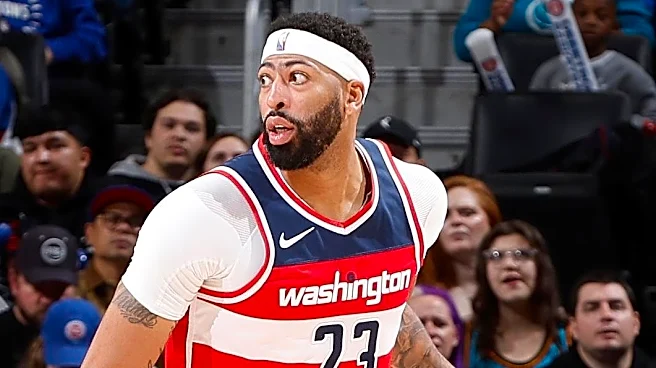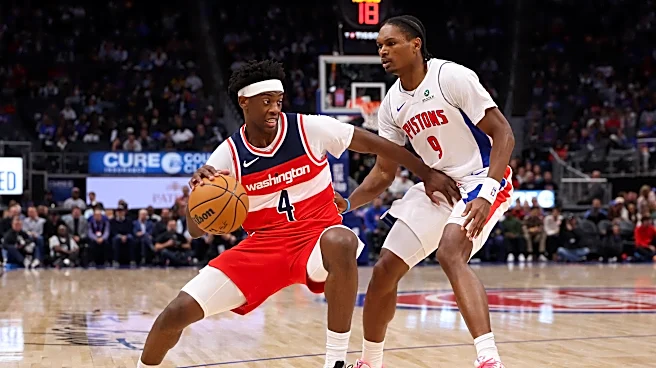


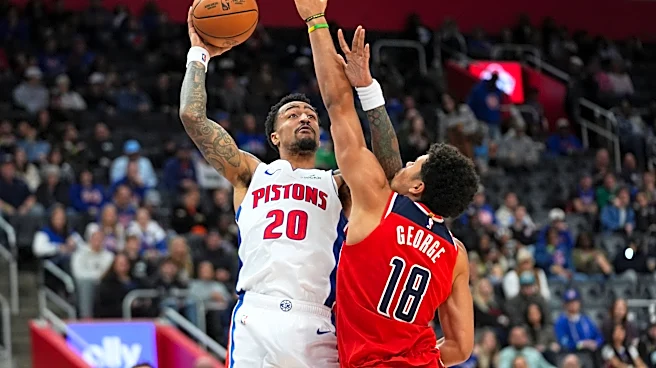
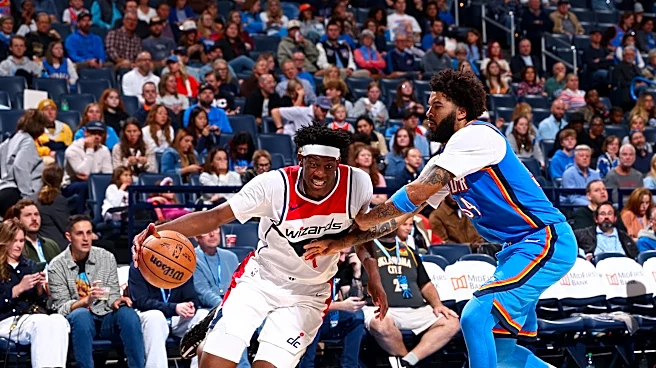
The Washington Wizards got 44 points and 13 rebounds from Anthony Davis, and very little from anyone else, and lost to the Detroit Pistons, 122-111.
It was Washington’s fourth straight loss as the team has struggled to generate effective offense or maintain stout defense.
Davis put on a show, especially in the first half, dominating the center-less Detroit lineup. He scored 30 points in the first half on 10-11 shooting from the floor. The Wizards headed to the locker room down 10 because the rest of
the team shot 10-30.

For the game, Davis shot 16-21. The rest of the team: 25-68. Davis used 25 offensive possessions to generate 41 points. His teammates used 78 possessions to produce 70 points. As the great Fred Katz used to say, “Yikes guys.”
The other major redeeming feature of the game was the play of No. 1 overall pick AJ Dybantsa, who had the most spectacular replacement level game I’ve ever seen. I can’t decide which plays impressed me the most:
- The lightning Euro-step drive in transition that froze John Collins and ended with a two-handed dunk
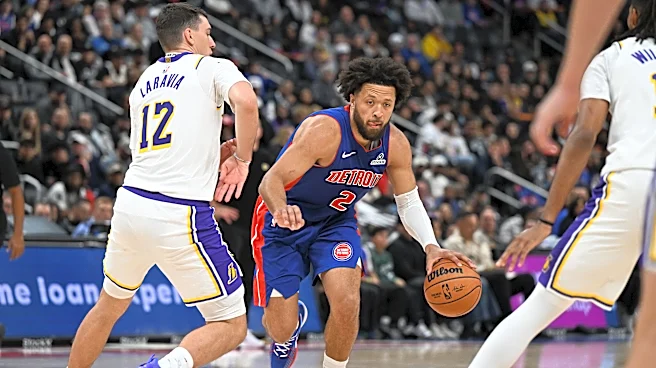
- The drive that included getting fouled by Cade Cunningham out top, and ended with a cuffed dunk on Collins
- The fake drive to attack a closeout that led to a relocation stepback three from the corner
That doesn’t include his relentless defensive effort and the constant pressure he put on the Detroit defense. Or his duel with Cunningham that was massively entertaining.
Or when he battled Ron Holland for a loose ball, inadvertently slapped him in the face, and then spent a chunk of the break while refs watched the replay reviewing the play on the arena screen with Detroit’s Daniss Jenkins.
The five turnovers and below average turnovers undermined his overall value for the game, but the highlights were big time plays, and the defensive impact was great from a 19-year-old rookie.
From the Notebook
- The Peacock broadcast format is great, and I hope it catches on around the league. Embedding the analysts on the benches is a genius innovation — especially when they share what the coaches are telling their players.
- Bilal Coulibaly missed the game with a left hand injury that I’m pretty sure happened a couple games ago.
- Will Riley entered the game in the first half, and almost immediately gave up one of the easiest drives in Cunningham’s career. Zero resistance. Not even turnstile level defense.
- Around 8:41 in the second quarter, Davis got an open three because Trae Young sprinted off screens, turned the corner and got into the paint. His effort on the play forced the help defender to commit (not coming over would have conceded a layup), which left Davis wide open at the three-point line. Young made the pass, and Davis converted.
- When I looked at my notes, I discovered one more Dybantsa play that I’d forgotten — in the second quarter, he threw a fake so fast and convincing that Kevin Huerter stepped in the wrong direction. Dybantsa went past him for a layup.
- Detroit opened the second half with Duncan Robinson getting a four-point play on what I thought was a bad call on Young. The Wizards started the period with a turnover, and then followed it up with an atrocious possession that ended with Dybantsa being forced to take a deep three with the shot clock running out. The team had tried — and failed — to feed Kyshawn George in the post against the diminutive Jenkins. They then ran multiple screens that finally got a switch that gave Dybantsa a mismatch…and not enough time to attack it.
- Peaccock’s Austin Rivers reported that during a third quarter timeout, Wizards coach Brian Keefe urged the team to improve their effort. His critique included Davis, who’d just given up a backcut dunk to Cunningham, which included an and-one free throw. “Let’s not wait until the next game,” Keefe said, according to Rivers. “Let’s do it now.”
- George needs to figure out to play on offense without turning it over so much. He had five more turnovers last night. On one in the fourth quarter, he drove into the paint, couldn’t get to the rim, and picked up his dribble. Stuck, and with the three-second count ticking, he attempted a ridiculous pass out with Ausar Thompson in the vicinity. The pass was stolen, of course.
- I wrote this in the fourth quarter, but I could have written it in any period: The Wizards cannot figure out how to initiate their offense. Dybantsa set a screen for George. George came up to set a ball screen for Davis. But, Davis went nowhere. George drifted a little and the possession just stalled. Davis finally tossed up a three, which missed. The offensive design was fine, though perhaps not with Davis as the ball handler.
- A few minutes later, the Wizards ran a similar set but with Davis screening for George. Davis rolled hard, George made a crisp pass, and Davis converted the layup.
- Thompson had an amazing block on Alex Sarr with around four minutes left in the game. He met Sarr at the rim, contested with with verticality, went up higher despite being several inches smaller, and swatted the dunk attempt.
Four Factors
Below are the four factors that decide wins and losses in basketball — shooting (efg), rebounding (offensive rebounds), ball handling (turnovers), fouling (free throws made).
The four factors are measured by:
- eFG% (effective field goal percentage, which accounts for the three-point shot)
- OREB% (offensive rebound percentage)
- TOV% (turnover percentage — turnovers divided by possessions)
- FTM/FGA (free throws made divided by field goal attempts)
Stats & Metrics
PPA is my overall production metric, which credits players for things they do that help a team win (scoring, rebounding, playmaking, defending) and dings them for things that hurt (missed shots, turnovers, bad defense, fouls).
PPA is a per possession metric designed for larger data sets. In small sample sizes, the numbers can get weird. In PPA, 100 is average, higher is better and replacement level is 45. For a single game, replacement level isn’t much use, and I reiterate the caution about small samples sometimes producing weird results.
POSS is the number of possessions each player was on the floor in this game.
ORTG = offensive rating, which is points produced per individual possessions x 100. League average so far this season is listed in the Four Factors table above. Points produced is not the same as points scored. It includes the value of assists and offensive rebounds, as well as sharing credit when receiving an assist.
USG = offensive usage rate. Average is 20%. Median last season was 17.7%.
ORTG and USG are versions of stats created by former Wizards assistant coach Dean Oliver and modified by me. ORTG is an efficiency measure that accounts for the value of shooting, offensive rebounds, assists and turnovers. USG includes shooting from the floor and free throw line, offensive rebounds, assists and turnovers.
+PTS = “Plus Points” is a measure of the points gained or lost by each player based on their efficiency in this game compared to league average efficiency on the same number of possessions. A player with an offensive rating (points produced per possession x 100) of 100 who uses 20 possessions would produce 20 points. If the league average efficiency is 115, the league — on average — would produced 23.0 points in the same 20 possessions. So, the player in this hypothetical would have a +PTS score of -3.0.
Players are sorted by total production in the game.