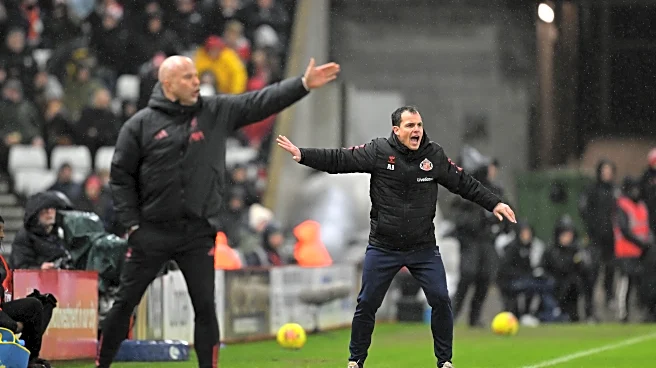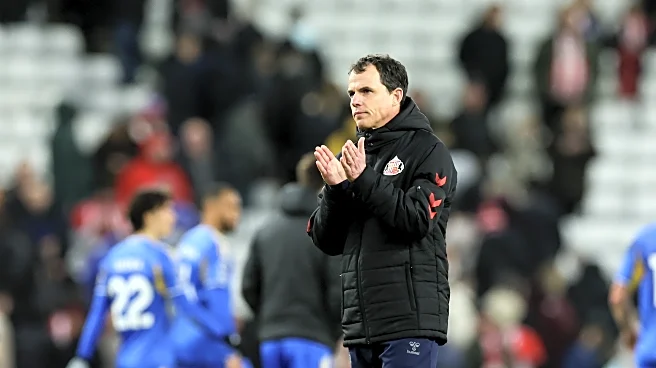

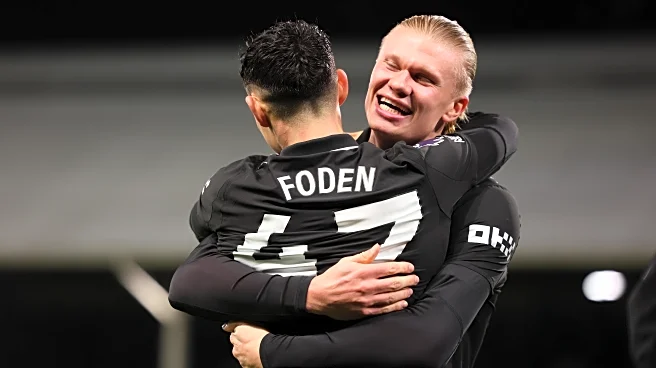


In Sunderland’s final fixture of the 2025 Calendar Year, Leeds United returned to the Stadium of Light since the epic 2-2 draw last season that saw Evan Meslier comically throw one into his own net with seconds to spare.
Leeds entered this one as the form team in the league, having dismantled Crystal Palace at Elland Road the week prior & Sunderland were held to a draw on the day, having sustained several heavy waves of Leeds pressure. How did Le Bris match up to Farke, and who came out on top in the tactical
battle?
Sunderland Line-Up v Leeds
In an eyebrow-raising selection, Dan Ballard unfortunately missed this one due to a suspected Achilles injury suffered against Brighton, and therefore Dennis Cirkin came in to replace him in an otherwise unchanged Sunderland side.
Given the absence of Ballard, Mukiele moved inside to partner Omar Alderete, and Hume assumed the role of an orthodox right-back with Cirkin partnering on the opposite flank. Simon Adingra & Chris Rigg retained their positions on the wings, whilst Brian Brobbey acted as Sunderland’s focal point in attack for Le Bris.

With Daniel Farke’s switch to three central defenders causing a reassurance, Sunderland didn’t look to match them up but instead play their own 4-3–3 in a proactive attempt to take the game to Leeds as opposed to seasons prior where Sunderland may have changed shape reactively to the opposition.
Leeds Line-Up
Daniel Farke retained the same side that ran out as victors against Crystal Palace in the same system that has sparked a new-look Leeds United during the festive period. Leeds utilise their size & physicality to put pressure on teams due to their lineup selection & against Sunderland, this was no different.
Leeds play with three central defenders supported by two wingbacks who provide their natural positional width, whilst also deploying three central midfielders to retain control over the central third of the pitch, whilst their two forwards work to run the channels and provide an outlet, and the rest of the team pushes up to support.

Very much a 3-5-2 in possession, which shifts to a static & compact 5-3-2 out of possession, means that Farke aims to crowd the central areas and make it difficult for teams to play through the lines in midfield. Instead, forcing teams to make long diagonal switches with an expectations that their aerial dominance will win the individual duels against opposition wingers and fullbacks.
Whilst Farke would consider himself an expansive coach focused on possession & ‘total football’, his efforts so far this season with Leeds, following their domination of the EFL in 24/25, have struggled to yield a points return. By leaning into a more pragmatic style of play and sacrificing his footballing morals, he’s been able to unsettle teams and generate a stronger points return for Leeds.
Unsettling Early Doors
Sunderland started the game off brightly and looked to utilise their winger mismatches against the wide central defenders of Leeds, with Rigg & Adingra drawing both Pascal Struijk and Joe Rodon out of position to engage with them 1v1 and created several openings in the first half. Brian Brobbey caused all three central defenders problems at various points by switching across and winning his individual duels to help sustain Sunderland Pressure forcing several early long throws and corners. Nordi Mukiele & Adingra both saw efforts saved or blocked as Leeds were restricted to countering when Sunderland attacks broke down.
As the Leeds midfield three were pinned into their own half, Sunderland were able to sustain pressure and saw Brian Brobbey close down Joe Rodon after a loose pass as a clash of knees took the Welsh defender down for treatment. With the Welshman clearly struggling, Sunderland attacked down their left and won a throw which Mukiele was able to launch in and cause his usual carnage even in the absence of Ballard.
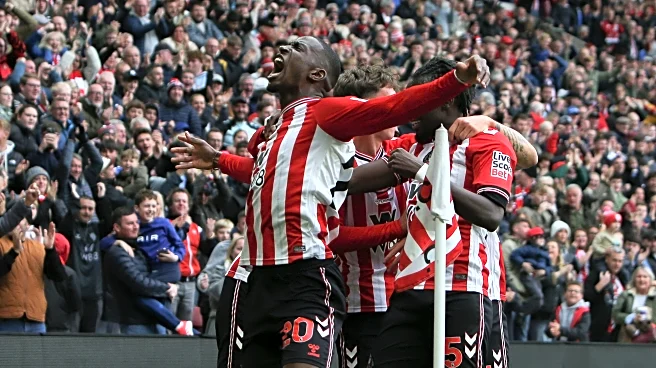
Granti Xhaka was able to demonstrate once again why he’s topping the assist charts for midfielders in the Premier League this season as he whipped a beautifully disguised pass into Adingra before the Ivorian whipped the ball back across Serri’s goal to open his account on Wearside in fashion.
With that assist, Xhaka now ties the lead for the most assists from a midfielder this season and places him in some rather elite company for someone who the outside noise would tell you was beyond his best years when he signed for Sunderland.
Killer Instincts
Sunderland looked to capitalise on a stumbling Leeds team and wanted to double their advantage before the break, with the opposition being forced to push on in the hope of an equaliser before the half. Trai Hume was well-placed to deny Brendan Aaronson from equalising before Brian Brobbey saw two guilt-edged chances come his way just as the half was coming to a close.
His first effort came from a sumptuous move form Chris Rigg after drifting inside and shaking hi defender in a way that demonstrated some of the quality he has for such a young age, his lofted ball tee’d up Brian Brobbey who’s first time effort squirmed underneath Lucas Perri but without the purchase on it that he wanted it was cleared off the line as Brobbey hit the deck. Only a minute later, he saw a teasing cross reached back post after a run down the line from Adingra; however, Brobbey was only able to hit the frame of the post and bar as the ball crashed out.

Brobbey’s two chances created an xG of 0.2 & 0.22 respectively and therefore, with a total xG of 0.44 generated within the space of a minute, Brobbey will be frustrated he wasn’t able to capitalise and probably put the game to bed before the break.
Leeds Shape Change
Following Sunderland’s opener, Joe Rodon went down again after a second challenge with Adingra and forced Daniel Farke into a change as he was replaced by Ayo Tanaka. Leeds opted to switch formation and returned to their usual 4-3-3 system with Ethan Amapdu sitting in the base of midfield and Anton Statch & Tanaka just ahead of him.
With Leeds now matching up to Sunderland from a shape perspective, gone were the central overloads & half spaces for Sunderland to exploit, and the game changed completely. With Sunderland’s makeshift midfield lacking the usual ground covering of Noah Sadiki, Geertruida was stuck between man-marking & zonally pressing and therefore Xhaka was dragged all over the midfield, and Sunderland showed for it.

As the second half started, an overzealous press from Dennis Cirkin forced the remainder of the team to commit and resulted in Xhaka having to cover on the eventual breakaway, causing Calvert-Lewin to stroll in between the two Sunderland defenders and level the game.
It’s worth noting that whilst Cirkin was the one initially out of position leading the press, the goal ultimately comes from Dominic Calvert-Lewin’s ability to ghost into the box in an area that Xhaka usually patrols and blocks passing lanes, preventing any clear shots on goal from occurring. Due to Xhaka’s requirement to press the onrushing Aaronson, Sunderland find themselves exposed, and within a minute of the restart, it’s a level game.
Leeds turn the screw
The following 20-minute spell saw Leeds take control, and in a spell that felt like it was never going to end, Sunderland had to sustain waves of Leeds pressure. A miscontrolled touch by Jayden Bogle prevented the visitors from finding a second before a string of tame efforts fell into the hands of Robin Roefs. Sunderland seemingly dwindled on every loose ball and lost every second ball for a spell, and looked like they couldn’t get their foot on the ball to slow the pace of the game down.
Looking at the information above, it’s important to note this in the context of a real game versus the numbers that are seen online. Much has been made of Sunderland overperforming this season; however, as can be seen, Sunderland actually ranks second in the league for PSxG. To explain this briefly, this figure determines the shot quality that opponents are generating against Sunderland, and therefore, a larger negative value indicates that Sunderland’s defenders turn opposition shots into worse than expected chances due to their ability to restrict/smother/block or pressure opposition players into taking poor shots.
Whilst Sunderland may not be scoring at the rate they’d like, they’re making things incredibly difficult for opposition attackers and that can be contextualised during the spell of pressure exerted by Leeds during the period. Despite the ball being in play and on the edge of Sunderland’s box for large swathes, Roefs wasn’t forced into making any tough saves and was able to command his area well to collect incoming crosses with relative ease, meaning that for all Leeds positional dominance, they were unable to break the deadlock.
With Sunderland’s unbeaten home record on the line as we entered 2026, Le Bris welcomed Pep Guardiola’s Manchester City in the hopes of stopping the in-form juggernauts who were looking to extend their nine-game winning streak.
Sunderland Line-Up v Manchester City
In a shock twist, Le Bris opted for a 4-4-2 shape in this one as one change saw Chris Rigg drop out for Eliezer Mayenda. Despite being a risky strategy, Le Bris decided that a 4-2-4 system was the most effective way to nullify the Manchester City build-up, with the knowledge that Donnarumma isn’t the most comfortable with the ball at his feet.

In somewhat of a bold selection choice, Le Bris opted to shuffle Geertruida to the right back position and stuck with a midfield duo of both Granit Xhaka & Enzo Le Fée, of which both players were riding the suspension tightrope in their final game before suspensions were lifted. Elsewhere, Trai Hume shifted across to right midfield to provide support on the wing whilst also acting as an outlet from aerial balls to relieve pressure.
Man City Line-Up
Pep Guardiola stuck with his usual 4-1-4-1 formation as Phil Foden, Ryan Cherki, Savinho & Bernardo Silva all rotated in front of the sole pivot of Nico Gonzalez, who protected the back four. With Rodri & Jeremy Doku only fit enough to make the bench, Guardiola left himself with reinforcements on the bench if required.

City utilise the Pep Guardiola philosophy of total control with an emphasis on lulling the opposition into a false sense of security through their relentless passing before slicing through low blocks with ease due to having the World’s Greatest Centre Forward ready to dispatch any opportunities when they do arise.
Stifling the City Build-Up
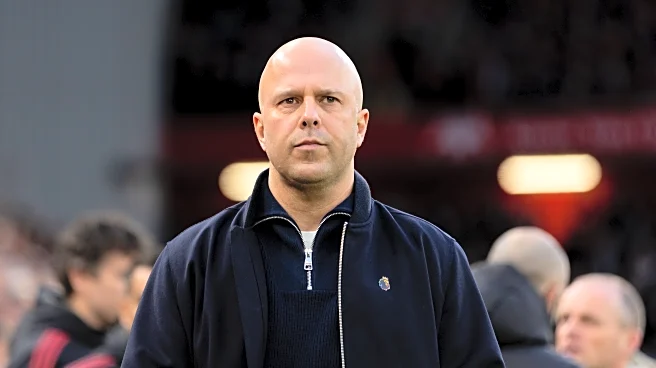
In a tactical battle which Le Bris clearly edged, Sunderland were able to totally nullify Manchester City’s build-up play by deploying a 4-2-4 press, which limited Donnarumma’s options from goal kicks and forced the Italian shot stopper to pump the ball long at every instance.
By shaping up man to man against the City back four, Mayenda & Brobbey were able to funnel the pressure to one of City’s central defenders before a pass back to Donnarumma and disrupted City’s ability to play their usual game. By placing all of the pressure on Haaland to win the long ball, City were relying on the Norwegian to retain possession, but due to his role as the lone striker was mismatched by Alderete & Mukiele during their individual duels.

On the other side of the ball, Sunderland were really clever in their ability to play through the City press, which so many teams find smothering, whether they face it home or away. By dragging Bernado Silva over to one side of the defence, Roefs was able to split the lines with a drilled pass into Le Fée on the half turn and spring Sunderland out countless times in the first half.

Roefs’ calmness on the ball can’t be underestimated with Haaland bearing down on him at every opportunity, and a tactical timeout was required by Guardiola on the half-hour to adjust their press, and he showed a real level of respect to Le Bris for totally outwitting Pep in this one.
Standing Firm
Sunderland were subject to City’s usual approach of death by possession and had to suffer long swathes without the ball and break when they had the chance. That being said, the compact shape and tactical instructions not to engage City’s wingers until they entered the box worked well and prevented Cherki and Savinho from creating any opportunities of real note during the opening half.
Conversely, Sunderland’s threat on the break was evident, and the strike pairing of Brobbey & Mayenda both saw good chances equalled by the City shot stopper. Following on from the information above regarding PsxG, looking at the graph below, it’s clear that Sunderland are doing an excellent job of limiting the opposition to low-quality shots despite the xG statistics.
Special mention to Robin Roefs, who, despite his standards, had a relatively comfortable night, was able to pull off a variety of saves once again and showcase just how important an asset he’s been this season. He now holds the highest save percentage in the league whilst facing one of the largest total shot attempt volumes, which means he’s going off a large sample size and it’s not just a wave he’s riding.
Sunderland will feel that this point was potentially one of the most important of the season psychologically, due to the fact that we retain our unbeaten home record, having now faced all three of the top three, and having shown a clear message of intent against each of them.
With three consecutive away games on the bounce, Sunderland will be looking to extend their form once they return to face Crystal Palace in the league with a full squad following the conclusion of AFCON and potentially some further incomings.