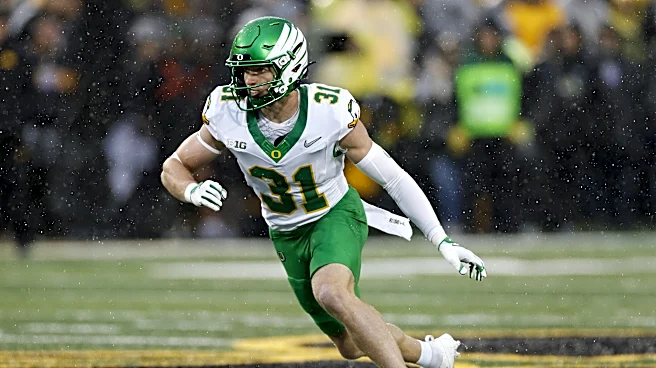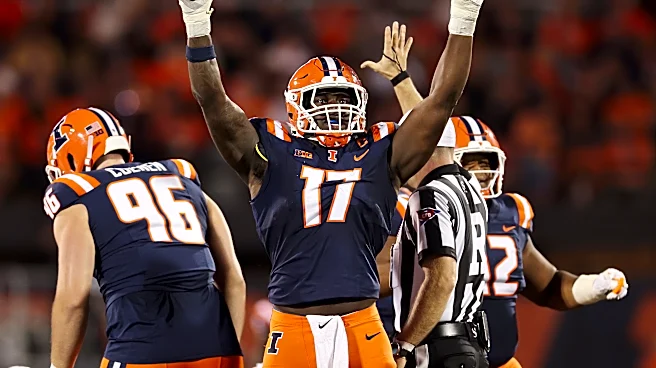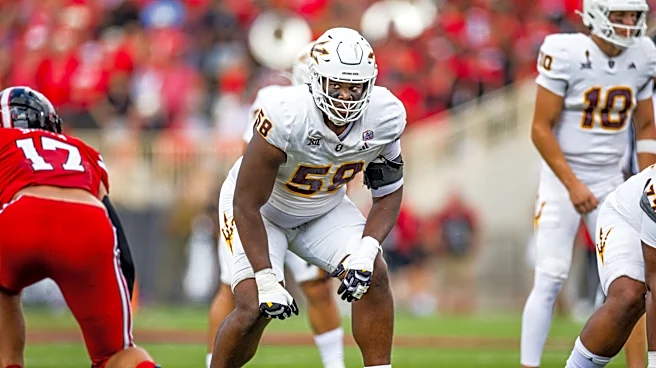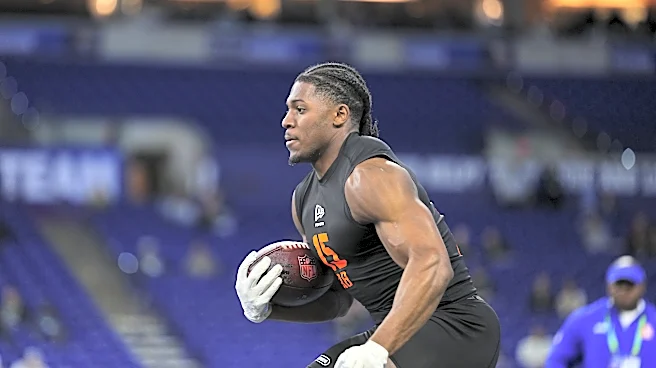

This is not a prediction of what the Seattle Seahawks will do on draft weekend. Instead, it’s an exercise grounded in the closest thing we have to a consensus board — blending public evaluations, team tendencies, and positional value to map out realistic options across each round.
With only four selections, Seattle doesn’t have the luxury of missing. Every pick needs to balance immediate contribution with long-term upside, and few positions demand that balance more than EDGE in Mike Macdonald’s defense.
Whether it’s generating pressure with four, setting firm edges against the run, or deploying versatile fronts, the Seahawks need players who can contribute in multiple ways.
Round 1
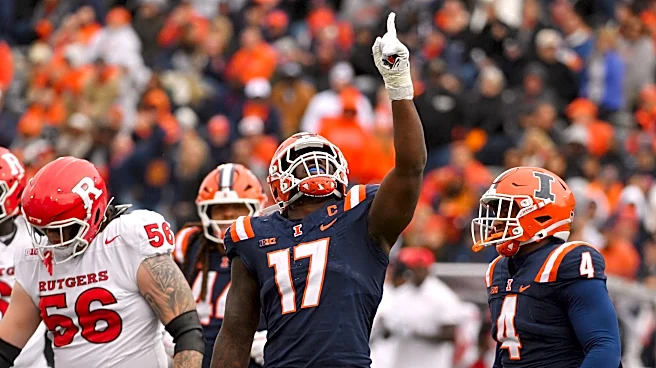
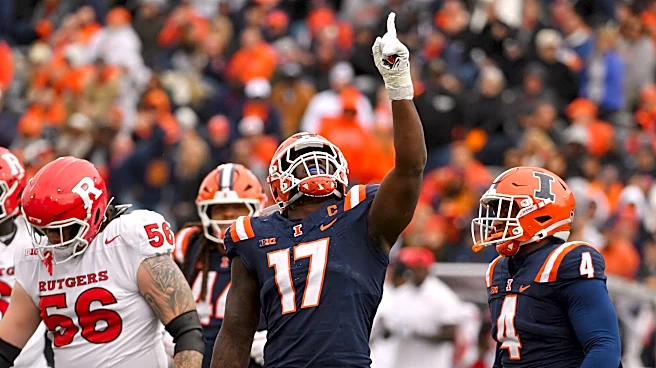
Gabe Jacas (Illinois)
Jacas is a physically imposing, well-built edge defender with outstanding play strength. He can line up both as a hand-in-the-dirt defensive end and as a stand-up EDGE, giving valuable flexibility. His game is built more on power and physicality than burst. Against the run, he can anchor and hold his ground, though his discipline can waver when it comes to maintaining contain. As a pass rusher, he relies heavily on force and leg drive, lacking a creative or varied rush plan.
This is a “tone-setter” profile — not flashy, but dependable. For Seattle, he projects as a strong-side presence capable of stabilizing the edge while developing into a consistent pocket-collapsing rusher. Can’t replace DeMarcus Lawrence (if he retires) but is a good option to improve the rotation.
Keldric Faulk (Auburn)
Faulk is one of the more intriguing upside bets in the class. With a long, developing frame and fluid movement skills, he brings the kind of physical profile teams covet for hybrid defensive fronts in different alignments.
He’s already a capable run defender but still needs to become more assertive at the point of attack to consistently control his gap. As a pass rusher, he flashes a diverse toolkit, though his lack of elite burst limits his ability to consistently win the edge.
There’s a real projection element here. Faulk’s age, traits, and flashes suggest a player whose best football is ahead of him. The question is whether that upside justifies a first-round investment. For Seattle, he fits as a high-ceiling piece who could develop into a versatile, inside-out contributor over time.
Zion Young (Missouri)
Young is a long, well-built edge defender who thrives in physical, trench-heavy battles. He brings energy, toughness, and a clear alpha mentality to the field.
However, his profile comes with notable concerns. His testing numbers and on-field speed both raise questions about his range and ability to consistently close. Those concerns were reinforced during the Senior Bowl, where he struggled to stand out athletically among his peers.
He wins primarily through strength and block destruction, showing the ability to extend, lock out, and control blockers in the run game. As a pass rusher, though, his approach lacks variety and instinct, which could cap his production at the next level.
There are also off-field questions (DWI arrest) that teams will have to weigh, even as he’s shown enough interest from Seattle to earn a top 30 visit. In the Seahawks’ defense, he would likely contribute early as a run defender while requiring significant development as a pass rusher.
Round 2
Malachi Lawrence (UCF)
Lawrence is one of the most explosive edge rushers in this range and a clear ascending prospect. His get-off is sudden, and he pairs it with a surprisingly deep bag of moves and counters for a player still developing. He can attack both inside and outside, showing the ability to create disruption in multiple ways. While his power conversion isn’t always consistent, his hand usage and ability to string moves together stand out.
There are still areas to clean up, particularly in run defense where discipline and consistency can fluctuate. But the traits are undeniable. Within the context of Seattle’s defense — especially with the emphasis on quick wins off the edge seen from players like Boye Mafe — Lawrence makes a lot of sense as a developmental rusher who can grow into a high-impact role.
Only two EDGE defenders managed to break into the elite sub-1.60 10-yard split range at the 2026 NFL Combine: Malachi Lawrence and Cashius Howell.
That threshold is widely viewed as the gold standard for first-step explosiveness off the edge, and both players validated their burst in a major way. In a class filled with solid athletes, Lawrence and Howell separated themselves by hitting a mark that very few prospects at the position reach.
For teams like Seattle that prioritize get-off and disruption up front, performances like these only reinforce what shows up on tape: rare initial quickness that can translate into immediate pass-rush impact at the next level.
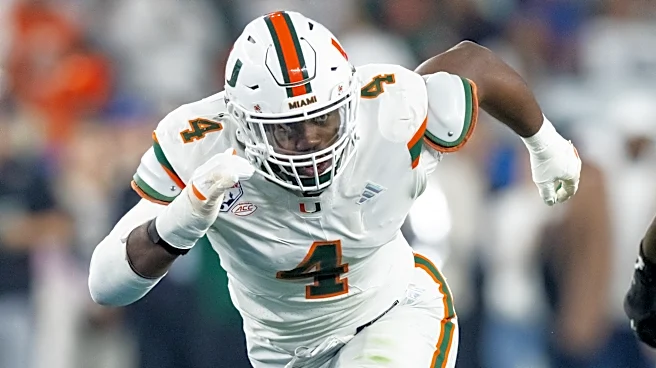
Jaishawn Barham (Michigan)
Barham may be one of the cleanest schematic fits for what Seattle wants to do defensively. A hybrid defender with experience off the ball, he brings explosiveness and versatility that can be deployed in multiple ways.
As a pass rusher, he’s still raw and heavily reliant on athleticism, but the flashes are there. He shows the ability to beat blocks with quickness and physicality, and his reactive agility allows him to make plays in space that most edge defenders simply can’t.
That said, there are concerns. His discipline can waver, leading to unnecessary penalties and negative plays, and there have been maturity-related issues that teams will need to be comfortable with.
If developed properly, though, Barham has the tools to become a dynamic, inside-out defender who fits perfectly into a multiple-front system like Seattle’s.
Dani Dennis-Sutton (Penn State)
Dennis-Sutton is a tough, physical base defensive end who offers immediate value against the run.
He plays with strength and effort, using his hands to disrupt blockers and muddy running lanes. However, his pass-rushing upside appears limited. His rush tends to be linear and predictable, lacking the burst and flexibility needed to consistently threaten the edge.
Pad level and leverage issues can also show up, particularly against more technically sound offensive linemen.
This is a profile that will vary depending on team philosophy. For some, the athletic profile will make him an appealing option. In Seattle, he projects as a steady presence rather than a game-changing rusher.
Round 3
Derrick Moore (Michigan)
Moore is a productive and aggressive pass rusher who thrives on power and effort. He consistently looks to collapse the pocket, using bull rushes to generate pressure and disrupt timing.
While he has the tools to hold up against the run, his urgency and consistency in that phase can fluctuate. As a rusher, though, he plays with intent and finishes well, showing good timing and control when closing on the quarterback.
If he can bring a more consistent approach across all downs, he has the potential to develop into a full-time contributor. At minimum, he projects as a reliable rotational player capable of generating pressure.
Keyron Crawford (Auburn)
Crawford is a classic developmental prospect. With a limited football background, he’s still learning the nuances of the position, but the athletic traits are evident.
He plays with energy and natural aggression as a pass rusher, showing the kind of twitch and pursuit ability that can’t be taught. However, his lack of experience shows up in his instincts and overall refinement.
There’s a tendency to play at one speed, which can hurt efficiency and control. With proper development, though, there’s real upside here.
Early in his career, he projects as a situational rusher and special teams contributor, with the potential to grow into a larger role over time.
Round 6
Nadame Tucker (Western Michigan)
Tucker is a pass-rush-first EDGE whose instincts and feel stand out relative to his experience level.
He wins with quickness, bend, and coordination, showing an ability to link his hands and feet to create early advantages. However, his run defense lags significantly behind, and he struggles to hold up at the point of attack.
The jump in competition will be a major adjustment, and his profile comes with concerns related to age and level of play. Still, the pass-rush flashes are intriguing enough to justify a late-round investment as a situational specialist. Age would be a problem also.
Patrick Payton (LSU)
Payton is the type of late-round gamble teams often take on traits and past expectations. Once viewed as a potential top prospect earlier in his career, he never fully developed into that player.
He has length and flashes of burst, but struggles with consistency and decisiveness. His ability to convert opportunities into production has been uneven, and he can have difficulty holding up against power in the run game.
That said, there are still enough tools to work with. In the right environment, he could carve out a role as a rotational pass rusher. At this stage of the draft, betting on that upside makes sense.
Max Llewellyn (Iowa)
Llewellyn fits the mold of a traditional base end but comes with clear limitations that cap his ceiling.
He lacks the lower-body flexibility and play strength needed to consistently anchor at the point of attack, and his explosiveness as a pass rusher is limited. He compensates with effort and a variety of moves, but those tools may not translate consistently against NFL competition.
He projects as a depth piece in an even front, offering rotational value but limited upside beyond that role.
Final thoughts
With such limited draft capital, the margin for error for the Seattle Seahawks becomes razor thin, which makes the EDGE evaluation even more interesting. This is a class that doesn’t necessarily offer a sure-fire elite option in every range, but it does present a wide spectrum of profiles — from physically imposing, high-floor defenders to raw, high-ceiling developmental bets.
What stands out is how clearly the decision at this position will reflect Seattle’s broader team-building philosophy. If the goal is to stabilize the front and improve early-down reliability, players like Jacas or Dennis-Sutton naturally come into focus. On the other hand, if the priority is chasing disruption and long-term pass-rush upside, names like Faulk or Lawrence become far more appealing, even if they come with more projection.
There’s also a middle ground with players like Barham, who offer schematic flexibility and the potential to unlock creative defensive packages, something that aligns closely with what Mike Macdonald has shown he values. Ultimately, Seattle doesn’t just need another EDGE, it needs the right type of EDGE for how this defense wants to evolve.