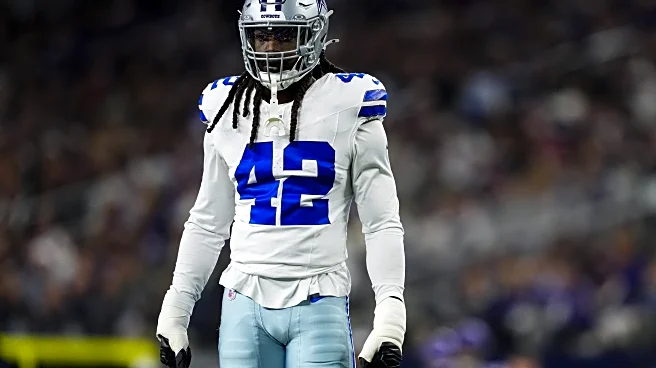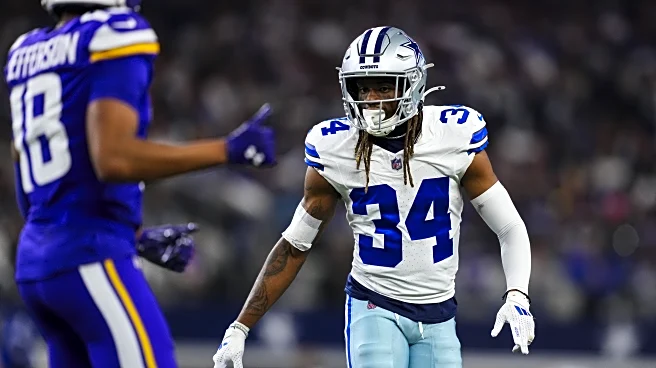

All year long we’ve looked at the rookie class and given previews and reviews on each player for every game of the season. Now let’s look back the season in its entirety and breakdown each rookie and how they performed. Let’s continue with third-round cornerback Shavon Revel Jr.
Season stats- Snaps: 334, Total Tackles: 35, Tackle for loss: 1, Receptions Allowed: 21, Reception Percentage: 67%, Pass Breakups: 3, TD Allowed: 2 , Passer Rating: 119.7, Penalties: 5
Revel’s rookie year in Dallas was always
going to be complicated, but it ended up being even tougher than anyone wished for. Less than a year before he played an NFL snap, he tore his ACL at East Carolina and missed most of his final college season, going into the draft as a first-round talent with a major medical red flag. Dallas still spent a Day 2 pick on him and expected him to be part of the future at outside corner, but the combination of that injury and the Cowboys’ cornerback depth issues meant his first season became a trial by fire rather than a slow ramp-up.
The basic numbers show the workload and the struggle. PFF has him with a 35.2 overall grade and a 34.6 coverage grade for 2025, ranked 122nd out of 123 graded cornerbacks. He played over 330 defensive snaps, most of them as an outside starter once he was activated, and finished with 35 total tackles, no interceptions, and eight missed tackles. In coverage, he allowed 21 catches on 31 targets for 295 yards and two touchdowns on the year, with quarterbacks posting a rating well into triple digits when they threw at him.
What makes the year more frustrating is that there were clear flashes early that hinted at a smoother path. His NFL debut against the Raiders was almost textbook for a young corner with 18 coverage snaps, one target, zero reception allowed for zero yards and a clean tackle. His first three games, he allowed only five catches for 61 yards on 89 coverage snaps, which is the kind of efficiency you would happily live with from any starter, never mind a rookie coming off major knee surgery. But as injuries elsewhere forced Dallas to lean on him, his role jumped quickly.
By late November, he had played at least 62% of the defensive snaps in every game but his debut, and he was regularly matched with top receivers in a secondary that wasn’t getting consistent help from the pass rush. That is when the wheels came off for Revel with big cushions on third down, late reactions to breaks in his zone, and repeated issues playing the ball with his back turned, which showed up in back-to-back weeks as the season drew on.
The physical storyline matters here. Revel missed the entire offseason program, training camp and preseason while finishing his ACL rehab, then sat out the first 10 regular-season games before debuting in Week 11. By the time he was on the field, he was not a typical rookie, he was a rehabbing player being asked to step straight into heavy NFL snaps with very little live football in the previous 15 months. His Christmas Day outing against Washington was a good example of how that looked with poor tackling and run-defense sub-grades, he was targeted six times and allowed four catches for 84 yards, and then he left the game after a blow to the head. He was placed into the concussion protocol the next day effectively ending his season with one week left.
The bigger concern is what this kind of year can do to a young player’s confidence. His season was a work in progress or better yet, a conundrum. He should ideally have spent this entire year rehabbing and easing into spot duty, but it’s fair to say the Cowboys’ depth issues forced him onto the field earlier than what was best for his development. Once he was thrust into a starter’s workload, the numbers and the tape say he struggled with too many completions, too many missed tackles, and a concussion at the end of the year that underlines how physically demanding the year was. The risk now is not just technical, it is mental. If Dallas wants him to be part of the long-term answer at corner, 2026 has to be about rebuilding his confidence and fundamentals with a full, healthy offseason, rather than repeating another season of trial by fire.