
The footballing transfer marketplace across Europe within the past decade has become an ever evolving, boundary bending landscape that has somehow normalized what, not very long ago, would have been considered completely ludicrous. Neymar Jr’s €222 million move from Barcelona to Paris Saint-Germain back in the summer of 2017 was essentially pouring gasoline onto the inevitable fire as the bigger clubs across the continent now seem to be able to navigate their way to spending outlandish lumps of cash
on top talents.
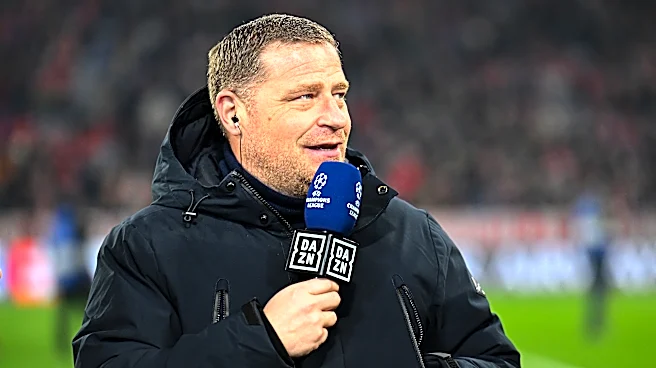
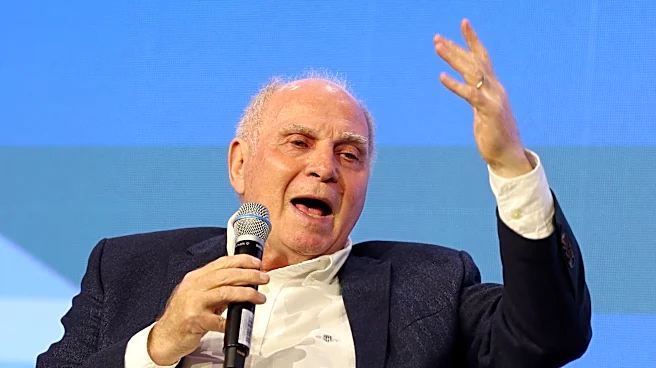
When Karl-Heinz Rummenigge and Uli Hoeneß were CEO and president of Bayern Munich, respectively, they used to speak boldly about how Bayern would never spend over €100 million on any one player, but even the German Rekordmeister have succumbed to the growing beast of the inflated transfer market. Now, we’re in a time and place where even contract extensions could cost just as much as a decent signing, a la the contract extension to board member for sport Max Eberl spearheaded for French center back Dayot Upamecano, who’s salary was essentially doubled.
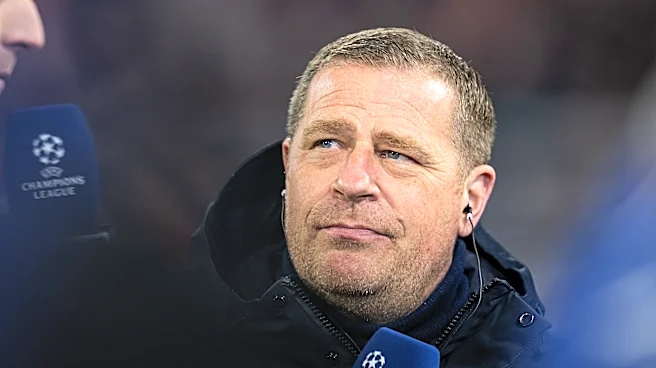
For Eberl, the Upamecano extension is fresh off the heels of last season when he was tasked to get extensions for Joshua Kimmich, Alphonso Davies, and Jamal Musiala over the line — all while trying to reduce the overall wage bill as the club prepped for the mega signing of Florian Wirtz from Bayer Leverkusen that didn’t wind up happening.
For Eberl, who has vast experience from his tenures at both RB Leipzig and Borussia Mönchengladbach, he explained how it’s a balancing act to try to get his job right in terms of deciding where money’s best spent — whether that be internal extensions, or signings from other clubs. “Let’s put it this way: These internal transfers, as I call them, can also be expensive, especially when I’m talking about top players. But then you always have to draw comparisons: I did that with the young Jérémy Jacquet during Dayot Upamecano’s contract extension. After 19 Ligue1 games, he cost €70m. That would be ‘the other path,” he explained in a recent interview with Tz (via @iMiaSanMia).
Jacquet is currently injured with a shoulder problem but is set for a move to Liverpool this summer. While the player was very much on Bayern’s radar for quite some time, as Eberl alluded to, he had to measure if the investment would be worth it and if the club’s hierarchy would even wind up giving the green light.
This season, there’s been more emphasis internally at Bayern to try to reduce the overall wage bill, which is an incredibly difficult thing to do for Eberl, Christoph Freund and Jan-Christian Dreesen. On one hand, the minimum expectation is for Eberl and company to make the squad better, which requires constant proactive squad planning, but on the other hand, the have to find ways where they can save money — it’s quite the paradox.
Eberl explained how it can be an increasingly difficult maze to navigate through, but combining high expectations with pragmatism and fiscal responsibility is the constant battle he’s ready to fight in his role at Bayern. “I’ll do my part, the part that’s expected of me, and then they [supervisory board] have to tell me whether they agree or not. That’s the conversation we need to have. And if they tell me, ‘Max, that’s too expensive, then that’s no problem for me’, then we’ll just have to go down that other path. But then we have to be clear that we’ll have to buy a different player — if we want to maintain the same quality — who might cost 50, 60, or 70 million euros. Knowing full well that the player might only be 19 or 20 years old and not yet at the top European level,” he stressed.