


Monday, June 1, was certainly an eventful day in the NFC.
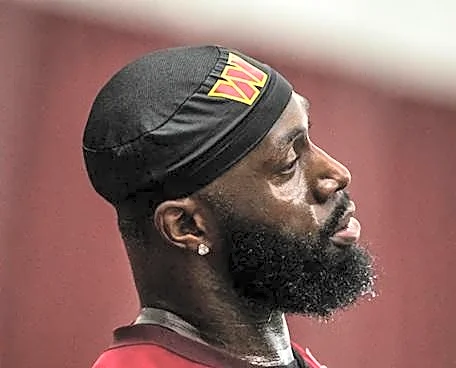
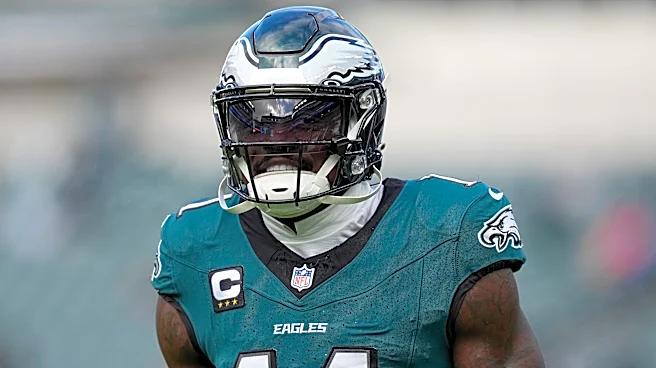
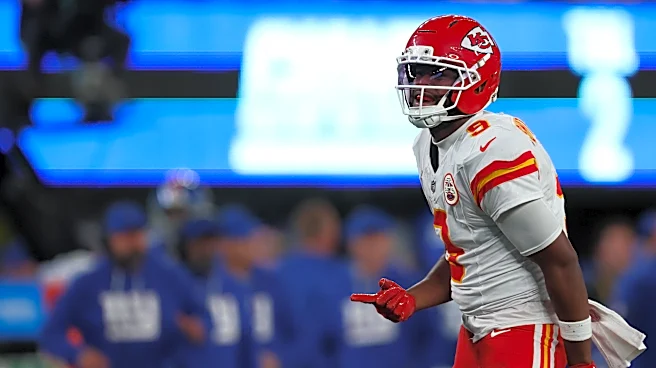
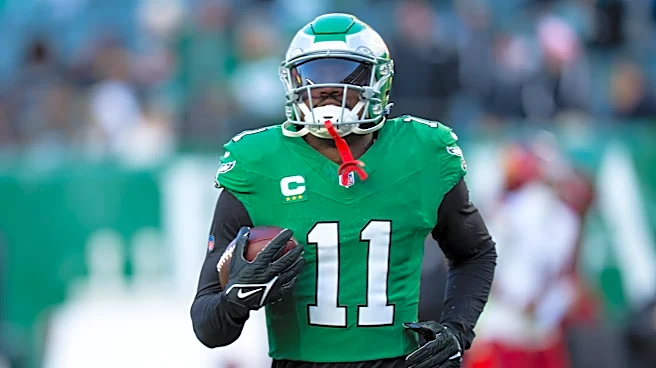
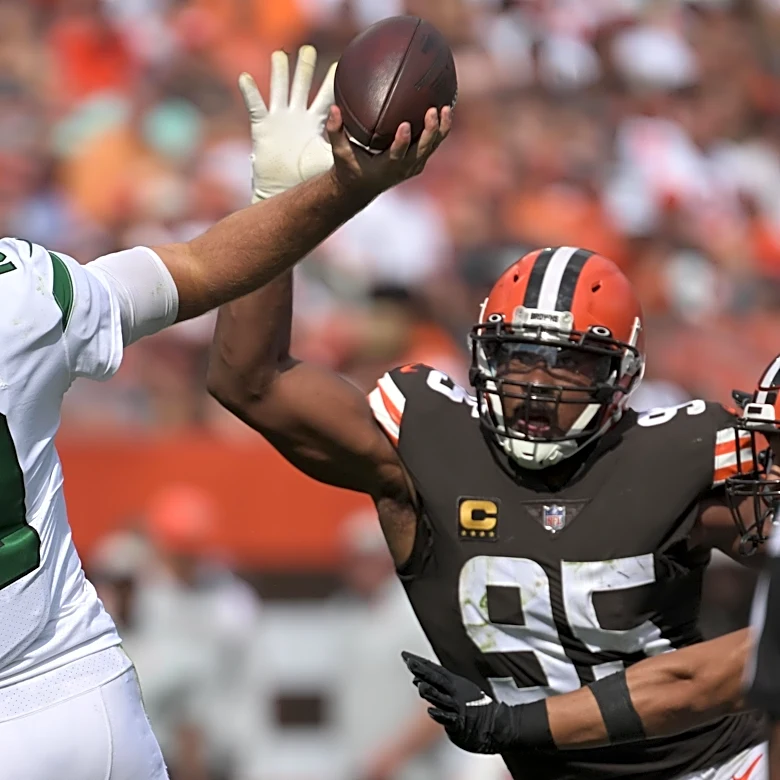
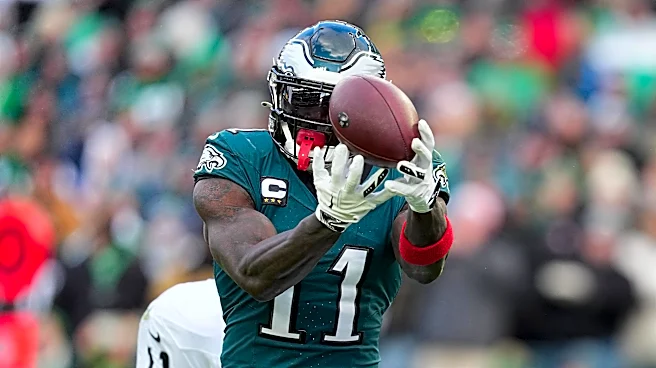
The New York Giants signed three receivers (Odell Beckham Jr., JuJu Smith-Schuster, and Braxton Berrios), the Cleveland Browns traded All-World defensive end Myles Garrett (and perhaps the Super Bowl) to the Los Angeles Rams, and the Philadelphia Eagles executed the long-awaited trade of star receiver A.J. Brown to the New England Patriots.
Each of those moves will obviously impact the Giants in 2026. We’re obviously interested to see what Beckham,
Smith-Schuster, and Berrios still have in the tank, and the Giants will see Garrett and the rest of the Rams’ defense in Week 2.
But, as John Harbaugh said shortly after being hired: The Giants need to build a team that can win their division.
“It starts with the Eagles. I mean, let’s just be honest about it. The Eagles are defending champs,” Harbaugh said back in January. “I remember when my dad would tell us that when Bo Schembechler took the job at Michigan in 1969, when Michigan was down. Ohio State was the reigning national champion. It was like, we have to beat Ohio State. Everything we do, every decision we make, is with his Ohio State in mind. And they ended up building a team like Ohio State. And they beat them the very first year.
“So, you gotta build a team to beat the Eagles. Yeah, you gotta beat the Commanders, and you gotta beat the Cowboys, but the Eagles are the champs. So, we have to build a team to beat the Eagles. And everything we do, every practice we have, every film session will be with that in mind.”
The Tennessee Titans trading Brown to the Eagles in 2022 was one of the catalysts for their recent divisional dominance. The dynamics of the division changed again on Monday with Brown’s departure.
Brown is one of the best pure receivers in the NFL thanks to his size, athleticism, ball skills, and route running. His presence allowed the Eagles to manipulate defenses and gave Jalen Hurts a reliable option even when covered.
Several factors in the Eagles’ disappointing season culminated in a quick exit from a post-season they got to more by default than merit. Jason Kelce’s retirement, their Super Bowl defense degrading due to age, and free agency departures had obvious impacts.
But so too was Brown’s discontent and accompanying poor play.
Correlation does not equal causation, but it is interesting that Brown’s worst games last year (Weeks 1, 2, 4, 5, 10, 11, and arguably 14) also coincided with poor games from Saquon Barkley and DeVonta Smith.
The three are capable of working together to devastating effect when all is well and offer complementary skill sets. Brown’s size and ability as a deep threat create space underneath, which Barkley exploits for his signature explosive plays in a “pick your poison” dynamic. Smith, meanwhile, takes advantage of the attention paid to the other two to make timely catches in the short-to-intermediate area of the field.
That, however, is contingent on the trio working as designed, and Brown is probably the most integral piece.
The modern resurgence in the running game is largely powered by the shift in defenses from Cover-3 based schemes to Cover-4 based schemes. Defenses have ceded lighter boxes and space in the underneath area of the field to clamp down on the explosive passing attacks powered by spread principles and dual-threat quarterbacks.
Offenses typically have a harder time running the ball when they don’t have a dominant receiving threat for which defenses must account. We saw similar dynamics on the Giants offense when Barkley was able (or unable) to play with Odell Beckham. Likewise, Ezekiel Elliott was much more consistently effective when the Cowboys had Dez Bryant on the field than when he (Bryant) wasn’t.
The question now becomes how the Eagles look to replace Brown on the field. They were clearly planning to move on from Brown when they drafted USC receiver Makai Lemon in the first round and Vanderbilt hybrid tight end Eli Stowers in the second round.
Lemon would appear to be a one-for-one replacement at first blush, but he’s a very different player than Brown. While both are tough and highly competitive receivers, Lemon is undersized and does his best work as a slot receiver in the short-to-intermediate area of the field. He lacks ideal athletic traits, and his skill set seems to overlap with Smith.
Stowers is the more interesting option. There was talk before the draft that some teams consider the 6-foot-4, 239-pound converted quarterback as a power slot receiver and not even a hybrid tight end. Stowers more than makes up for the size and explosiveness that Brown brought to the field. However, there’s the question of whether he’ll be used in a way that forces teams to respect the vertical pass. Most of their other receiving weapons are small slot-type receivers who need space with which to work, and the Eagles could be in danger of drawing defenders into the tackle box if they don’t have a legitimate vertical threat. Not only will that hamper Barkley’s productivity, but it will make life tougher for all of their receiving options.
Likewise, Jalen Hurts has historically struggled in attacking the middle of the field and is much more dangerous outside the hashmarks. Brown was his go-to weapon on the outside, while Smith spent more than half his time in the slot and ran a very high rate of shallow crossing routes. The loss of Brown could not only force Hurts to play where he’s less effective and less comfortable. It could also allow defenders to squeeze down on the passing offense in a similar way in which we saw opponents play the Giants’ short-range and RPO-heavy offense when it lacked a true “Number 1” receiver.
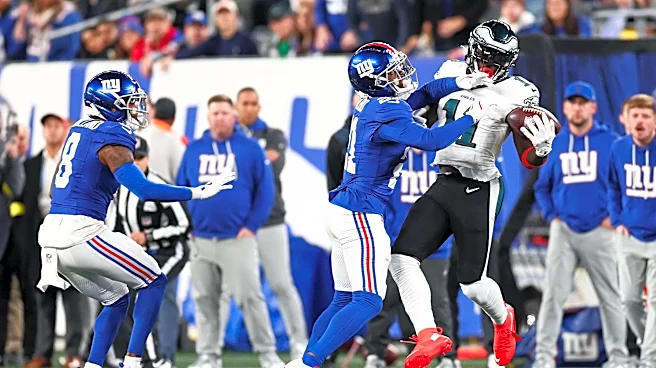
The departure of Brown could likewise make life easier for the Giants as they seek to knock off the division champs.
We don’t know precisely what the Giants’ defense will look like in 2026. However, each of their cornerback options has upside in man coverage, which suggests that it will feature fairly prominently in the defensive scheme.
Brown’s size, speed, and physicality make man coverage a relatively difficult proposition. He’s able to play through contact as well as use his frame to box out corners and create separation with his frame and physicality. Brown was significantly better against man coverage than Smith last year, averaging 1.93 more yards per route run than Smith.
The Eagles’ additions of cornerback Riq Woolen and edge defender Jonathan Greenard are a significant boost to a defense that flagged last year. However, the departure of Brown could have significant repercussions for their offense. It’s also worth noting that their offensive line will be without legendary coach Jeff Stoutland. The dual losses of Brown and Stoutland could make for significantly tougher sledding for the Eagles’ running game as defenses play downhill and are less afraid to stack the box.
We don’t know for certain, but it does sound like the decision to move Brown was driven by interpersonal dynamics behind the scenes. If so, that supersedes what happens on the field, as a fractured locker room is impossible for any team to survive.
As Harbaugh said back in January, the Giants still have to beat the Cowboys and Commanders. But all three teams’ primary goal is beating the Eagles to take the division crown away, and it’s entirely possible that Philly just traded away the division when they traded A.J. Brown.