

On a recent episode of Uncs on Lansdowne, the critical darling seldom featured on the Pod on Lansdowne podcast feed, host and Over The Monster editor Dan Secatore mentioned recently watching Tenet. If you’ve ever watched Tenet and claim to understand the plot, you’re a liar. If you haven’t watched Tenet, it’s a wildly confusing movie where things are moving forward and backwards at the same time, and Robert Pattinson is there, and John David Washington talks about hot sauce. As a movie guy and as a pitching
guy, I feel the same way about Tenet as I do about Brayan Bello. I want to like it, but I don’t really understand what’s going on.
I’m a nerd. I like stats. I use my eyes to verify the numbers, but when in doubt, I lean towards what the stats are telling me rather than the intangibles. In the case of Brayan Bello, my head is in a pretzel. Just a few months ago, I posited that his success had little to do with his role, and more with some mechanical and strategic changes he made that coincided with his move to the bullpen. One day later, he allowed eight earned runs over five innings. He was demoted to AAA-Worcester, returned about a month later, and allowed four earned runs over his next 29.1 innings out of the bullpen.
I’m not the type to cross-reference the position of the sun and the moon with Bello’s astrological sign, or try to hack his Apple Watch to see how much he was sleeping the night before his appearances to try to get to the bottom of this. I’m stubborn, so I’m back to looking at the numbers. Here are some high-level numbers from his cold streak in the rotation, and subsequent hot streak in the bullpen.

He cut down the walk rate significantly, and more than doubled his strikeout rate against righties. How exactly he made such an improvement is a more complex question. Let’s start with the simplest explanation for the improvement — he was throwing harder. Across the board, his velocity was up. His sweeper was the smallest gainer at just 0.4 mph, but his sinker was up 1.7 mph, his four-seam 1.0, and his slider 2.4. Throwing harder, all else equal, is a good thing.
That’s not the only difference, though. We’ll start with lefties. Bello entirely cut out his curveball. In March and April, the pitch was in the zone just 35% of the time and returned 44% strikes while accounting for 13% of his arsenal. Any pitch that returns 44% strikes isn’t worth throwing, so cutting it out was low-hanging fruit. The curveball also accounted for 28% of his two-strike pitches against lefties, generating just three strikeouts. He also slashed his cutter usage from 22% down to 10%. The cutter had a huge swinging strike rate, but lefties were often able to get around the pitch, pulling the ball for massive slugging numbers. He replaced those two pitches with more changeups (+15.6%) and four-seam fastballs (+9.3%). The swinging strike rate against the changeup was down, but better locations created more ground balls and weak contact. His four-seam still, and likely never will be a good pitch, but he was able to keep it above the zone as something to change the eye level and away from trouble during his hot streak from the pen.
His sinker was also better. Aside from the higher velocity, his locations were vastly improved.


They’re probably more elevated than he’d like, but his early-season, low and glove-side sinkers weren’t effective. The strike rate in both samples was only about 60%, but keeping the ball away from lefties led to more ground balls and easy outs. A 6% K-BB% is still far from an encouraging mark, but it’s much better than the -2% mark he posted to begin the season. His changed approach against lefties was far from perfect, but it was a step in the right direction.
Against righties was where the major improvements came. Strike throwing was an issue to begin the season (8% walk rate against righties), but it improved out of the bullpen. His sinker strike rate increased nearly 15% thanks to a 15% increase in zone rate. His sweeper also became a big swing-and-miss pitch. The velocity and the usage rate remained roughly the same, but he returned to the majors with two extra inches of horizontal movement. The swinging strike rate jumped almost 8% with better locations low and on the glove side.
Bello also returned to an old game plan by throwing more changeups to righties. In each of his first three seasons, he used his changeup to righties about 15% of the time, getting massive swinging strike rates with it. The hard contact numbers were ugly, however, and he cut out the pitch almost entirely in 2025. The strike rate was low at 56%, but it was a source of whiffs for him.
With better strike-throwing and a legitimate whiff pitch in his sweeper, Bello was able to balloon his strikeout rate and keep righties off the bases, limiting big innings.
Of the changes he made, I think increased velocity might be the most impactful. He failed to locate his sinker on the arm side against righties out of the bullpen, but was still able to survive in the zone and get strikes at a high rate. It’s hard to attribute those velo gains to one thing, but shorter outings from the pen likely allowed him to throw harder. The increased sweeper movement and improved changeup command were important as well, but Bello will often go as far as his strike-throwing can take him.
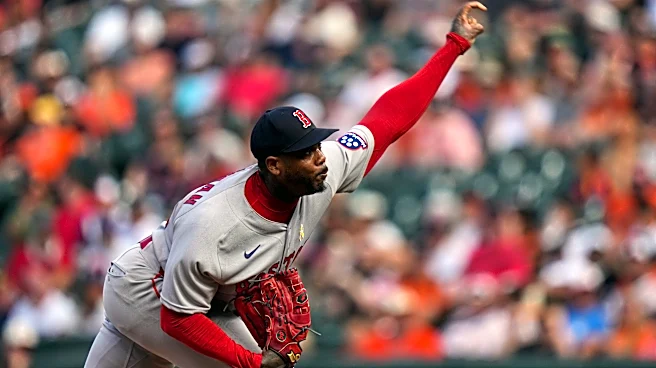
On Monday, Bello took the ball as a starter for the first time since June 4th, a five-inning, eight-earned-run appearance. He turned in five shutout innings, allowing four hits, two walks, and striking out seven. So the monkey is off his back, and he can go back to pitching from the rotation, right? Right???
I’ll start by saying, yes, it was a good outing. He threw five innings without allowing a run. That’s the job. At the same time, the Bello that showed up on Monday was far from the dominant pitcher we saw in July and August. His sinker was all over the map and went for just 60% strikes. His four-seam caught too much of the plate and was hit hard, while his cutter found the zone just twice in eight offerings. His sweeper was still good, inducing seven whiffs, but his changeup wasn’t fooling anyone and went for just one whiff.
Is it because he was working as a starter? What is the plot of Tenet? The answer to both questions is: I don’t fully know. He struggled in his bullpen outings against the Yankees and Mariners, surrendering eight earned runs over 7.1 innings between the two outings as he had a hard time throwing strikes. If you forced me to answer the questions, I would probably say something about a “Temporal Pincer Movement,” which is a term Christopher Nolan wrote that has stuck in my head because it sounds cool despite me not really getting it. I’d also probably ask you why we consider John David Washington a good actor when he hasn’t really turned in many (any?) good performances besides Black KkKlansman. At that point, I’d expect you to tell me to shut up and focus on the Bello portion of the question, and I’d say he’s probably an okay pitcher, with streaky command, whose location issues were, at least in part, masked by increased velocity out of the bullpen.
Bello is talented. He’s been a dominant pitcher for stretches during his career. He’s also been wildly inconsistent. His arm angle has fluctuated, and he’s gone from using the windup to pitching solely from the stretch and back more than once. For the 2026 Red Sox, he’s a perfect inning eater as the team uses cruise control to finish as the second Wild Card. In the postseason, he’ll likely be on a short leash due to his volatility, if he’s on the roster at all. In the future, he’s a prime change-of-scenery candidate who could be a great pitcher with the right coaching.
P.S. Just because I can’t explain Tenet doesn’t mean I didn’t like it. It looks cool, and sometimes that’s all you need. Tune in next week when I explain why Dan’s wife was correct in saying that Richard Linklater’s “Before” series is pretentious and sucks.