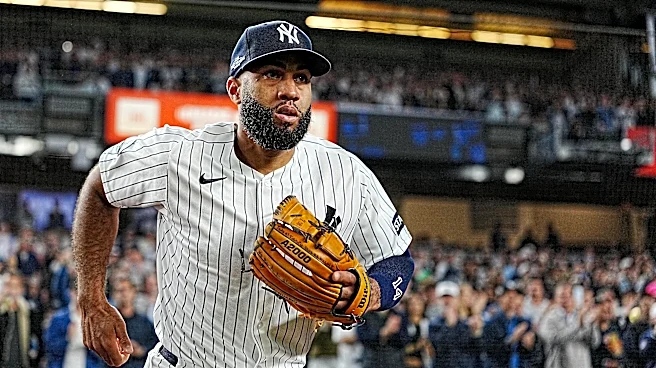




Before the 2026 season, the Yankees re-signed utilityman Amed Rosario to a one-year, $2.5 million contract. Long rumored to be a trade target for the Bombers, Rosario spent the latter half of 2025 with the team after being acquired from the Nationals at the Trade Deadline. The move was low-risk and really seemed like a fit that was too good to be true.
The organization brought Rosario back to balance the lineup against left-handed pitching, and he earned solid marks from PSA last year for doing just
that. His ability to play multiple positions also made him a useful bench piece, allowing him to slide around the infield and outfield as needed. Still, I think we all know the vision was for him to serve as the other half of a platoon at third base alongside Ryan McMahon. To say that dream fell short would be an understatement.
Grade: F
2026 Stats: 87 G, 244 PA, 10 HR, 28 R, 34 RBI, 3 SB, .238/.279/.405, 88 wRC+, -0.2 fWAR, -0.2 bWAR
2027 Contract Status: Free agent
After participating in the World Baseball Classic for the Dominican Republic, Rosario got off to a strong start to the season. During April and May, he looked much like the player he had been for most of his career, batting around .270 and occasionally getting a hold of a pitch or two. His bat and versatility were useful as he moved around the infield, plugging holes as they arose due to injury. However, his production plummeted after he returned from the paternity list in early June.
In June and July, Rosario slashed .195/.241/.366. His strikeout rate climbed to 34.5 percent over that stretch, and it felt like he was swinging at flies in every at-bat. By this point, it was also becoming apparent that Rosario wasn’t hitting lefties remotely as well as he was righties, making the daily chess match that much harder.
Over the last third of the season, Rosario’s numbers settled in the middle of his previous two segments as he batted .258 in August and .231 in September. In another strange twist, after hitting a big blast at the end of July, Rosario’s power dried up, and he failed to hit another home run in either month. In a lot of ways, Rosario’s season was a microcosm of the Yankees’ year. What looked like a low-risk move that was too good to be true got off to a promising start before ultimately falling short of expectations in ways that were almost impressive.
Rosario made the Wild Card roster and went 0-for-1 with a strikeout and a walk in his lone postseason appearance against Boston. He was then left off the ALDS roster against the Rays as the coaching staff opted to carry another pitcher in his place. I assume Rosario’s baseball future will be somewhere other than the Bronx next season after his year and a half run with the Yankees.
Defensively, Rosario’s versatility was somewhat useful with the injuries the club faced, but the results were ugly as his Outs Above Average came in at -9. He appeared in 55 games at third base, seven at second base and designated hitter, five games in right field, and four in left field. Rosario’s defensive numbers at the infield spots were as rough as the eye test, as he posted a .911 fielding percentage at third and .882 at second. He was perfect in the limited action in both outfield spots, but overall he wasn’t a very reliable defender at any position making his versatility less valuable.
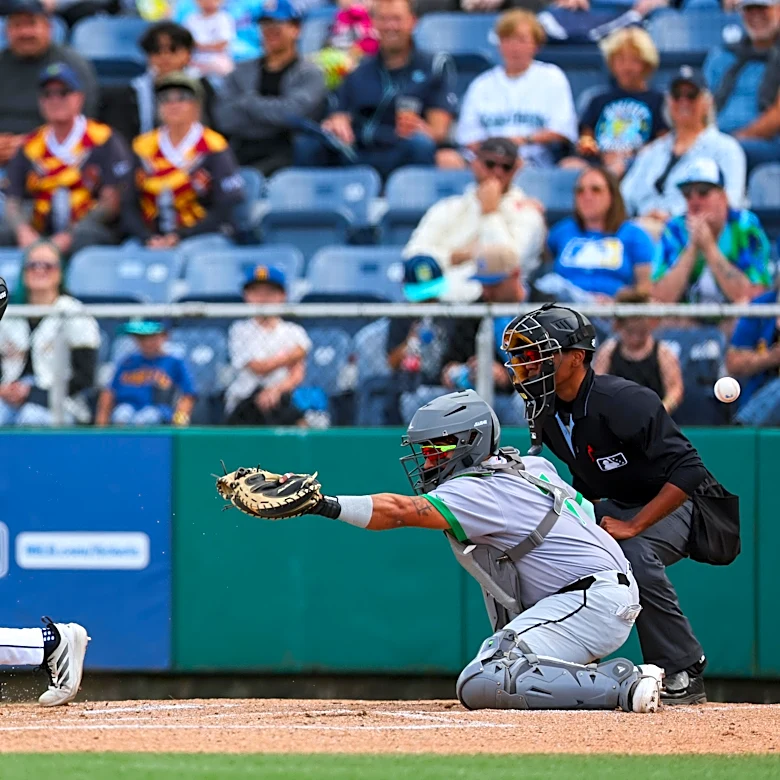
Rosario’s biggest highlight came on July 31, when he launched a 450-foot home run against the Cubs at Wrigley Field. It was the second-longest home run hit by a Yankee all season. Another noteworthy performance came in April against the Athletics, when Rosario hit two home runs, including the go-ahead three-run blast in the bottom of the eighth inning off former Yankee reliever Mark Leiter Jr.
In 2026, Rosario, the man meant to mash lefties, ended the season batting .208 against southpaws, well below his .287 career average. His .606 OPS against left-handed pitching was a far cry from what the Yankees needed. The splits against righties made the situation even more head-scratching: he hit .295 with an .833 OPS, compared to a .265 career average against right-handers.
The final Statcast numbers showed a 39.3-percent hard-hit rate and an average exit velocity of 90.2 mph. His average bat speed reached 74.0 mph, a career high, and he set a new career high with a 112.1 mph exit velocity. Additionally, Rosario might have suffered from some poor luck, as his expected batting average (xBA) was .250, 12 points higher than his actual average.
Rosario finished the season with negative WAR, posting a -0.2 mark. When you literally have one job and you fail to do it, a failing grade is fair and is what the group consensus here at PSA concluded. I personally gave Rosario a D- due to the fact he hit righties well this year, if nothing else. What grade would you place on his report card?
See more of the Yankees Roster Report Card series here.