

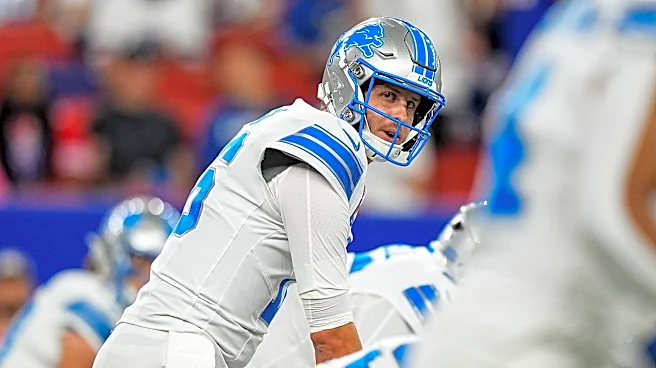
The Detroit Lions defense is in trouble. After two extremely troubling performances, fans and analysts are already wondering if Detroit needs to make massive changes on the defensive side of the ball, while others are already claiming defeat for the team.
The silver-lining crew points to the fact that it’s early in the season. September is for ugly football and correcting those mistakes. So Detroit has plenty of time to right the ship.
But what is the historical context of massive improvement when
it comes to terrible play on defense? Does it actually happen a lot, or is it something coaches simply try to manifest by saying they’re all correctable mistakes?
For this exercise, I looked at the bottom-five defenses (by points allowed) after two weeks over the last five seasons, exploring where each started and where it ended the season. We’ll start with the most recent data points from the 2025 season and work our way back to 2021.
For context, the Lions have allowed 71 points through two games, which currently ranks 31st (before Monday night’s game).
2025 season
After 2 weeks:
- 32. Bears — 79 points allowed (39.5 PPG)
- 31. Dolphins — 66 points allowed (33.0 PPG)
- 30. Jets — 64 points allowed (32.0 PPG)
- 29. Steelers — 63 points allowed (31.5 PPG)
- t-28. Cowboys — 61 points allowed (30.5 PPG)
- t-28. Giants — 61 points allowed (30.5 PPG)
At the end of the season
Bears:
- 24.4 PPG allowed (23rd)
- 25th in DVOA
- 21st in EPA/play
Dolphins:
- 24.9 PPG allowed (24th)
- 24th in DVOA
- 25th in EPA/play
Jets:
- 29.6 PPG allowed (31st)
- 31st in DVOA
- 20th in EPA/play
Steelers:
- 22.8 PPG allowed (17th)
- 11th in DVOA
- 19th in EPA/play
Cowboys:
- 30.1 PPG allowed (32nd)
- 32nd in DVOA
- 32nd in EPA/play
Giants:
- 25.8 PPG allowed (26th)
- 26th in DVOA
- 27th in EPA/play
Of these six teams, only the Steelers really pulled themselves out of the basement, which is kind of incredible, because you may remember they started the season by giving up 32 points to the lowly Jets. However, they bounced back nicely and held each of their last six opponents to 26 points or less. What was the reason for their improvement? A big schematic shift, moving from single-high safety looks to a two-high shell.
Everyone else showed their true colors early.
2024 season
After 2 weeks:
- 32. Panthers — 73 points allowed (36.5 PPG)
- 31. Rams — 67 points allowed (33.5 PPG)
- 30. Cowboys — 61 points allowed (30.5 PPG)
- 29. Commanders — 55 points allowed (27.5 PPG)
- 28. Ravens — 53 points allowed (26.5 PPG)
At the end of the season:
Panthers:
- 31.4 PPG allowed (32nd)
- 32nd in DVOA
- 32nd in EPA/play
Rams:
- 22.7 PPG allowed (17th)
- 26th in DVOA
- 23rd in EPA/play
Cowboys:
- 27.5 PPG allowed (31st)
- 24th in DVOA
- 28th in EPA/play
Commanders:
- 23.0 PPG allowed (18th)
- 23rd in DVOA
- 22nd in EPA/play
Ravens:
- 21.2 PPG allowed (9th)
- 6th in DVOA
- 11th in EPA/play
There’s a little more hope in this data set. The Commanders and Rams were able to climb toward average, while the Ravens arguably turned into a top-10 defense. But there’s an interesting story to the 2024 Baltimore Ravens. At the start of the year, the defense was coordinated by former NFL linebacker Zach Orr—his first year as a coordinator. In October, the Ravens added senior defensive assistant Dean Pees to the staff. The actual defensive turnaround didn’t come until weeks later—and some coaches denied that Pees was the catalyst for the improvement—but it’s something to consider. Despite the turnaround, Orr would only last one more season as Ravens defensive coordinator.
Again, however, it’s worth pointing out that the Panthers and Cowboys defenses were exactly as they seemed after two weeks.
2023 season
After two weeks:
- 32. Giants — 68 points allowed (34.0 PPG)
- 31. Bears — 65 points allowed (32.5 PPG)
- 30. Chargers — 63 points allowed (31.5 PPG)
- 29. Seahawks — 61 points allowed (30.5 PPG)
- 28. Lions — 57 points allowed (28.5 PPG)
At the end of the season:
Giants:
- 23.9 PPG allowed (26th)
- 21st in DVOA
- 22nd in EPA/play
Bears:
- 22.3 PPG allowed (20th)
- 17th in DVOA
- 16th in EPA/play
Chargers:
- 23.4 PPG allowed (24th)
- 26th in DVOA
- 24th in EPA/play
Seahawks:
- 23.6 PPG allowed (25th)
- 28th in DVOA
- 30th in EPA/play
Lions:
- 23.2 PPG allowed (23rd)
- 13th in DVOA
- 21st in EPA/play
Most of these defenses were able to climb out of the bottom five, but not much further. All remained in the bottom half of the league except arguably the 2023 Lions (by DVOA), coincidentally enough. The Bears managed to become an average defense, as well. Two things worth noting in the Bears’ turnaround: defensive coordinator Alan Williams resigned after two games due to health and family reasons. Additionally, they traded for Montez Sweat at the deadline, and he provided 6.0 sacks in the final nine games.
2022
After two weeks:
- 32. Cardinals — 67 points allowed (33.5 PPG)
- 31. Lions — 65 points allowed (32.5 PPG)
- 30. Titans — 62 points allowed (31.0 PPG)
- t-29. Falcons — 58 points allowed (29.0 PPG)
- t-29. Rams — 58 points allowed (28.0 PPG)
- t-29. Commanders — 58 points allowed (28.0 PPG)
At the end of the season:
Cardinals
- 26.4 PPG allowed (31st)
- 26th in DVOA
- 20th in EPA/play
Lions
- 25.1 PPG allowed (t-30th)
- 27th in DVOA
- 31st in EPA/play
Titans
- 21.1 PPG allowed (t-14th)
- 19th in DVOA
- 21st in EPA/play
Falcons
- 22.7 PPG allowed (23rd)
- 31st in DVOA
- 29th in EPA/play
Rams
- 24.6 PPG allowed (26th)
- 18th in DVOA
- 22nd in EPA/play
Commanders
- 20.2 PPG allowed (7th)
- 10th in DVOA
- 5th in EPA/play
Again, there is some hope here. The Titans, Rams, and Commanders all pulled themselves out of the bottom-10 by most metrics. Washington, in particular, turned into a top-10 defense. It’s interesting because Washington had one of the worst defenses in 2021 and 2023, but this one haven of a season under defensive coordinator Jack Del Rio worked with no clear reason why. He was fired the next year.
2021
After two weeks:
- 32. Falcons — 80 points allowed (40.0 PPG)
- 31. Lions — 76 points allowed (38.0 PPG)
- 30. Titans — 68 points allowed (34.0 PPG)
- 29. Ravens — 68 points allowed (34.0 PPG)
- 28. Chiefs — 65 points allowed (32.5 PPG)
At the end of the season:
Falcons
- 27.0 PPG allowed (30th)
- 31st in DVOA
- 28th in EPA/play
Lions
- 27.5 PPG allowed (31st)
- 29th in DVOA
- 30th in EPA/play
Titans
- 20.8 PPG allowed (6th)
- 10th in DVOA
- 10th in EPA/play
Ravens
- 23.0 PPG allowed (19th)
- 28th in DVOA
- 27th in EPA/play
Chiefs
- 21.4 PPG allowed (8th)
- 22nd in DVOA
- 23rd in EPA/play
We have one more example of a team pulling themselves out of a bottom-five performance and climbing to a top-10 defense by the season’s end: the 2021 Titans. They looked like a completely different unit after their Week 13 bye, allowing 24.2 points per game before the bye week and just 13.8 points per game in the six games after the bye (including playoffs). It’s hard to point to exactly what helped the turnaround, but in a funny coincidence given how many Lions fans want a similar move, it is worth noting that Jim Schwartz was added as a senior defensive assistant prior to the 2021 season.
Only one other bottom-five defense was able to pull themselves out of the basement—the Chiefs, who remained in the bottom-10 in efficiency numbers, but the scoring defense jumped into the top-10 likely due to some help from a top-five offense.
Conclusions
Of the 27 teams that started the season in the bottom-five of scoring defense after two weeks:
- Only eight (29.6%) finished in the bottom-five in scoring defense
- However, 17 (63.0%) finished in the bottom-10 in scoring defense
- Similarly, 17 (63.0%) finished bottom-10 in DVOA, but, oddly, only 14 (51.9%) finished bottom-10 in EPA/play.
As for the positive finishes, of the 27 teams:
- Only five (18.5%) finished in the top half of the league in scoring
- Five (18.5%) finished in the top half of the league in DVOA
- Four (14.8%) finished in the top half in EPA/play
Of this data set, only three teams—the 2021 Titans, 2022 Commanders, and the 2024 Ravens—turned into top-10 units. And while there is no exact common thread between the teams that improved, they all did make some sort of change, be it schematic, personnel, or even coaching. None of the teams that showed drastic improvement—even to the middle-of-the-pack— fired their coordinator midseason.
So what does this mean for the Lions? Well, the odds are certainly stacked against them to turn this around, but the probability may not be as daunting as you think. Historically, about two of the five worst defenses after Week 2 will finish outside of the bottom-10 in scoring defense—nearly half will finish outside of the bottom-10 in EPA/play.
But if your hope is for this defense to turn into a top-10 unit or even top half of the league, the chances are pretty low.