

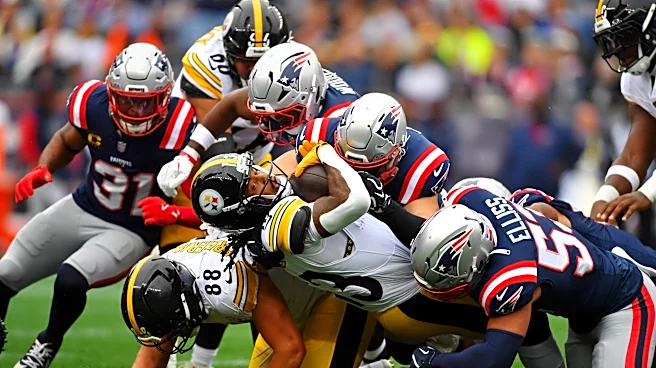
The Jacksonville Jaguars needed a response. A week after letting a game slip away in Denver, Liam Coen’s team returned home to face the defending AFC champions with a fairly simple challenge: prove that the 20-13 loss to the Broncos was a stumble rather than a sign of things to come.
They did considerably more than that.
The Jaguars dismantled the New England Patriots 35-6 on Sunday, turning what initially looked like a competitive game into a procession after halftime. The Patriots were held without
a touchdown, Drake Maye was responsible for three turnovers, and Jacksonville scored 28 unanswered points after New England’s second field goal. The Jaguars are now 2-1, have won 10 of their last 11 regular-season games and have won six straight at EverBank Stadium.
There were plenty of individual performances worthy of praise, but three things in particular explain why this became such a one-sided afternoon.
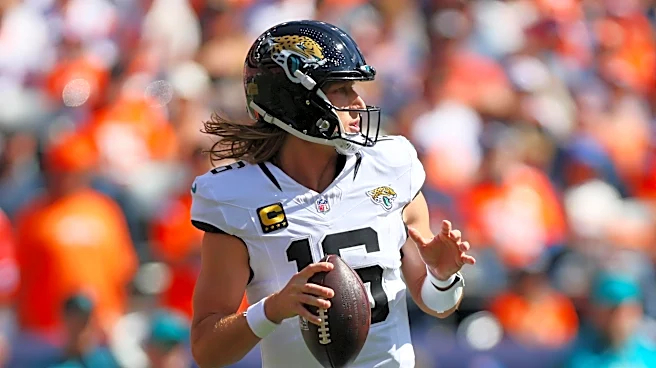
Trevor Lawrence and Liam Coen are in lockstep
There is a difference between a quarterback playing well and a quarterback looking completely synchronized with his offensive system. Trevor Lawrence looked like the latter on Sunday.
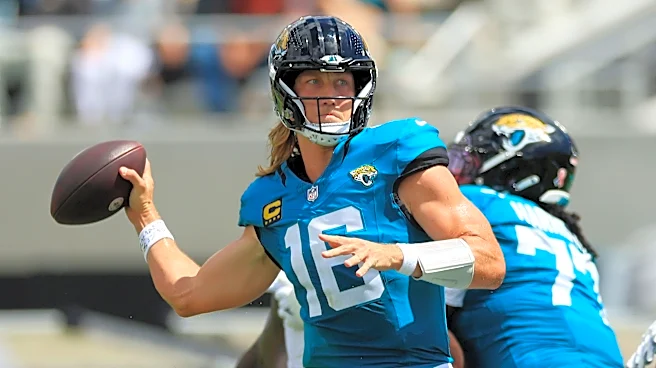
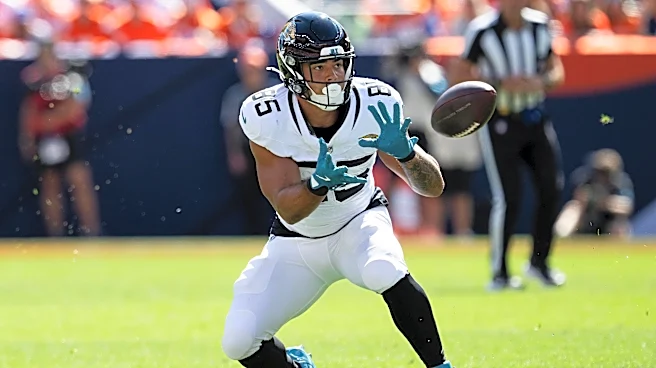
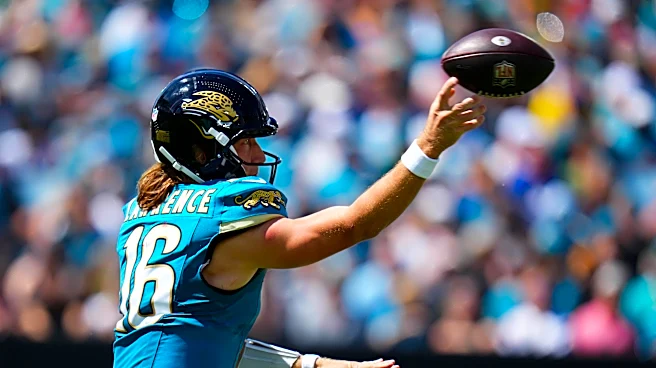
The numbers themselves are solid rather than spectacular: 19-of-29 for 182 yards and three touchdowns. The significance was in the timing. Jacksonville’s first touchdown came after DaVon Hamilton recovered Drake Maye’s fumble, with Lawrence immediately hitting rookie Josh Cameron for 12 yards. The drive was kept alive by an 18-yard completion to Parker Washington on third-and-5, and Lawrence was consistently making the throws Coen’s offense needed him to make.
The most telling sequence came after New England finally got a break. Marcus Jones intercepted Lawrence’s pass after it deflected off Brenton Strange’s hands, giving the Patriots possession at the Jacksonville 21-yard line. New England converted that mistake into a field goal and suddenly had the deficit down to 7-3.
Lawrence’s response was exactly what you want from a franchise quarterback. Jacksonville went 65 yards in nine plays, and Lawrence finished the drive by finding Jakobi Meyers for a 10-yard touchdown. No panic, no attempt to manufacture something spectacular, just an immediate answer. That touchdown also moved Lawrence past Blake Bortles into second place on the Jaguars’ all-time touchdown passing list, with 104.
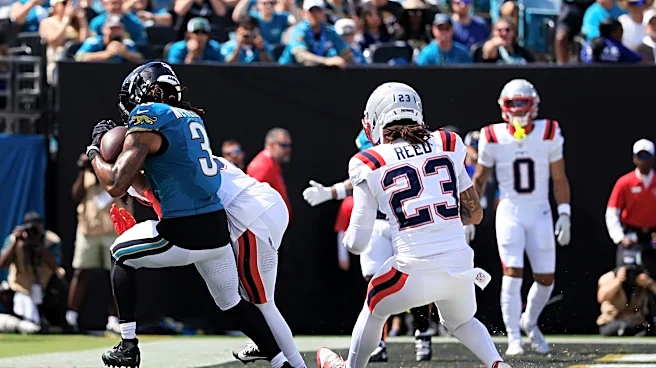
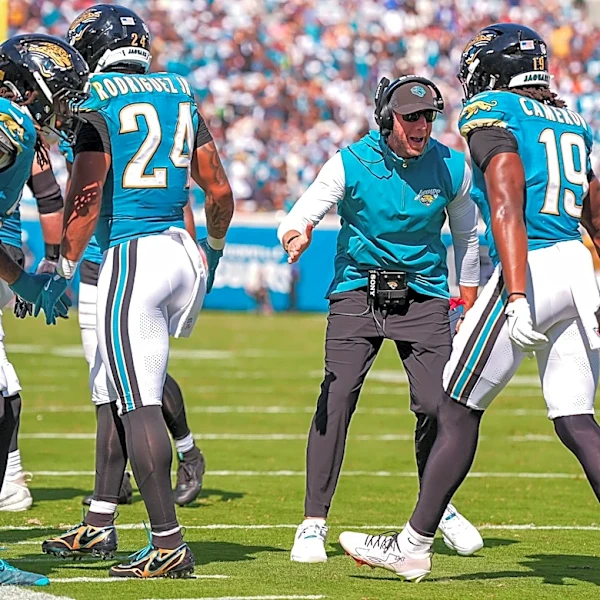
Then came the dagger. A 15-play, 72-yard drive consumed 8:42 of the third quarter, and Lawrence eventually found Washington for a remarkable 17-yard touchdown catch from the 17-yard line. It was the sort of drive that demonstrates the relationship between quarterback and play-caller: Coen kept asking the Patriots defense questions, and Lawrence kept giving him the right answers.
This isn’t about Lawrence “silencing doubters.” That storyline has become increasingly tired. It’s about a quarterback and a coach who appear to be seeing the same game. On Sunday, they were in lockstep.
The Jaguars’ defense made every Patriots mistake hurt
Jacksonville’s defense did not need to produce a 2017 AFC Championship-style spectacle. There was no need for a repeat of ‘Myles Jack wasn’t down’. It simply needed to make New England pay whenever an opportunity presented itself.
It did exactly that.
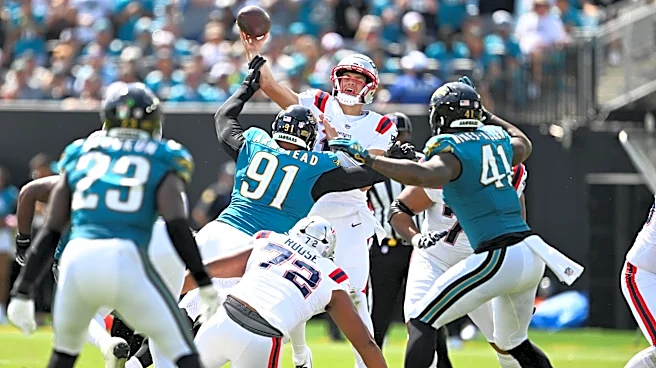
The first opportunity arrived late in the opening quarter, when Maye lost the football attempting to throw. Hamilton recovered at the Jacksonville 38, and the Jaguars turned the turnover into seven points. That was the first of three takeaways, and each one helped Jacksonville take control of the game.
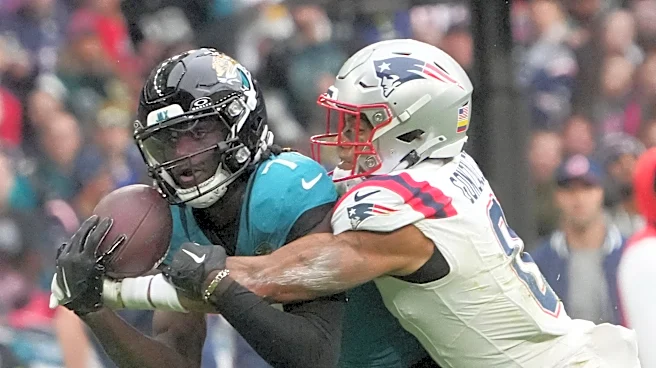
The most spectacular came from Travis Hunter. With New England driving before halftime and looking for a way back into the game, Hunter intercepted Maye in the end zone with 1:02 remaining. It was Hunter’s first career interception and, more importantly, it erased New England’s best opportunity to turn the momentum before the break. Instead of potentially entering halftime with Jacksonville’s lead under pressure, the Jaguars walked into the locker room up 14-3. Hunter’s usage has been the subject of much debate in Duval County; a timely big play from a player the Jags invested a lot of draft capital into will do wonders for the second year star’s confidence.
Then, just when the Patriots needed to respond in the second half, Jacksonville delivered another knockout blow. Washington’s touchdown gave the Jaguars a 21-3 lead, and on the very next New England snap, Jarrian Jones intercepted Maye and returned it 32 yards. Fifty seconds later, Chris Rodriguez Jr. was in the end zone from five yards out.
That’s how a 21-3 lead became 28-3 in the space of 18 seconds of game clock.
There was substance behind the opportunism, too. Jacksonville recorded three sacks, with Ruke Orhorhoro getting home in the second quarter and rookie Bryan Thomas Jr. sharing a third-quarter sack with DaVon Hamilton. Maye finished 14-of-25 for 199 yards, no touchdowns and two interceptions, while his lost fumble directly produced Jacksonville’s opening touchdown.
The Jaguars didn’t merely stop New England. They punished every mistake the Patriots gave them, and that is how a close game becomes a blowout.
Bhayshul Tuten has taken ownership of the backfield
There was a legitimate question hanging over Jacksonville’s running game entering the season. Travis Etienne was gone, and the Jaguars needed someone to turn a committee into a functioning backfield.
Through three weeks, Bhayshul Tuten is making a very convincing case that he should be that someone.
Tuten carried 28 times for 131 yards through the opening two games, and against a Patriots defense that had not allowed a 100-yard rusher during the first two weeks of the season, he continued to get the work. He finished Sunday with 15 carries for 73 yards and a touchdown, averaging 4.9 yards per carry.
The important part wasn’t simply the production. It was the way Jacksonville used the run to control the game once it had established the lead. Tuten repeatedly kept the offense ahead of the chains, allowing Coen to stay patient rather than asking Lawrence to win every possession through the air.
That became particularly valuable in the second half. Jacksonville’s 15-play touchdown drive was not built around one explosive play. It was a sustained march that ate more than eight minutes from the clock and ended with Washington’s touchdown. When New England eventually got the ball back, the game was already beginning to disappear.
And then, with the Patriots having finally managed to cut the deficit from 28-3 to 28-6, Tuten put the final punctuation mark on the afternoon. He took the ball in from one yard out with 8:02 remaining, pushing Jacksonville’s advantage back to 35-6 and removing any remaining doubt about the outcome.
Tuten wasn’t the only Jacksonville back to contribute — Chris Rodriguez also scored — but the distribution of the workload tells its own story. Tuten was the lead back, and the Jaguars trusted him to carry the offense when the game demanded physicality. As far as bellcow, north-south running backs come, Tuten fits the mould better than most.
That is perhaps the most encouraging development of all. Jacksonville doesn’t need one player to dominate every Sunday. It needs an offense capable of winning games in different ways. Against New England, Tuten’s running gave Lawrence and Coen the platform to do exactly that.