
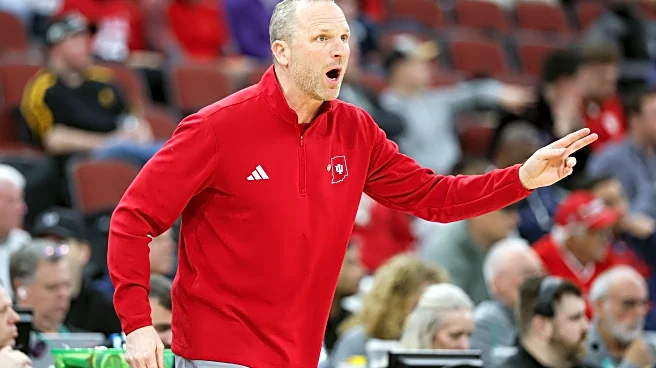
Indiana men’s basketball’s first season under Darian DeVries came to an end when the Hoosiers didn’t receive a bid for the 2026 NCAA Tournament. The Hoosiers finished 18-14 overall and 9-11 in Big Ten play, with a late collapse ending their March Madness hopes.
We’ll be recapping and analyzing DeVries’ first season in a few different ways from individual players to other lineups and trends.
Nick Dorn
- Final Statline: 8.1 PTS, 2.3 REB, .3 AST
- Role: 6th man/starting wing
Stats provided by KenPom or CBB Analytics.
There was a three game stretch of the 2025-26 season that looked like
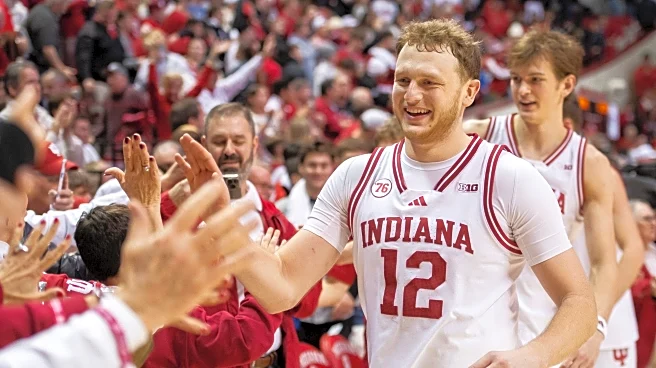
Nick Dorn was going to, alongside Lamar Wilkerson, carry Indiana into the NCAA Tournament on his back. It ended up being too tall of a task for transfer from Elon, but it’s a run to remember when imagining how Indiana might look next year.
As a 6’7” wing with a pure shooting stroke, Dorn looked a bit like the model for what DeVries will want on the wing for his tenure. He attempted 5.9 field goals per game, 5.3 of which came from 3-point range. Even when the shots weren’t falling, his presence on the floor helped space the offense, since he was only there to shoot threes.
*One statistical anomaly we noticed via the great folks at CBB Analytics. Dorn converted on a fantastic 43% of his 3s from the corner but only 32.9% on 3s taken above the break. He shot just as many corner 3s as he did above break 3s on the season.
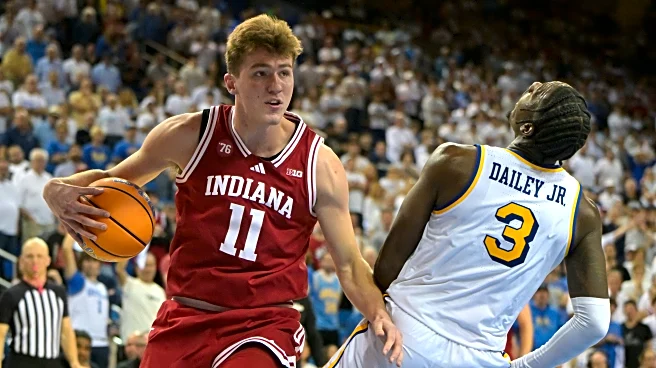
This is likely the reason that Dorn remained in the starting lineup even after his magical three-game run ended. Following the 2OT win at UCLA, when Dorn had 26 points on 6-15 from 3-point range, he only cracked double figures in scoring twice. Both were wins for Indiana.
Given how his success correlated with the team’s, there’s definitely an argument to be made that Dorn was Indiana’s most valuable – not best – player. The three game stretch against Rutgers, UCLA, and Purdue when Dorn was shooting the lights out was the only three game streak when Indiana posted Bart Torvik game scores over 90 against high-major competition.
Of course, that also gives some insight into what went wrong for Indiana this year. Like Dorn, who didn’t put up big assist or rebound numbers, Indiana was overly reliant on the 3-ball in its offense.
While Dorn has always taken a lot of threes, his last year at Elon at least saw him attempt more shots inside the arc, which allowed him to put up a higher scoring average on a lower 3-point shooting percentage than he did this past season at Indiana.
With one year of eligibility remaining, it’s easy to see why DeVries would want him around. 8.1 points per game and over 40% from three is great for a role player as a floor spacer off the bench, and he clearly demonstrated the potential to be more than that. Whether he can reach his potential is one question, and whether it will be at Indiana next year is another.