


Bill Belichick for spring practice kept media attention and reporting at arm’s length, with extremely limited viewing opportunities and a closed scrimmage to conclude the work. With that caveat, reporting seemed to suggest the following pecking order in the QB room entering the summer: Billy Edwards, Miles O’Neill, Au’Tori Newkirk, and then Travis Burgess. Taron Dickens, the transfer from WCU, committed too late to participate in spring ball and will join the team this summer. No reporting suggests
a clear front-runner at this point.
The QB question looms large for UNC’s 2026 football team. While some QB rooms reflect a specific type of QB, with similar physical traits and skills differentiated mainly by experience, UNC’s reflects a variety of types. Each one would take the offense in a different direction, with effects rippling through strategy, tactics, and personnel decisions on offense, defense, and special teams. More on that below.
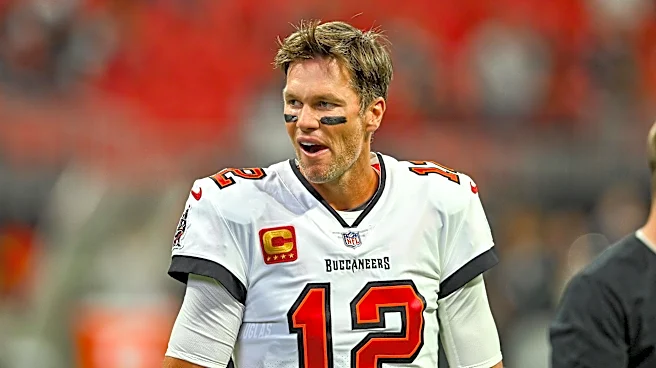
Belichick also faces a second QB question: “How good is Bill Belichick without Tom Brady?” While no one doubts six Super Bowl rings, Belichick’s coaching record without Brady seems almost an inverse of results with Brady. In five seasons with the Cleveland Browns, Belichick achieved a winning season only once, going 11-5 with Vinny Testaverde under center. That 1994 team then beat the Patriots in the wildcard round before losing to Pittsburgh for the third time in the divisional round. Overall, Belichick posted a 37-45 record with the Browns.
With the Patriots, Belichick started Brady for 18 of his 24 seasons there. The remaining six seasons look somewhat similar to his time with the Browns. Year one with Drew Bledsoe yielded 5-11. After losing Brady for 2008 in the first quarter of Game 1, the Patriots went 11-5 but missed the playoffs. After letting Brady move to the Tampa Bay Buccaneers for the 2020 season, Belichick tried an aging Cam Newton and went 7-9. Rookie Mac Jones then helped New England to a 10-7 record in 2021, with a first round playoff exit to Buffalo. The future seemed to hold promise.
Following the departure of offensive coordinator Josh McDaniels, Belichick somehow saw fit to select former defensive coordinator Matt Patricia to call plays. Note: Patricia had never run an offense or called plays at any level of football in his life. Result: another losing season at 8-9. 2023 saw the bottom fall out, with Mac Jones, confidence shattered, eventually being benched for Bailey Zappe in a 4-13 campaign. So, in six seasons with the Patriots but without Brady on the active roster, Belichick compiled a 40-44 record, reaching the playoffs once with no wins.
Combining the five seasons with the Browns, Belichick’s NFL record in those 11 years comes to 77-99, with two playoff appearances and one playoff win. Throw in last season’s 4-8 here. In 12 “no Brady” seasons, Belichick achieved a winning season three times and posted a losing record nine times. The cumulative record for those 12 seasons stands at 81-107, a winning percentage of 43%.
That makes 2026 an opportunity for Belichick to quiet the doubters who question his ability to coach without Tom Brady or those who question his ability to transition successfully to college ball. Who might end up at QB for UNC this season, and how might the offense look with that player running the show?
Billy Edwards seems the QB with the highest floor, if not the highest ceiling. A transfer from Wisconsin via Maryland, Edwards has played in 28 games at the P4 level, attempting 512 passes. Those attempts yielded 19 touchdowns and 10 interceptions at 7.1 yards per attempt. Edwards brings accuracy for chain-moving throws and the experience to keep things safe. In 2024 at Maryland, Edwards attempted 420 passes, 136 of those achieving first downs but only 24 of them netting more than 25 yards. Jacolby Criswell here that same season had a similar number of long pass plays on 100 less attempts.
Edwards presents no threat as a runner, rushing for 81 yards in a season at Maryland before missing most of last season at Wisconsin with a knee injury. In other words, the UNC offense with Edwards at the helm would likely be more efficient than explosive. In its ideal form, it could resemble what the Steelers ran last season, with multiple tight ends, shorter throws, and running backs active in the pass game.
Downside: that approach requires a top-end defense and special teams to keep that offense from having to chase. The defense this year will lean heavily on true freshmen for depth, while special teams will lean on true freshmen to start.
Miles O’Neill looks the part of a QB, straight out of central casting. The transfer from Texas A&M enters his third college season with 20 pass attempts to his name. Petrino helped recruit O’Neill to the Aggies before departing for Arkansas, so the two were familiar with each other prior to working together here. Without much tape or stats to work with, the attraction to O’Neill seems to be his arm talent, the kind of gun that can make safeties back up as well as worry about the entire width of the field. O’Neill’s size and stride make him a QB power threat if defenses leave too much room up the middle. If Petrino can find a comfort level with O’Neill’s processing and anticipation, O’Neill would add a layer to the offense Edwards doesn’t, making the offense more explosive.
The question with O’Neill entering the summer will be his ability to make good decisions, keeping the offense efficient and limiting mistakes while adding the upside of throws with more risk but more reward. If Miles can accomplish that, he likely jumps Edwards, and the offense looks nothing like the one Belichick and Freddie Kitchens put on the field. In its ideal form, it could have some structural similarities to McVay’s Los Angeles Rams, again with multiple tight ends but with a passing game exploiting all three levels of the field. (No, Miles O’Neill is not and will never be Matthew Stafford.)
Downside: potential turnovers and busted drives. Petrino’s offense at Arkansas the last two seasons turned the ball over 43 times and finished in the bottom quartile of offenses in drives that went 3-and-out. Both of those make life much more complicated for a defense.
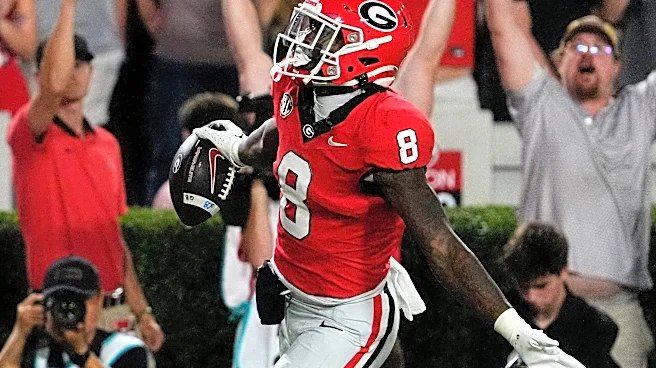
Au’Tori Newkirk, the lone returning member of last season’s QB room, attempted six passes as a true freshman in two appearances, both in blowouts to Richmond (right side) and NC State (wrong side). Newkirk, like O’Neill, has a cannon for an arm but much more mobility than either Edwards or O’Neill. Given what Petrino accomplished with Taylen Green at Arkansas (admittedly a much more elite athlete), Newkirk could present the opponent a moving target and give Petrino more tools to stress defenses with conflicting run/pass reads. This would be more along the lines of what fans call a “college offense.” In its ideal form, it might look a lot like the offense Kirby Smart and Mike Bobo ran with Gunner Stockton last season at Georgia.
Downside: this sort of approach requires precise timing and coordination from the offensive line, whereas UNC will be completely rebuilding its offensive line in 2026.
Travis Burgess missed his senior season of high school with a knee injury but nonetheless comes to UNC as a highly rated prospect. His physical tools – size, arm strength, accuracy, speed, agility – make him a tantalizing option. On the other hand, he hasn’t played football in awhile, and recovering from a knee injury takes a lot of mental reps as well as physical rehab. Adjusting to the college game on top of those challenges, in addition to having the three QBs ahead of him, makes Burgess unlikely to see the field this season. If events somehow align to force Burgess onto the field as a starter, the 2026 season will be this staff’s last, with Burgess the answer to the trivia question, “Who was the last quarterback to start for Bill Belichick?”
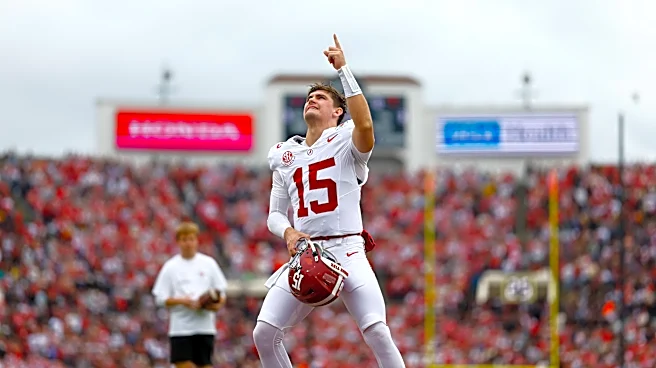
Taron Dickens will come to UNC as the biggest question mark. The Miami native put up video game numbers at Western Carolina, throwing for 3,506 yards, 38 touchdowns, and only two interceptions. While his highlight tape shows a lot of evasive maneuvering, he only ran for 321 yards (3.3 per attempt) and one touchdown, voiding the Taylen Green and Lamar Jackson comparisons some people initially made. The drawbacks are clear. First, Dickens comes to UNC from a FCS school and missed spring practice. Second, WCU lists him at 5’11”, 180, and most schools embellish those numbers a bit. That’s extremely small for a P4 QB. In some ways, Dickens’ game resembles Bryce Young’s at Alabama, a smaller QB using pocket awareness and ability to throw accurately on the move as plays extend. With Edwards, O’Neill, Newkirk, and Burgess already on the roster when Dickens opted to transfer, one wonders what sort of potential role the staff had in mind that sold Dickens on Chapel Hill.
So, those are the quarterback options and questions as UNC moves into its summer “player led” practices. What direction might Petrino go at the most important position on the field? And will Bill Belichick deliver a rare winning season without Tom Brady running his offense?