

Were they necessarily the Trade Deadline moves that fans wanted or even predicted? Not really; catcher is still a concern and the bullpen blew up last night’s stirring rally. Still, one can’t pin complete complacency on the Yankees front office, which, in the end, went out there and acquired multiple pieces to boost their playoff chances. The addition of Heliot Ramos, much like the one of Luis García Jr., was with an eye on the now and another one in the future. Instead of focusing on rental pieces,
the Yankees added two controllable pieces to strengthen a lineup absolutely reeling amidst many key absences.
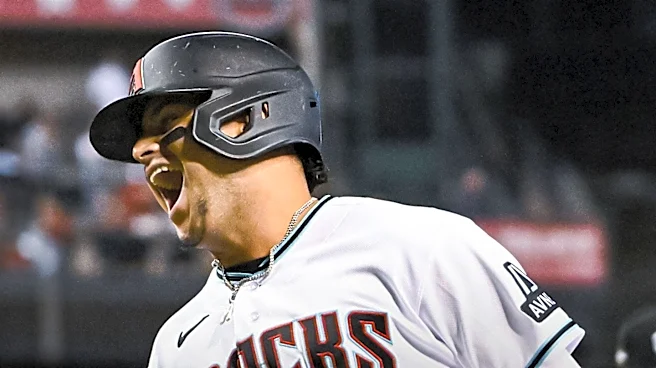
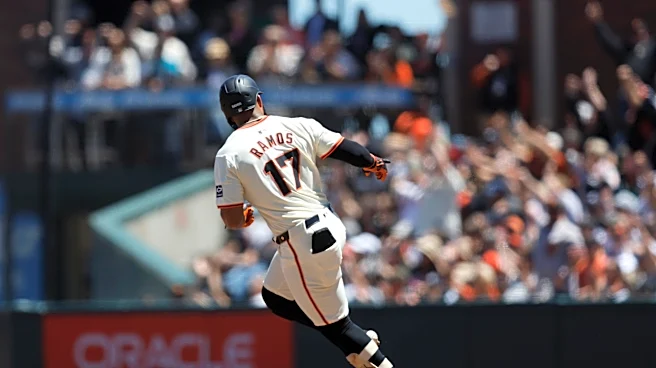
Unlike García, though, Ramos comes to the Yankees partially looking to recapture the production levels that saw him make the All-Star Game in his first full season back in 2024. This isn’t to say the current version of Ramos isn’t a productive player and wouldn’t represent an improvement for the Yankees in their current dire outfield situation. It’s just that, unlike García, who is peaking at the moment, there is more to Ramos than the league-average 100 wRC+ he has put up in 74 games this season.
First things first, let’s start with what we know. Ramos is a lefty killer, a fact that in and of itself makes him a valuable acquisition to this increasingly lefty-heavy lineup, particularly with no Aaron Judge for who knows how long at this point. Even in this 2026 campaign, which has seen his worst numbers with the bat, Ramos has an .835 OPS versus southpaws, somewhat in line with his career numbers in 386 games:
vs. RHP: .249/.305/.389
vs. LHP: .279/.345/.501
Supposing he maintains that, which there is no reason for us to think we wouldn’t, the balance of this lineup when healthy grows a bit, but it might not be enough to justify the deal. After all, Henry Lalane is a pretty appealing (if risky) prospect who the Yankees parted with as the headlining piece of the package going to San Francisco.
Now we move on to expectations of improvements and how Ramos might go about recuperating his better form. A bit of a free swinger by nature, Ramos has suffered in 2026 from an increased tendency to smash the ball on the ground, subutilizing his natural skill of hitting the ball hard consistently. Ramos’ 53.6-percent ground-ball rate this season is not only well above league average, but a drastic shift from the 43.3-percent and 44.4-percent marks he put up in the two previous campaigns. In terms of quality of contact, his hard-hit rate in the 85th percentile is as good as it’s ever been. Unsurprisingly, this seems to strictly be an issue versus righties.

As consistently as Ramos hits barrels, though, with a career average above 11 percent, he also sprays the ball to all fields, but even by his standards, a Pull AIR rate under nine percent is surprisingly low—only 10 of his 25 extra-base hits have come to the pull side. While that can be tweaked, even at his best, García was not a pull-heavy hitter, far from it. What he can’t keep doing is hitting the ball on the ground as often as it has.
Now addressing how Ramos fits into this roster, similarly to the García deal, the initial adjustment is rather simple, but further questions arise once this team gets healthier. First and foremost, entrusting left field in Yankee Stadium to a subpar defender isn’t the ideal move. Against left-handers, the risk-reward should pay off, but the production needs to be better versus right-handers to justify an everyday role before the injured starters return. In the meantime, look for Ramos to take plenty of at-bats in right field with Jasson Domínguez now demoted.
Obviously, you take any hitting improvements you can get right now. Although considering the club had already added García, who figures to eventually eat into a lot of DH at-bats, it’s easy to become concerned about the potential return of Judge, Bellinger, and company. Is the club planning for worse as a form of due diligence or because time has passed and the outlook hasn’t gotten more positive as we’d hoped? For all of these reasons, now, more than ever, though, the Yankees need these reinforcements to hit the ground running.