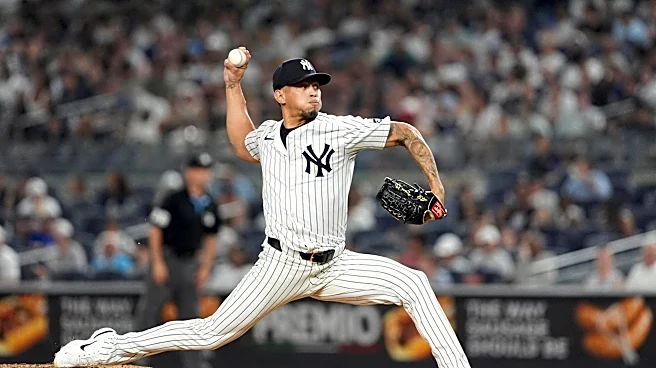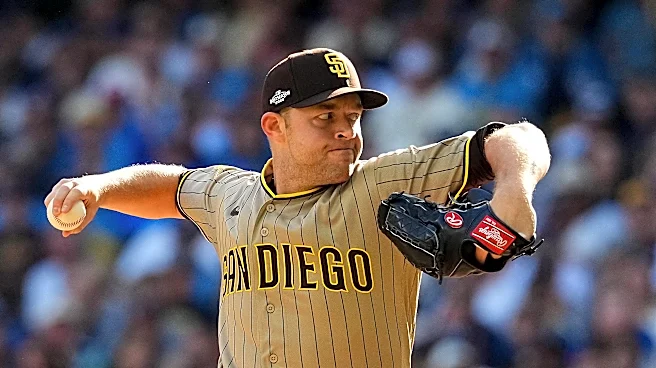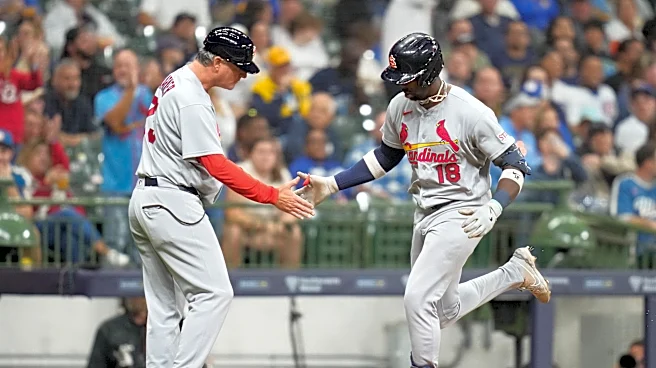

On Thursday, I wrote that I wanted to compare Cardinals players at this point in their careers to players of the past using the Similarity Score on Baseball-Reference. The idea was that it would be fun to see recognizable players, ideally good ones, that might mimic a current Cardinals player. The comparisons aren’t always “fun” but can be informative. Anyway, I intended for it to be one post, until it took me a lot of words just to get halfway there, so it became a two-parter. Let’s begin.
To quickly,
reiterate the categories, there’s going to be a most similar to player, who is literally #1 on the similarity score list. Then the best outcome for that player is whoever has the best career, although sometimes I take liberties and choose a player with better outcomes in the next few years, which is more relevant as a Cardinals fan, or just go with a more modern player. But I’ll mention any great outcomes either way. And then the worst outcome, typically someone out of baseball soon.
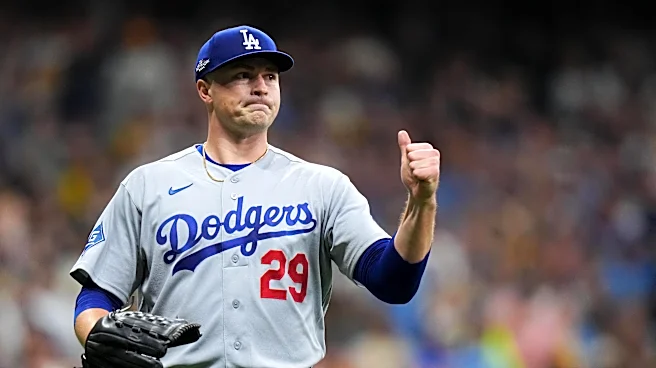
Michael McGreevy
Most Similar Player: Joe Ross
Ross is a very bad comparison from a projection standpoint, even if their overall careers look similar at 25. Ross spent most of his age 24 and 25 seasons injured, and was in fact not very good in either season when he did pitch. That doesn’t describe McGreevy at all.
Best outcome: Anibal Sanchez wins this one. His career arc would be phenomenal for the Cardinals. Sanchez had three straight 3 bWAR seasons and then a 6 bWAR season at this point in his career. He then was bad in what would be McGreevy’s last year of team control (for now) and was bad for a few years before a resurgence at 34.
Worst outcome: Ian Anderson at least so far, and certainly would be for the Cardinals. Anderson didn’t actually pitch in his age 25 season, so not a very comp generally speaking. Anderson didn’t pitch at 26 either, threw 7 very bad games in 2025 and didn’t pitch again in 2026.
Conclusion: I mean this is a good list. Logan Gilbert lands at 5th most similar. John Farrell had a 3 bWAR season at 26, and then injuries ruined his career. Older Cardinal fans will remember Ray Washburn. For my my money, the actual most similar guy on his top 10 though is probably Jameson Taillon which would still be a solid result.
Riley O’Brien
Most similar: Rob Scahill
Interesting that the formula spit out Scahill who threw 6 MLB innings at 31 after having a below replacement level season at age 30 in about 22 innings. He had zero career saves, so clearly saves was not important which is probably a good thing. They are in such wildly different places in their career at 31 that I’m not stressing that Scahill did not pitch in the MLB again.
Best outcome: Bill Landrum
In a pretty bleak list, I think Landrum wins. Joe Borowski made this a tough choice though because Borowski had 33 saves and a 1.8 fWAR season at age 32. But then he sucked for a couple years, and then bounced back at 35 and 36 as a mediocre closer who got lots of save opportunities. Landrum meanwhile threw nearly 150 innings combined the next two seasons with a 2.68 ERA, though less impressive WAR totals because it was the 80s.
Worst outcome: Ernie Camacho
Half of this list did not pitch in their age 32 season, though to be fair, a couple were modern pitchers who have not had a chance to do that yet (Ian Hamilton, Seth Martinez). However, I chose a guy who did pitch, but was terrible. He was worth -1.4 bWAR in about 30 innings in his next two seasons combined.
Conclusion
A not very good list for a very atypical career should not be surprising. For those suggesting a trade, I would counter that I genuinely don’t think the trade offers are worth bothering. I could be wrong. I don’t care about passing up another team’s #15 prospect (or whatever) when the good version of O’Brien, no matter how unlikely he is to be that version, would net a top 100 prospect. This is not a Ryan Helsley situation in my opinion.
Pedro Pages
Most similar: Raul Casanova
We’ll call this a mixed bag. Casanova was actually a 96 wRC+ hitter at age 28, which would be an amazing outcome for Pages. But his defense didn’t rate very well. And that was kind of the last hurrah for Casanova.
Best outcome: Greg Zaun
Generally speaking, most Pages’ comparisons were functional backups at least. Zaun was a good backup catcher for the next three seasons, was a bad backup for a couple years, and then randomly became a starting caliber player for a few years in his mid-30s.
Worst outcome: John Ryan Murphy
Surprisingly hard to find anyone who didn’t manage at least one more decent season. Murphy’s career was effectively over, playing two more seasons and getting less than 150 PAs combined in those seasons.
Conclusion
Frankly, if it wasn’t for the catching depth, we should all be delighted that Pedro Pages was here to provide cheap, functional backup catcher performance, because that’s what this list tells me more than anything.
Andre Pallante
Most similar: Willie Fraser
Well another weird comparison. He is actually a former Cardinal, although briefly. He spent his age 27 season split between the Jays and the Cardinals as a bad reliever. He didn’t pitch in the majors for the next two seasons and he continued being bad as a part-time reliever for two more years before his career was over. Don’t get how he’s similar to Pallante.
Best outcome: Milt Wilcox
Wilcox had a 2.2 bWAR season at age 28 and was worth at least 2 bWAR in three of his next four seasons. If the Cardinals let Pallante reach free agency, he would have a 3.3 bWAR season in his walk year.
Worst outcome: Randall Delgado
He would throw just 10 more innings in his career and they weren’t very good innings.
Conclusion
A very eclectic group. You have Erasmo Ramirez, whose starting career was effectively over, but he later rebuilt himself as a reliever. Brandon Morrow is kind of the same, although you wouldn’t think his starting career was about to end, coming off a 3.1 bWAR season. Clearly a group on the whole who say “trade now” though.
Victor Scott
Most similar: Brady Anderson
I’m fairly confident he’s also going to be in the best outcome part because holy cow. I was not expecting any real good outcomes. Anderson wasn’t that good at 26 or 27 though so not a great chance the Cardinals would hold onto him that long.
Best outcome: Anderson
I mean yeah it’s not even close. I know of Anderson as the poster boy for the steroid era, or the main representative of how out of control homers got. Thing is that’s very unfair to Anderson who was actually a really good player. He had three seasons at 5 bWAR or better, including at 28.
Worst outcome: John Torres
He didn’t even play after his age 25 season, so yeah I think this would be the worst outcome for Victor.
Conclusion
Believe it or not, while it’s not exactly a group of All-Stars (Anderson excepted), you understand why the Cardinals hold onto him more with this list. A good amount had good seasons after this: Rusty Torres was an average hitter at 27, Shawn Abner had a great age 26 season (and never played again after for some reason), Bobby del Greco had good age 27 and age 29 seasons, Jordan Schafer was a good fourth outfielder at 26, Tommie Reynolds at age 27, I mean most of this list was a solid backup in the near future. And with Scott’s defense, the bar for his offense wouldn’t be high to match them.
George Soriano
Most similar: Will Cunnane
Cunnane was bad at 27 and bad at 28, had a good 20 inning stretch at 29, bad to being bad at 30, and his career was done. He was probably too bad at 27 to make a good comp for Soriano, who just played in his age 27 season.
Best outcome: Jesse Chavez
The pure length of Chavez’s career has to win among the random reliever carousel, but I will have to point out that Chavez mixed good seasons with bad – and his age 28 season was bad. But he was also not very good before this, and didn’t start having good seasons until he was 30.
Worst outcome: Fernnado Cabrera
Either Fernando Cabrera who threw 1.1 terrible innings for the rest of his career, or Dan Smith, who threw zero innings the rest of his career.
Conclusion
A truly representative group of the random reliever is seen here. Chavez, the ultimate journeyman, Todd Wellemeyer is here before he got to the Cards, Dennis Santana had a couple good years, Wil Crowe was another one whose career was effectively over. Soriano is basically a roll of the dice.
Matt Svanson
Most similar: Bob File
You never want to see your most similar player be a guy who literally never threw another inning. File had his good season at age 24, not age 26. So it would make sense for Svanson to sputter around a couple more years even if he’s toast.
Best outcome: Scott Barlow
Fascinating list, but the choices were not particularly great. That said, if he wants to do what Scott Barlow did at 28 and 29, we have a shutdown reliever on our hands. Exactly 74.1 innings both seasons with ERAs of 2.42 and 2.18. He’s been pretty ho hum since then, but obviously even two seasons of being elite is a great outcome for Svanson.
Worst outcome: Take your pick
There’s like 4-5 outcomes where either the career was literally over, or they threw some innings at 28, and then their career was over. Really no need to single anyone out, if this is to be believed, there’s a 50% chance Svanson won’t pitch in 2028 and beyond.
Conclusion
Having said that, if their career wasn’t over, they had a good age 28 season. Barlow was mentioned, Brian Holton and Mark Huismann both had good seasons as well. Tyler Phillips of the Marlins is here, but he became a good starter, so I’m not sure that one will be duplicated.
Jordan Walker
Most similar: Charlie Spikes
Probably not shocking that the first guy is not a good result, but Spikes wasn’t very good at 24. He had a good, though not as good as Walker, season at 23. Anyway, from a projection standpoint, bad comp for sure.
Best outcome: Jim Wynn
You want to be optimistic about Jordan Walker? Look at the names on his similarity score. Wynn has a real argument to be in the Hall of Fame. He certainly has the peak with seven seasons of 4.9 fWAR or better, a career 130 wRC+. He only hit 291 homers though and his career was done at 35, but yeah if he could have lasted a few more years, I’d be banging on the drum to elect him.
Worst outcome: Spikes
Yeah I mean he’s the worst
Conclusion:
Roger Maris is on the top 10 and I didn’t choose him for the best outcome, just to give you an idea. You have 30 WAR careers from age 25 onward in both Chili Davis and George Scott. Wyatt Langford doesn’t make much sense to me, but he’s here too. Gregory Polanco and Colby Rasmus almost are disappointing results in light of this. The conclusion is extension now actually even with a few underwhelming guys in here.
JJ Wetherholt
Most similar: Jim Lefebvre
Good news and bad news on this comparison. Unfortunately, at age 23, it’s actually a good comp. He won Rookie of the Year with a 4.6 bWAR season. He then followed it up with a 5.3 bWAR season. He had another above average season at 25 and I’m guessing injuries took their toll, because he didn’t play in a full season the rest of his career. Or he started getting benched because he had a low average. Either way he became more like an average player.
Best outcome: Davey Johnson
Johnson wasn’t actually that good in his rookie season at 23, although he did place 3rd in Rookie of the Year voting, but he was a fairly good defender and above average hitter for basically the length of Wetherholt’s current contract. Johnson never had a bWAR as good as Wetherholt’s rookie season though and he only only one season by Fangraphs better Wetherholt.
Worst outcome: Pedro Garcia
Another player who didn’t actually rate that well by WAR in his rookie season, but got 2nd in the Rookie of the Year voting. He was below replacement level for the rest of his career.
Conclusion
I wasn’t really expecting Jordan Walker to have wildly better players on his list than Wetherholt, but then again I guess I didn’t realize it was tough to find a good comp for him either. Jazz is on his top 10, so is Felipe Lopez, but most of this group didn’t have near as good of seasons as Wetherholt just had. Except the most similar.
Masyn Winn
Most similar: Orlando Arcia
Not really the name you want to see here, although to defend Winn here, Arcia had a much worse bat than Winn seems to have. I mean he had a 55 and 64 OPS+ in his age 23 and 24 seasons. Winn wasn’t exactly coming off a good season with the bat and his was 80! That is so much better.
Best outcome: Jay Bell
Bell started a string of three straight 4 fWAR seasons when he was Masyn Winn’s age, a streak that ended when he was worth 3.6 fWAR. And he still had a 5.4 and 3.7 fWAR seasons in his future. This is the version of Winn whose offense comes around.
Worst outcome: Andres Thomas
I want to be clear how bad of a comp this is to Winn first off. Thomas was a terrible baseball player pretty much his whole career. He was worth a career -5.7 bWAR. He was worth -3.4 bWAR in his age 25 and 26 seasons.
Conclusion
I’m not sure if this group says extension, but all the negative outcomes seem like bad comps to me. Arcia had one good season and even less of a bat than Winn. Kurt Stillwell didn’t have Winn’s glove. Both Thomas and Ray Quiñones were never good. The more appropriate comps suggest a very safe floor for Winn: Alex Gonzalez, Alex Gonzalez (yes both of them are on here), Eddie Miller (7-time All-Star entirely due to defense!), Dick Schofield are on here. Maybe you trade Winn if you think this is the outcome though if someone “overpays.” Bell and Andrelton Simmons would be very good outcomes.
And there you have it. That’s everyone with a similarity score. When I imagined this project, Jordan Walker results was what I had in mind for fun. Nobody else was quite as optimistic as those results, but I think this has still been an interesting thing to explore.
Book corner
I have finished Crime and Punishment. Did so a few days ago in fact. This is most definitely one of those books where it’s kind of hard to express anything definitive, because of conflicting emotions. I want to acknowledge when this was written of course, which carries with it certain choices that would never be made or likely approved today. A modern editor would significantly cut down on this book I would think and I’m not sure they would be wrong to do so.
At the same time, the book mostly does connect its seemingly meandering moments. So much so that I am tempted – though not that tempted – to re-read it, knowing where it goes. A random diversion ends up not being random. I’m still not a huge fan of the ending of part five, which kind of singlehandedly ruined any chance I would end up loving this book. HUGE SPOILER ALERT INCOMING FOR REST OF THIS
Sonya’s mother randomly dies at the end of part five, with no real foreshadowing except she’s kind of going crazy, but A) that’s not foreshadowing for a death and B) everyone seems kind of crazy in this book at some point. And this happens very closely to when Sonya’s father gets run over by a horse and carriage while drunk. Like…it’s not like either of these individually are hard to believe, but narratively, you would not get away with this today without criticism. On top of that, the confession gets heard by someone of his sister’s past who just so happens to be in a room next door? This was very, very soap opera ending and not in a good way.
But the book also doesn’t go where you expect it either. I found it interesting how Rodya confesses in a moment of understanding and then immediately reverts back into his antisocial and psychotic thoughts while first in prison, to the point where when he embraces religion at the end, I’m not totally I sure I buy that will stick. He still has a lot more years in prison. I also think knowing Russian society at the time would better help understand Sonya’s realistic options, because girl, you can surely do better than this. You haven’t known this guy very long, you know he AXED two women without remorse, and then you uproot your life and fully commit yourself to someone in prison for nine years. All of that is inconceivable from a modern perspective.
Frankly, I’m not sure what kind of commentary the book is making with how Rodya behaves throughout the novel (avoid at all costs) and the fact that he has so many devoted people who want to help him. It makes more sense for people of his past, when I’m guessing he was much more agreeable and fun to be around, but we never see that version of him. So it seems like an intentional dichotomy. But what he’s specifically trying to say, I’m less sure. I could go on, but I’ll end it here.