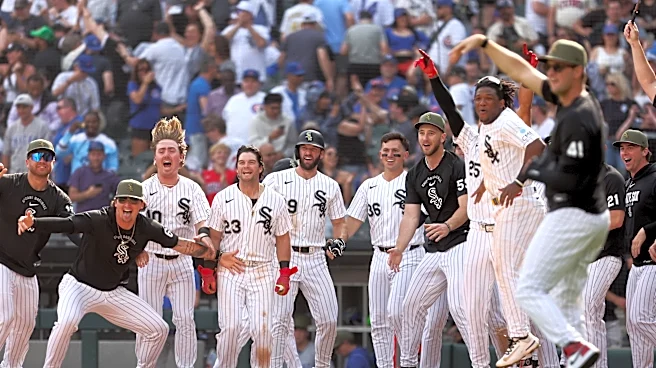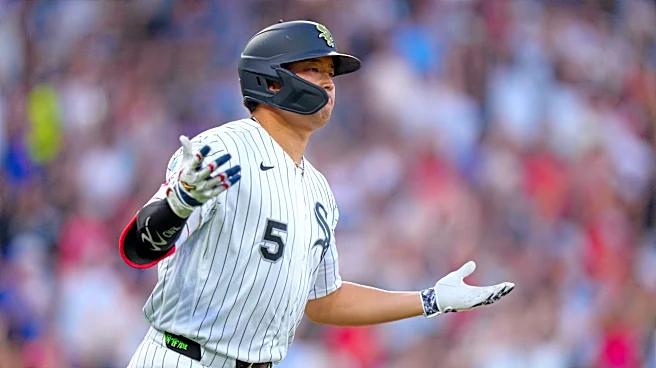





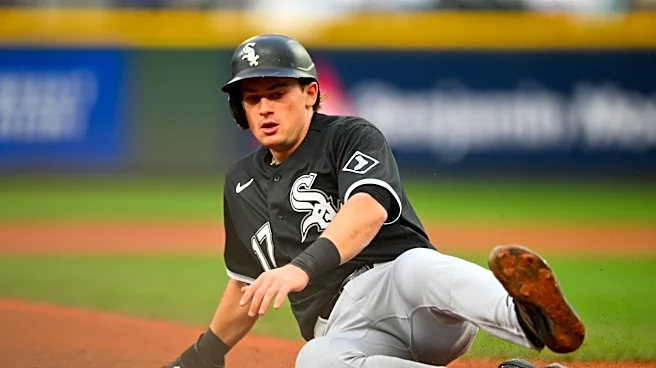
The 2024 Chicago White Sox lost the second most games (121) in baseball history. Fast forward 19 months to mid-May 2026, the team on the south side of Chicago is over .500 and in a wildcard position in the America League.
Regardless of whether they end up keeping up this pace for the full season or not, this is an incredible turnaround from one of the worst ever teams.
Are there any lessons the Rockies, coming off their own historically bad season, can take from how this White Sox roster was built?
Finding undervalued markets
This offseason, the market for players coming to MLB from NPB and KBO was more tepid than it had been in recent years. The White Sox, having just seen success in that market when signing Erick Fedde prior to 2024, were ready and willing to pounce on what they perceived as undervalued players.
In early December, they made a modest two year $12 million commitment to left handed starting pitcher Anthony Kay but he was not the only import from NPB that the White Sox brought in this offseason.
After hitting 246 home runs in NPB before he turned 26 years old, Munetaka Murakami was one of the most polarizing free agents this year. The power in his bat was hardly questionable, however, concerns about strikeouts and his ability to hit high velocity was enough to make most teams pass on him. While MLB Trade Rumors predicted an eight year deal worth $180 million when the offseason began, the market for a long-term deal never materialized.
That’s where the White Sox swooped in and offered a short two-year $34 million deal that would allow Murakami a chance to prove his doubters wrong and retest free agency before his age 28 season. For that amount of money the White Sox saw little risk. The reward, however, appears to be immense.
Murakami has already hit 17 home runs and sports a .240/.382/.557 line that would make him a middle of the order hitter in any MLB lineup. It’s still early, we’ll need to see if opposing hitters can adjust to him, but so far the signing looks incredible. The White Sox have two years of a young star and then will either look to extend him or trade him for a haul as a rental.
For the Rockies, the lesson is not simply to throw money at the next risky-profile potential star out of NPB (though they shouldn’t rule that out), it’s to be willing to zig when other teams are zagging. This is not a new concept but it is one where the applications are constantly changing and it would behoove the Rockies to try and be the first to find the next one.
Patience with growing pains
Some of the contributors to this early season surge were also there in Chicago contributing to the past few years of losing. Now, however, the teams patience with these formerly struggling players appears to be paying off.
On the mound, Davis Martin spent his first 250 big league innings with an ERA and FIP both in the mid-fours while walking over three per nine innings. He was the definition of a bottom of the rotation starter who did not have the prospect pedigree to give much hope he’d ever be more than that.
Then he added a “harder gyro-action slider” to his repertoire and has performed like a top of the rotation arm to start this season. In nine starts, Martin has a 1.61 ERA backed up by a 2.40 FIP and a WHIP of 0.98.
Some of that run prevention is likely to regress as his sequencing luck has been abnormally good (he’s stranded 89.2% of runners), but his component skills do appear to have meaningfully improved. He’s striking out 9.48 per nine and walking only 1.61, both of which are significantly better than his career averages.
On the hitting side, there’s the curious case of Miguel Vargas. The headlining piece in the return from the much maligned Erik Fedde deal at the deadline in 2024, Vargas looked entirely lost in his first calendar year in Chicago to the tune of a 17 wRC+ in his 42 games following the trade.
That poor play largely continued until the second half of last season where he turned in a 123 wRC+ after the All-Star break. That breakout has continued into 2026 where his already solid plate discipline has suddenly been backed up by an increase in bat speed. The end result of this is a .132 year-over-year increase in OPS that is backed up by an impressively red Baseball Savant page.

The White Sox had plenty of time, and reason, to cut bait on these players but they stuck with them and are now seeing that patience pay off. For the Rockies, this could mean that bearing with the poor performance of young players like Ezequiel Tovar and Brenton Doyle may be in the teams long term interest.
Focused on home-grown players
Other than those mentioned above, the majority of players fueling this currently competitive White Sox team were either drafted by them or traded for while they were still prospects.
On the pitching side that includes Sean Burke, Noah Schultz, and Grant Taylor. Each of these arms was entirely home grown and now are being leaned on by White Sox manager Will Venable. While Burke and Schultz are holding their own in the rotation, it’s Taylor who has been a revelation in the bullpen.
So far in 2026 the White Sox rank 23rd in ERA from relief pitchers at 4.57. This comes after the front office had tried to bolster the bullpen this offseason with free agent pickup Seranthony Domínguez but have instead seen him walk 13.3% of the batters he’s faced as the teams closer.

Grant Taylor, the White Sox second round pick in 2023, has been working out of the bullpen this year in order to build his innings up before a planned conversion to the rotation next year. That conversion, however, may not happen given how integral he has become to the bullpen unit with his 1.78 ERA and 13.5 k/9 in 25.1 innings of work. Taylor picked up his first save of the season on Tuesday night and looks poised to be the first name up in high leverage situations moving forward.
On the hitting side, the other key cogs on the 2026 roster are Sam Antonacci, Chase Meidroth, and most well known Colson Montgomery. While Meidroth came to the White Sox as a part of the prospect package acquired for Garret Crochet last offseason, both Antonacci and Montgomery were White Sox draftees that made stops at every minor league affiliate before cracking the big league roster.
Montgomery, the White Sox first round pick in 2021, has blossomed into arguably their best player. The 24 year old has a very three true outcomes style slash line of .228/.327/.503 with 13 home runs while also recording seven outs above average at shortstop. The White Sox developmental staff has been able to help him access his power at the major league level despite consistently running a strikeout rate hovering around 30%, and to improve his defense enough that he will stick at short for the foreseeable future.

For the Rockies there isn’t much that is directly transferrable other than the obvious: It’s good to draft and develop well.
It does seem noteworthy, however, just how much of this White Sox roster is already homegrown just two seasons after they hit rock bottom in 2024. They do not appear to have clogged up their roster with tons of veteran one year trade-bait style contracts. Instead, they are letting their former prospects play at the big league level and it seems like it may be paying off sooner than expected. This is something the Rockies could look to mimic possibly as soon as the trade deadline passes later this season.
On the Farm
Triple-A: Albuquerque Isotopes 6, Las Vegas Aviators 5
This was essentially two games: The first eight innings and then the final one.
In the first eight, the Isotopes failed to string any hits together instead scattering a handful of isolated singles and doubles in different frames. Carson Palmquist (No. 19 PuRP) and Blake Adams combined to pitch seven innings between them and allowed four runs on eight hits. It looked like the Isotopes would go down quietly… then came the top of the ninth.
Singles from Adael Amador and Charlie Condon (No. 1 PuRP), along with walks from Brian Serven and Vimael Machín, were all cashed in by a Cole Carrigg (No. 4 PuRP) double and a Nic Kent home run. Suddenly the Isotopes were leading and it was the bottom of the ninth. Joey Meneses walked with two outs and Cade Marlowe slapped a line drive into right center field that was intercepted by a diving Nic Kent to end the game.
Double-A: Hartford Yard Goats 10, New Hampshire Fisher Cats 8
Aside from one blemish, in the form of Sam Weatherly allowing seven runs while recording only a single out, the Yard Goats trounced the Fisher Cats. Eiberson Castellano got the start and completed seven innings on only 84 pitches while collecting eight strikeouts.
At the plate Zach Kokoska had three hits including a double, and both Bryant Betancourt and GJ Hill launched home runs, but the real star was Benny Montgomery. After a difficult start to the season, Montgomery would be hard-pressed to have a better game than this one in which he scored two runs, walked, stole a base, and hit two home runs.
High-A: Spokane Indians 5, Vancouver Canadians 7
A relatively listless game from Spokane until the seventh inning. Jordy Vargas (No. 21 PuRP) got the start and managed four and two thirds innings wherein the only runs scored were as a result of a homer from Alexis Hernandez. Vargas, however, wasn’t efficient enough with his pitch count to go any deeper and the lineup had not provided him with any run support.
Once the Candians’ starting pitcher Nolan Perry was no longer on the mound the Indians attempted a late comeback. They scored three runs in the seventh before Jacob Humphrey hit an absolute rocket into right center field in the eighth. It was, however, too little too late for Spokane.
Low-A: Fresno Grizzlies 10, Rancho Cucamonga Quakes 5
While no one stood out on the mound (the closest being Dylan Crooks with a scoreless ninth to close out the game), the lineup brought enough firepower for the Grizzlies to earn a convincing win.
As a whole, Grizzlies batters collected fourteen hits, seven of which were for extra bases. Cameron Nelson earned three walks and a stole a base from the leadoff spot, Tanner Thach continued his torrid start to the season with three hits including a home run, and Roldy Brito (No. 11 PuRP) matched him with three hits and a homer of his own. As a group they struck out a whopping thirteen times but that certainly did not stop the Grizzlies from scoring runs.
2026 Colorado Rockies Top 30 Prospects May Update | Baseball America ($)
Matt Eddy details what has changed in Baseball America’s assessment of the Rockies farm system since their pre-season rankings. There are a handful of prospects that have broken into their top 30, highlighted by Andy Perez who they now rank 12th in the system. The biggest riser is 18 year-old outfielder Cristian Arguelles, who the Rockies signed out of Venezuela in 2024. Arguelles has rocketed up from the 20th spot all the way to 8th in Baseball America’s estimation.
Johnston making his mark attacking the breaking ball | MLB.com
Thomas Harding talks to Troy Johnston about what has led to his success to begin the season. Johnston goes into how his time at Gonzaga led to him getting more looks at breaking balls than folks in other environments would have at that age. According to Johnston, his ability to sit breaking ball first has started to pay dividends in a league where pitchers become less fastball reliant each year.
20th & Blake: Rockies should consider TRADING stalwarts| Mile High Sports
Drew Creasman and Mark Knudson sit down for their weekly podcast where they recap all the recent news from the Rockies. This week they focus on both a breakdown of potential trade candidates that they think the front office should consider shopping ahead of the august deadline (including Kyle Freeland) as well as a check-in on how the Rockies top prospects are performing down on the farm.
Join the conversation!
Sign up for a user account and get:
- Fewer ads
- Create community posts
- Comment on articles, community posts
- Rec comments, community posts
- New, improved notifications system!
Please keep in mind our Purple Row Community Guidelines when you’re commenting. Thanks!