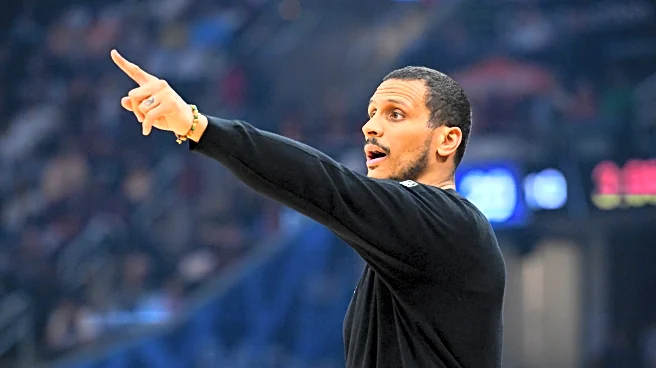


When people imagine a summer trip to France, they picture the Riviera, Parisian terraces, or hikes across the Alps. Joe Mazzulla chose Le Mans instead.
Le Mans is a small city located between Paris and the Atlantic Ocean. It is well known for its rillettes, a traditional French spread made from slow-cooked, shredded meat often served cold on bread. But Joe Mazzulla wasn’t there for the food — at least not primarily.
If coach Mazzulla traveled all the way from Boston to Le Mans, it was for two reasons.
First, the Le Mans 24- hour endurance race. As we know, Mazzulla loves to learn from other sports, and his interest in soccer, for example, has been well documented.
But there was also something — or, to be more accurate, someone — that Joe Mazzulla wanted to meet in Le Mans: Guillaume Vizade, the head coach of Le Mans Basket.
The young French coach has made a name for himself over the last few years by winning the European Championship twice with the French U20 national team. With Le Mans, he won a trophy in his very first season while developing Noah Penda, who was at the time an NBA prospect and now with the Orlando Magic.
Beyond the trophies, what made Vizade stand out in European basketball circles was his high tempo offense. His teams play fast, but not recklessly. The idea is simple: create more possessions than the opponent and make every possession count.
He describes his playstyle as up-tempo, oriented toward dictating the pace and dominating the possession battle. Here is what he told CelticsBlog exclusively when asked how he wants his team to play:
“Our team in Le Mans plays a fast-paced style of basketball built on ball movement, cutting to the rim, and shot-making. That’s our definition of uptempo. We want to take every shot created by our teammates, with an offensive rebounding strategy that can give us second chances or allow us to quickly set our transition defense.
This philosophy is implemented across all three of our teams — U18, U21, and the pros — which allows us to integrate our young players quickly because they grow within the same framework, the same references, and the same intentions.”
One thing that clearly stood out to Vizade was how natural the basketball conversation felt between the two coaches. What started as a simple exchange quickly turned into a deeper discussion about offensive concepts and how modern teams can create advantages before defenses have time to react.

Here is how Vizade described that summit in Le Mans last summer:
“The conversations we had with Joe went both ways, and we were able to feed off each other when it comes to ideas about transition play, motion offense, cutting actions, the short roll, and Spain pick-and-rolls.
Our shared ideas about arriving into offense while playing, amplifying advantages, and creating chaos in opposing defenses connected very quickly during those discussions. I felt both lucky and proud to be able to present some of our methods and actions, and in return I received even more by exchanging ideas with Joe and his disruptive approach.“
I watch his team play a lot, and the way they manipulate spacing, use their interior players, move without the ball, and involve every player in every task is extremely inspiring.
In any case, the determination and the desire to perform regardless of the roster — injuries, transfers — and to turn every problem into a solution, whether managerial, tactical, or strategic, is something I have always tried to implement in the environments where I coach as well.“
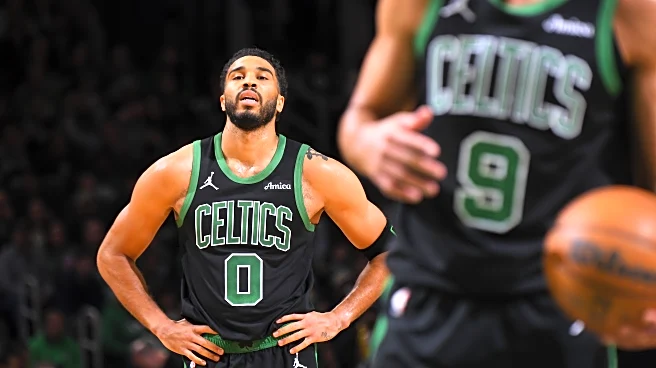
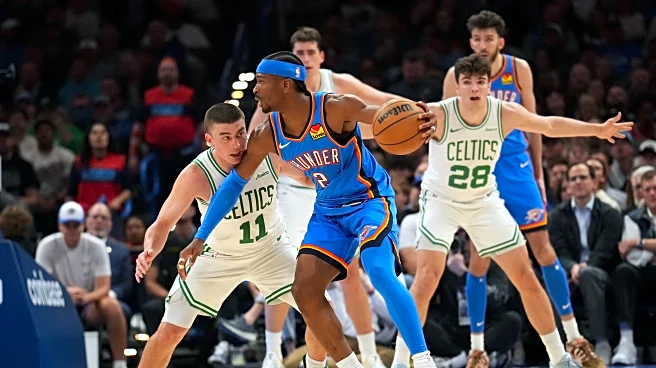
For Celtics observers, that philosophy might sound familiar. Over the past few months, Boston has quietly built its identity around similar principles: limiting turnovers, crashing the offensive glass when needed, and forcing opponents into mistakes. The goal isn’t always to play faster, it’s to own the game’s tempo.
So it made me wonder, how much this meeting could have impacted the team’s strategy this season, especially considering that Joe Mazzulla said he learned a lot offensively during his time with Guillaume Vizade.
For Mazzulla, this type of exchange is not unusual. The Celtics coach has built a reputation around his intellectual curiosity and innovation. Whether studying soccer pressing schemes or turning training camp into a warzone, he constantly searches for ideas outside the traditional basketball world.
The meeting with Vizade fits perfectly into that pattern. Two coaches from different basketball cultures, sharing the same obsession: learning and getting better at what they are doing.
When asked whether he thinks the Celtics play differently from last season — and whether that could be related to their meeting — here is what the French coach had to say:
“What impresses me the most about their season is the commitment of the stars to setting screens, playing without the ball, and crashing the offensive glass. Every player on the team follows that leadership. It’s a non-negotiable if you want to play for them, and that clarity means that every player who steps on the floor wearing a Celtics jersey is fully committed.
That’s something so rare to see that it really deserves credit — both for the team’s culture and for the coaching staff. And even though our conversations touched on these topics, that approach was already deeply embedded in their project. So you can only feel honored and happy to have had the chance to share a few of the ideas we work on in our daily routines.”
And maybe the Le Mans 24 Hours race itself offered another layer of inspiration.
Endurance racing isn’t about a single spectacular moment. It’s about consistency, discipline, and thousands of small decisions that accumulate over time. A driver doesn’t win the race with one perfect lap — they win it by avoiding mistakes and managing the long run. Basketball seasons aren’t that different.
While the overachieving Celtics season probably didn’t start in France, this summer trip might have been one of the foundations of that incredible journey. To build such a solid group, you need to go brick by brick, with patience and discipline. The Celtics needed to reinvent themselves after an eventful summer, and the inspiration might have come from the other side of the Atlantic.