




Evolution is inevitable in just about everything, and sports are no exception. Sometimes you’ll get a Stephen Curry or a Victor Wembanyama, and it’s great. Other times, you’ll get a three-team format in the NBA All-Star Game that nobody understands, cares to understand, or has the tolerance to watch from start to finish while getting force-fed more gambling ads than Kevin Hart has been paid for.
So it’s not always great.
Years ago, the sports media landscape didn’t just make sports fun — it did its
job without abusing the trust of fans, players, or the teams it covered.
If you grew up in the 1990s, you experienced what’s widely considered the golden age of televised sports. You watched the late, great Stuart Scott share the SportsCenter desk with Rich Eisen. In the 2000s, you attributed Chris Berman’s voice and the words “back, back, back” to MLB’s Home Run Derby. Or you remember the iconic “This is SportsCenter” commercials that showcased some of ESPN’s best creativity. Go to YouTube and search “This is SportsCenter,” and you’ll immediately fall into a rabbit hole of classics. Paul Pierce, Kevin Garnett, and Ray Allen asking Scott Van Pelt for nickname help in ESPN’s office. David Ortiz trying on Jorge Posada’s New York Yankees hat, nearly giving Wally the Green Monster a heart attack as he walks by. Or, of course, the one where Michael Phelps gets annoyed that one of his eight Olympic medals is being used as a coffee mug coaster, prompting Jay Harris to shrug: “It’s just a bronze.”
The nostalgia wasn’t retrospective; we knew it was special while we were living in it. Now, those days feel so far gone it’s almost hard to imagine they ever existed based on what we’re consuming today.

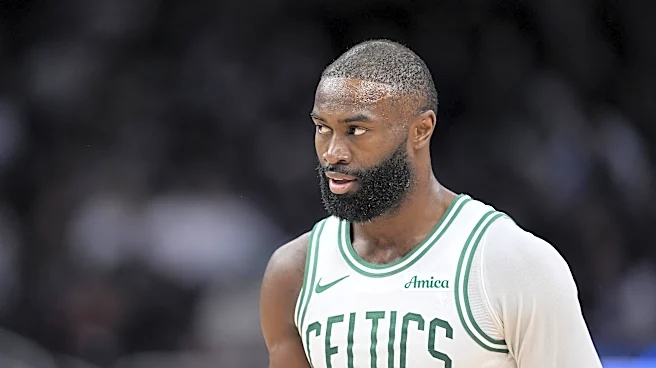
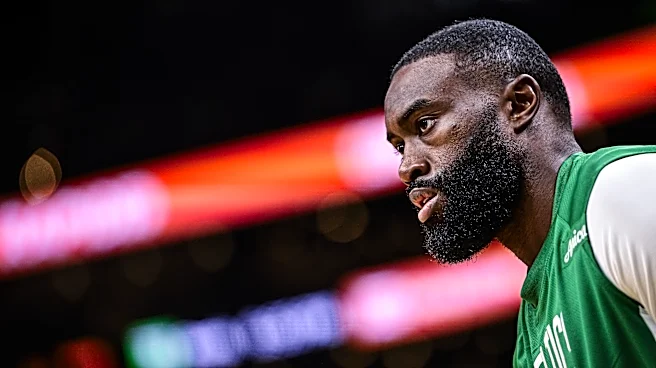
Jaylen Brown’s ongoing criticism of sports media best illustrates the current landscape’s trajectory — and it’s not hard to see why.
Brown and the Boston Celtics suffered a historic collapse to end their season by blowing a 3-1 series lead to the Philadelphia 76ers in the first round of this year’s NBA Playoffs. Brown immediately vented on Twitch less than 24 hours after the team’s Game 7 home loss, unloading on various topics while reflecting on the season as a whole. He pointed the finger at Joel Embiid for flopping and claimed he had inside information that officials were colluding against him, yet labeled the season his “favorite.”
Was it the best way to digest the loss? Probably not. However, that doesn’t justify the way ESPN’s Stephen A. Smith used Brown’s livestream as fodder for repeated segments.
If Smith had simply claimed Brown hadn’t gone about the loss as best as he could, that would’ve been fair game. The problem with Smith, however, is that “fair game” is way too vanilla for him. Smith doesn’t make $100 million by being impartial or keeping himself in check. The suits he wears on First Take are a thin layer of professionalism to help mask the mudslinging circus ESPN airs every morning.
But whether it’s an Armani suit or a $15 tank top while screaming into a microphone with his buddies, it doesn’t matter. It makes zero difference. Being reasonable doesn’t get Smith animated or hyperventilating while his protégé, former Celtic Kendrick Perkins, sits back and learns from the goofiest in the business before getting his turn to perform on stage.
It’s not journalism — it’s theater.
On Monday morning, Smith had his turn to address Brown’s latest livestream during which the Celtics star — on several occasions — shouted, “F*ck Stephen A.”
“Man, f*ck Stephen A. Stephen A, Stephen B, Stephen C,” Brown said during his Sunday night Twitch stream. “My offer still stands. You want me to be quiet and stop streaming. Well, I want you to be quiet and get off these networks because you’re not using your platform to do real journalism. You’re using your platform to use clickbait.”
The reason Brown reacted so strongly wasn’t because Smith called out the Celtics for choking in Round 1. It was because Smith used conclusive thinking to manipulate an audience into believing a handful of assumptions that have no backing.
For example, Smith gave himself a pat on the back for landing a Jayson Tatum appearance on First Take during his rehab — and alluded to the idea that an existing divide between Tatum and Brown explains why Tatum hasn’t made an appearance on Brown’s livestream.
You might assume that someone with Smith’s connections would float that insinuation based on something he’s been told. Only during that same segment Monday morning, Smith threatened Brown directly by claiming he’d do some dirt-digging to find the exact information he suggested was tucked away in his back pocket.
“Jaylen Brown, be careful what you wish for,” Smith threatened on First Take. “You really want me to start reporting on that level? You understand? Locker room. How the organization might think about you. How the city might feel about you. How Jayson Tatum may or may not feel about you. Sneaker deals. Endorsement deals. The list goes on.”
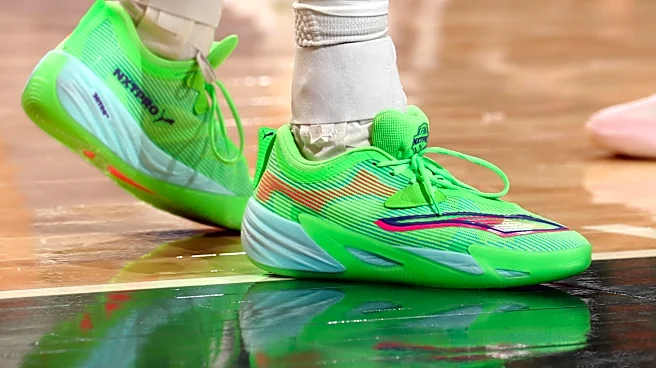
Smith took it a step further, using Tatum as a comparison point to elevate Brown’s shortcomings in the narrative. He mentioned how Tatum has a sneaker deal and a commercial, but leaves out the fact that Brown turned down a $50 million endorsement deal from Nike — opting to instead launch his own brand, 741 Performance — and headlined an NBA playoffs commercial of his own just a few weeks ago.

That’s either deliberate narrative manufacturing or sincere ignorance.
If you watch Smith try to commentate on the NFL, NHL, or MLB (look up his comments about Shohei Ohtani from 2021), you wouldn’t be able to identify which one it is.
Smith argues that because he’s labeled Brown worthy of league MVP consideration and defended him after his second-quarter ejection against the San Antonio Spurs, it absolves him of everything else he says. That’s the issue. Smith will hurl five different conclusions on the loudest airwaves in sports media, then turn around and hand-pick one as the reason for your response. It’s not even logical.
Basically, Smith is suggesting that criticism of all forms is fair game, but if you respond, he’ll throw a Tony Montana fit at your expense — even if it means spreading disinformation he finds on social media. He’s become a loose cannon, enabled by ESPN to garner as much viewership as possible, even if it means getting his information from the satirical social media page Ballsack Sports (yes, that’s happened several times before).
There was plenty of room to criticize Brown in a way that’s fair, objective, and in bounds. But again, that’s journalism, and ESPN would rather direct message journalists for locker room video clips instead of hiring journalists outright.
That’s the magic touch of Walt Disney!
If you caught 98.5 The Sports Hub’s “Felger & Mazz” on Monday, you’d notice a continuation of Smith’s oversimplified framing. Michael Felger, Tony Massarotti, and Jim Murray added their two cents on the Brown-Smith feud, speaking without the context needed for a fully informed discussion.
“I just don’t know why he’s so over-the-top antagonistic,” Felger said.
If that doesn’t describe Smith’s last two decades at ESPN, nothing really does. Let’s be honest.
“He’s just putting together a world salad,” Murray said. “What he’s really saying and what he means is ‘I don’t like what you’re saying about me.’ That’s it.”
The irony is hard to ignore: defenders of Smith often overlook how quickly he lashes out when an athlete refuses to validate him. The same man who, because he frequently appears on Fox News, actually believes he’s qualified to run for president if he ever chooses to do so.
Now, was it hypocritical of Brown to say he doesn’t care for the opinions of those who haven’t played, while hosting Celtics fans on his livestream to hear their perspectives? Sure. But that standard needs to be applied consistently on both sides of the aisle.
There’s no mention of Smith, a 58-year-old man cosplaying as an unhinged cartel kingpin, because Brown called him out. There’s no mention of Smith’s deliberate lies about Brown’s inability to generate revenue through commercials or sneaker deals. There’s no mention of Smith gloating about Tatum’s First Take appearance being an unrelated, irrelevant talking point — and it comes off as intentional.
Felger, Massarotti, and Murray aren’t ignorant — they’re being disingenuous by choice. Smith has built his name by often substituting traditional journalistic standards with sensationalism. That’s no secret. He spent weeks amplifying the LaVar Ball storyline to boost viewership, used criticism of Bronny James as a springboard to question LeBron James’ role as a father, and also spread misinformation about Kobe Bryant’s memorial service, telling ESPN’s audience that LeBron didn’t attend before being debunked the same day.
He didn’t misspeak; he overspoke. Because in today’s my-take-your-take culture, it’s about being the loudest and most confident, even if what you’re saying is wrong and flat out stupid.
For years, Smith used Kwame Brown as a punching bag. Not because Brown’s name warranted the coverage, but because he was an easy target as a former No. 1 pick who didn’t pan out.
He’s a one-trick pony, and it’s been that way for years. And just because most don’t dare to call a spade a spade, doesn’t make it anything different.
Brown’s point stands, and it’s a sentiment that he didn’t birth overnight.
Smith said the point was that it wasn’t “wise” for Brown to label the season his “favorite” immediately after being eliminated. That’s a fair stance to take considering the optics. The issue is that Smith didn’t stop there. He continued to escalate the critique in a way that crossed from commentary into disrespect by leaning into black-and-white reasoning and uniformed commentary.
You can speculate about Boston’s locker room and its feelings toward Brown, but once you state those opinions publicly without anything to back them up, you can’t be surprised by what follows.
Blaming Brown for giving Smith clicks is essentially an admission that a grown man and father of two cannot control himself. It’s unrealistic to tell Brown — or any athlete — how to handle Smith’s antics. The truth is, it’s easier to criticize the response than to call out the source that provoked it.
Perhaps it’s our fault for tuning in and keeping the lights on.