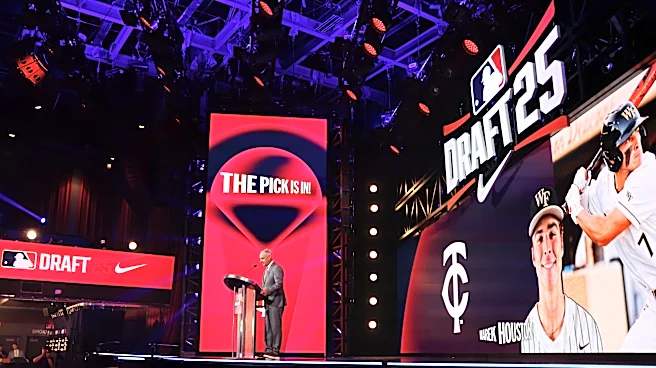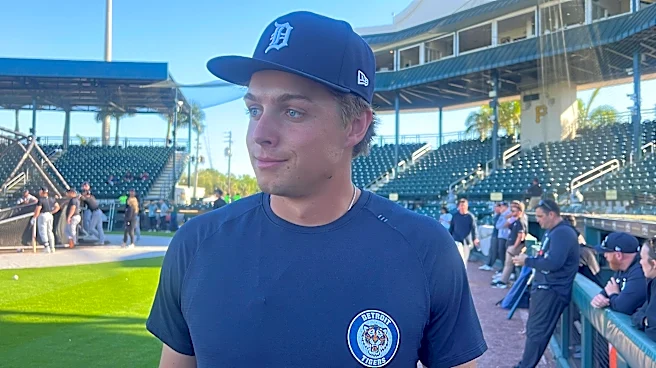







As in 2024, the Detroit Tigers were once again faced with a low pick as they selected 24th overall in the 2025 MLB amateur draft. Unlike 2024, they had the competitive balance A round selection, which helped both in terms of picks but also in terms of bonus pool to a degree. They did as expected, spreading their $10,990,000 bonus pool around with a mix of early underslot deals and inexpensive college picks to help them go overslot later on to lock up a deeper pool of talent.
As always though, the
draft is largely about your top picks and who gets the biggest signing bonuses, with those two things not always fully aligned. The rest are more of a bulk buy where you’re hoping to draft a lot of players you already have a lead on developing, and eventually produce a good player or two along with pitching and positional depth in the farm system. We’ll see how the top picks turn out in time, but the Tigers did a really nice adjusting their strategy a bit and finding a nice mix of smaller program college picks, JUCO players, along with a couple of big ticket prep arms and some talented but raw high schoolers as value picks late in the draft.
Round 1: No. 24 – SS Jordan Yost, (Sickles HS, FL) $3.25M
I remain a little baffled by the response to the Tigers first round selection, prep shortstop Jordan Yost. In Yost the Tigers got an advanced defensive shortstop in a left-handed teenaged hitter with a good eye and great feel for making contact. Sure, he’s still on the skinny side and doesn’t pack much power yet, but unlike some other older, slender infielders in the Tigers’ system, Yost has enough room on his frame that he can add signficant muscle in the coming years. He already packed on 13 pounds over his first offseason, and is showing 40 grade raw power as a teenager. It’s a good bet that in three years time he’ll approach average raw power. In game that’s probably more like 45 for him, but a plus shortstop who hits 10-15 homers, steals bases, and rarely strikes out is not a big ask here. In fact I’d say it’s pretty likely.
Yost holds a 12.2 strikeout rate in his first look at Single-A Lakeland. His walk rate is 14.5 percent. You don’t see that from a teenaged prospect very often, and it will hold up well against more advanced pitching as he develops more batspeed. His hit tool isn’t going to match McGonigle’s elite level as a prospect but you can expect a plus hitter who is on base a lot, chips in some power and stolen bases, and locks down the shortstop position, potentially bumping Bryce Rainer to third and McGonigle to second base. He needs a few years, but Yost has a good deal of upside, and the floor set by his current tools is already pretty solid.
Competitive Balance Round A: No. 34 – C Michael Oliveto, Hauppauge (NY) $2.45M
This Long Island prep catcher burst on the scene prior to the draft with a huge showing in the World Wood Bat Association Championship. That helped him boost his draft stock significantly despite being a northeast kid who didn’t face the best competition often in high school. The bat quickly became more well regarded, but there were, and are, still concerns about his arm strength as it pertains to the catcher position. On the other hand, Oliveto should develop well in all other respects, and one thing the Tigers do really well is evaluate and develop catchers, so we’ll just have to trust them on the arm strength.
Oliveto has a pretty sweet, left-handed swing and controls the strike zone very well for his age. He should develop above average power, and has the tools to get to it regularly. What he lacks, is top shelf competitive experience. Between that factor and the demands of getting a full on course in professional catching this season in the Complex League, and soon a move to Single-A Lakeland, a slow start with the bat is likely. Once he has his feet under him defensively and is comfortable handling a pro pitching staff, more focus can turn to developing his hit tool.
Oliveto was headed to Yale before the Tigers signed him, and his smarts and work ethic draw extremely high marks, so he’s teachable and motivated, and should get the most out of his natural abilities. I think he’ll hit, but we’ll have to see how he develops behind the plate. That will take plenty of time.
Round 2: No. 62 – RHP Malachi Witherspoon (University of Oklahoma) $1.451M
Witherspoon is kind of an all or nothing pick. The stuff is undeniably excellent already. He sits in the mid-to-high 90’s, and has touched 100 but his sinker is more of a bat breaker than a bat misser. He has the breaking stuff and changeup to be a frontline starter, but his command is decidedly a work in progress and his long-armed, low three-quarters delivery suggests quite a bit of relief risk. If he puts it all together, the Tigers are going to look great here. The sinker is a dominant pitch when he’s locating it, and his cutter, slider, and changeup all flash plus, but he has a decided tendency to suddenly lose the plot in the middle of an outing for a few hitters before pulling himself together. There’s certainly a chance he never executes and self-corrects enough to even make it as the high leverage reliever he already has the stuff to become.
Round 3: No. 98 – LHP Ben Jacobs (Arizona State University) $722,500
Jacobs has been the quickest riser out of this class, showing a good, riding fourseamer at 93-95 mph with an above average slider and curveball, and a plus changeup that has made him tough on right-handed hitters. He’s had a few bouts of control issues as he and the Tigers develop his delivery and stuff, but he’s handled a quick move to High-A West Michigan pretty well. The 22-year-old has plenty in the stuff department. The big step is commanding the whole package more consistently.
Round 4: No. 129 – LHP Caleb Leys (University of Maine) $574,900
The Tigers kept adding quality college pitchers with this left-hander with big extension to the plate. Leys has a solid slider and a good changeup developing, but he’s still sitting 92 mph with pretty average movement on his fourseamer. He’ll use his sinker as well and it’s been effective. Leys is in Single-A Lakeland, but is still walking a few too many batters to move out from under the Tigers’ close eye in Lakeland. There’s enough projection here to think he’ll eventually throw harder. If he gets to more velo and keeps refining his fastball and slider command he could make it as a starter, but he feels more like a future lefty swingman type.
Round 5: No. 159 – RHP Ryan Hall (North Gwinnett HS, GA) $997,500
This is still the Tigers under Scott Harris, and so the draft wouldn’t have been complete without an expensive speculative big-bonus selection of a prep pitcher. Right-hander Ryan Hall was a quarterback and pitching standout both in high school. At six-foot-one he doesn’t have the big, rangy build of the classic power pitcher, but Hall can spin the baseball and has standout athleticism. He’s been up to 95 mph and the Tigers clearly believe there’s a ton of projection here. And, unlike their other prep picks, Hall didn’t miss much time before his pro debut. He’s currently working in the Complex League and is due to move over to the Single-A level in another week or two as the Complex League wraps up.
Round 6: No. 189: – LHP Grayson Grinsell (Oregon) $297,500
This lefty has an interesting fastball-changeup combination and is working to develop his slider and changeup, as well as his command, in his first pro season. Grinsell gets over 19 inches of induced vertical break on his fourseamer, but it’s still 90-92 mph for the most part. His changeup is good, and his arm speed and extension help it play up. He needs to keep building velo and sharpening his slider. His control has been a little shaky at the Single-A level, but he racking up plenty of strikeouts so far.
Round 7: No. 219 – OF/RHP Cale Wetwiska (Northern Oklahoma) $645,700
Wetwiska got a pretty nice bonus as well as a JUCO selection. The big-armed right-hander has good ride, extension, and cutting action on his 95.5 mph fourseamer and has touched 98 mph with the Single-A Flying Tigers this spring. He’ll mix in plenty of sinkers as well, but the real trick is turning his natural supinator traits into a good cutter-slider combination. He can spin the baseball, but while he’ll flash good editions of both breaking balls they’re still pretty inconsistent. Wetwiska is also a good candidate to learn a splitter, and he’ll need it if he’s going to remain a starting pitcher. The right-hander went down with an injury in early April, but he’s rehabbed and back starting in Single-A now.
Round 8: No. 249 – OF Nick Dumesnil (California Baptist) $214,300
The Tigers went back to their well of athletic, inexpensive college players to select Dumesnil, and the 22-year-old looks like a fine selection. He’s walking a lot in Lakeland and keeping the strikeouts under control. He’s also shown some power and speed on the bases to go with the ability to play all three outfield positions.
Round 9: No. 279 – LHP Trevor Heishman (St. John Bosco HS, CA) $347,500
This left-handed high schooler has a lot of interesting projection, but he’s yet to pitch this season. Now 19 years old, there isn’t much to add that we didn’t know on draft day. He’s six-foot-four and weighs in at 230 pounds, so he’s already quite a specimen. Heishman was low 90’s in high school but really spins the fastball and breaking stuff well, getting plenty of carry on the fastball. There is enormous upside here but it’s going to take plenty of time to get there.
Round 10: No. 309 – C Edian Espinal (Central Florida) $185,300
Espinal has been a fascinating player to watch in Lakeland this spring. He was a JUCO pick who mainly played second base until converting to catcher last year. He’s only five-foot-seven and fairly thickly built, yet he still runs reasonable well. The defense will take plenty of time, but he has the arm strength and the athleticism to succeed. What has really turned heads, however, is his bat. The switch-hitter has really good bat to ball skills and is posting outstanding walk and strikeout rates that are nearly identical. He’s flashed solid raw power as well with six home runs so far and a max exit velocity of 108.1 mph. His average exit velocity is 90.7 mph, pretty exceptional for a JUCO pick dropped into the pro full season environment. Espinal has lived on base with the Flying Tigers, posting a .418 on-base percentage. Right now he’s a bat first catcher but the defense is coming along. Espinal can hit, and if he can develop into a quality major league catcher this is going to be a huge winner of a pick.
Round 11: No. 339 – RHP River Hamilton (Sam Barlow HS, OR) $497,500
Hamilton has the raw stuff and frame to be pretty excited about him, but this one will require plenty of patience as well. He was very well regarded on the prep circuit and might have been a late first round pick had he not torn his UCL and required Tommy John last summer. The Tigers took him anyway, betting that they could sign him and that he’ll rehab the injury, come back in great shape, and prove a big winner of a pick that didn’t really require a huge, risky bonus.
Round 12: No. 369 – RHP Cash Kuiper (Murray State) $150,000
This 21-year-old was another JUCO pick with big-time extension to the plate and some projection left in his six-foot-four frame. He has a pretty good changeup, but his slider and curveball need work. So far he’s been a little wild in Lakeland, but he came to the club without a ton of experience.
Round 13: No. 399 – SS Jack Goodman (Northeastern) $150,000
Goodman has some power and plate discipline already, but he does swing a lot, and whiff a lot. He’s probably a second baseman, and has spent most of his time there in Lakeland. He has touched 109 mph off the bat, so there’s power potential in a right-handed hitting middle infielder, but it will take a major breakout to get him much prospect consideration. Still, he’s another athletic young player with a lot of tools, and it’s a question of how far he can refine his eye and hit tool.
Round 14: No. 429: – 1B Beau Ankeney (Loyola Marymount) $150,000
Ankeney is built like a superhero and shows off plus raw power already. He’s been crushing it in Lakeland with 14 home runs in a half season of work in his pro debut, and can get to that pop to all fields. He’s also a free swinger who chases and punches out a lot. It’s probably not going to work out, but Ankeney feels like a guy the Tigers would’ve drafted in the 5-10 round range a decade ago and spent real money on. He’s a fun lottery ticket.
Round 15: No. 459 – RHP Charlie Christensen (Central Arkansas) $150,000
Christensen has already torn through Single-A and recently moved to West Michigan. He has a fairly nasty slider-changeup combination from a snappy, low three-quarters arm slot. The whiffs piled up for him when he was commanding the secondary pitches, but his 92 mph sinker is still quite hittable when he’s behind in the count and needs a strike. Still a 36.7 percent strikeout rate in your Single-A pro debut out of a smaller college program is pretty darn good. The six-foot-four right-hander has some velocity projection remaining and boasts nearly seven feet of extension to the plate. Outstanding pick at the price.
Round 16: No. 489 – RHP Joe Ruzicka (Belmont) $150,000
Ruzicka was a standout college pitcher in the small Missouri Valley conference. The six-foot-three right-hander has the Tigers requisite good extension, and he also brings good fastball shape and a nice curveball to the table, but doesn’t throw very hard yet, averaging 92.2 mph. He does spin the ball well, getting good ride on the heater with the ability to develop his breaking stuff. Presumably the Tigers think the velo can improve in time.
Round 17: No. 519 – RHP Joey Wimpelberg (Central Florida) $197,500
Wimpelberg is another JUCO selection. He just threw his first inning of pro ball the other day, so there isn’t much new to say about him yet. He was a two-way player in high school and broke out with one of the top Florida junior college programs. His high three-quarters slot produces a good fastball in the low to mid-90’s and he can really spin his breaking stuff. He’s quite raw, but there’s a lot to like in the base arm talent alone.
Round 18: No. 549 – LHP Ethan Rogers (Lone Jack HS, MO)
Did not sign, attending Wichita State now.
Round 19: No. 579 – SS Meridian Leffew (Gastion Christian, NC) $164,500
Leffew signed out of high school after reclassifying from the 2026 to the 2025 draft, wanting to go right to pro ball. The 19-year-old shortstop hasn’t played yet, and is presumably going through a ton of developmental work behind the scenes. He’s fairly large for a shortstop at six-foot-two and a listed 187 pounds already. He’s a pretty good raw athlete with natural loft in his right-handed swing. Any prep shortstop with good athleticism available at this price is a good pick.
Round 20: No. 609 – OF Kameron Douglas (Alabama State) $150,000
The 22-year-old Douglas is an interesting two-way player who has been up to 96 mph and has high spin characteristics on his fastball and breaking pitches. He’s got speed and power at the plate and can play all over the outfield, though he profiles best as a right fielder. This is another fairly raw player with a lot of athleticism. We haven’t seen him yet, and I suspect the Tigers mainly view him as a pitcher and are taking their time improving his mechanics right now behind the scenes.
The Tigers showed some positive adjustments in this draft
Personally, I really like the Yost and Oliveto picks quite a bit where they landed them. Neither has the upside of Bryce Rainer, but they’re both strong selections with plenty of upside and high floors. The pivot made in this draft was the ongoing move toward college and JUCO pitchers, while still finding a few arms like Hall and Hamilton in the prep ranks.
Two key names here are certainly Witherspoon and Jacobs. They both have the stuff to make it as quality mid-rotation starters and possibly more, and the Tigers really need some wins on the pitching side. So far Jacobs looks good, while Witherspoon already has great stuff but has to overcome the tendency to lose his rhythm and release spot that he showed in college. He would’ve been a first rounder based on his stuff if this hadn’t been an ongoing concern throughout his college career.
The Tigers also continued to get a lot of raw talent for minimum, or close to it, bonuses, including locking up some inexpensive prep and JUCO talent to work with.
It’s fair to be underwhelmed with the haul here initially, but that’s generally how it goes picking near the bottom of the draft order. I actually really like the Yost-Oliveto combination, and the Tigers got a whole lot of value throughout the rest of the draft. They scout farther and wider than some clubs, and it continues to show up as they add talented players from smaller college programs and the JUCO ranks, while opportunistically adding prep athletes who are highly motivated to start their pro careers despite meager signing bonuses.
We’re only a few months into seeing this class in action, so it’s going to be another year or two until there’s a really good read on how the whole class is coming together. Still, hopefully it gives you some sense of how their strategy has evolved as they slipped down in the draft order, with smaller bonus pools to work with.