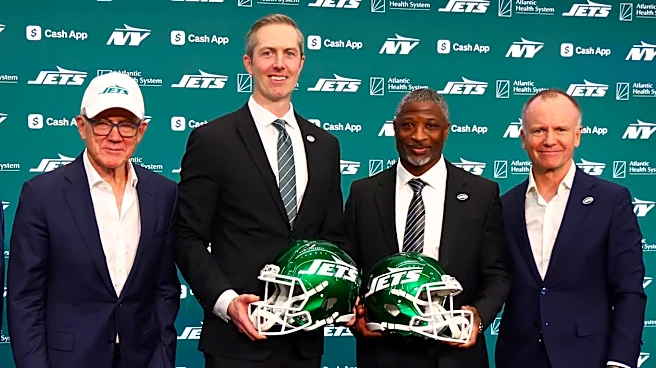


Timing is funny. I have been working on this article for a while, and today Zack Rosenblatt of The Athletic dropped a long feature on Jets ownerWoody Johnson. The article portrays Johnson as an owner who is changing for the better. The sources for this belief that Woody Johnson is becoming a better owner? Woody Johnson and people close to Woody Johnson.
Call me cynical. Call me jaded. Call me whatever you want. I feel like we’ve heard this all before. Maybe the owner is turning over a new leaf. The
proof will be in the results.
Let’s talk about the challenges the Jets face from this owner and what head coach Aaron Glenn needs to do to turn this team around. I would argue that it is the toughest job in professional sports.
At the start of training camp this year, I saw social media posts saying some version of the following over and over.
This post and many like it expressed nostalgia for Jets training camp in 2023. The Jets were emerging from an offseason full of hype and heading into a training camp…well…full of hype. The team was featured on HBO’s Hard Knocks. They were one of the top storylines in the national media on a daily basis. They were a trendy Super Bowl pick in the national media.
The galvanizing force behind all of this was the trade for future Hall of Fame quarterback Aaron Rodgers.
During training camp in 2023, no team in professional football had more buzz than the New York Jets.
Unfortunately, what followed were two catastrophic years for the Jets. Rodgers suffered a season-ending injury four plays into his first Jets season, and the team stumbled to a 7-9 record without him. In year two the Jets managed to win fewer games with Rodgers than they won the year before without him. The team’s final record in 2024 was 5-12.
Looking back it comes off as kind of ludicrous that the Jets fanbase looks back at a training camp as the glory days. Fans of franchises like the Eagles and Chiefs look back on Super Bowl wins as the pinnacle of their fandom. Our recent peak is a period of offseason hype. This offseason hype preceded perhaps the most disappointing stretch of play in franchise history after the games actually started.
In other ways, however, few things sum up the experience of the Woody Johnson Jets better than the team’s peak being a period of massive offseason hype.
At the end of the 2024 season, Johnson responded defensively when asked to summarize what had happened in an interview with the New York Post’s Brian Costello.
“At the beginning of the season, I said this is from a talent standpoint this is one of the best teams I’ve ever had,” Johnson said. “Obviously, the networks and everybody agreed with that.”
On the surface that seems like an innocuous comment, but I think it actually is a window into what Woody Johnson prioritizes building his team. For the great franchises in the NFL, the focus is on field stability. For Woody Johnson, the Holy Grail is positive media buzz. That has directed all aspects of the Jets franchise in recent years.
Indeed, many members of the national media did predict big things from the Jets in the Rodgers era. ESPN’s Mike Clay declared that the team had the NFL’s best roster in 2024 and predicted they would win the Super Bowl. Pro Football Focus also suggested the Jets had a top five roster. Peter Schrager, then of NFL Network, predicted the Jets would finish the regular season with the top seed in the conference. This is a small sampling of the preseason buzz around the Jets in the Rodgers era. All of this must have been the sweetest music to Johnson’s ears imaginable.
To be clear, I don’t think Woody Johnson is indifferent to whether his team wins or loses. I believe he genuinely wants to win. Where he runs into trouble is that he believes the things that get a team media hype are the same sort of things that lead to victory on the field. It just isn’t the case.
Football is singular in this way. Follow any other sport, and the formula to build a winning team is simple. Get a couple of high impact players, and you’re a contender. Landing a big name star generally can transform your franchise.
The NFL doesn’t work that way. There are eleven starters on each side of the ball. Then you have numerous role players who play small yet significant roles on subpackages and special teams. Simply put, a big name star in football moves the needle less than a big name star in any other sport. Additionally, the NFL has the franchise tag lingering for any big name who might want to test the market in free agency. The tag provides a player with a lucrative one year contract, but it limits long term earnings. With the nature of football meaning that a career altering injury is potentially lurking around every turn, true star players are incentivized to stay with their own team. Generally speaking, when a true superstar changes teams it is at the end of his career at a point he is declining. Some of the players who hit free agency are big names, but their name is bigger than their actual impact.
Don’t get me wrong. You absolutely need stars to win the NFL, particularly at quarterback. The best teams have the best players. It’s just you need more good players to win in professional football than in any other sport, and one great player only means so much.
Our current sports media landscape isn’t set up to appreciate this, however. Across sports, offseasons have become as interesting as the seasons themselves with widespread player movement. Make splashy moves, and you win the offseason. In other leagues, pundits are accurate enough when they claim a splashy offseason has genuinely made a difference. In the NFL, a few big name signings typically aren’t enough to change a team’s fortune. There are too many pieces a winning team needs to have, and the guys available are a lower caliber than in other leagues.
Of course, a great team can make a timely veteran addition in free agency that makes a genuine difference. But it’s important to do the under the radar things in the NFL, more than in any other league. Great teams are also developing midround Draft picks at a high level. A top heavy roster cannot be carried alone by big name players in a sport where gameday responsibilities are so spread out.
That brings us to the fateful decision the Jets made in 2023 to pursue four-time MVP quarterback Aaron Rodgers, a move influenced in no small way by the team’s owner.
Now I want to be clear. If you were excited when the Jets traded for Rodgers and optimistic before his two seasons with the team, I am not criticizing you. I’m a fan too. Our job is to be fired up when our team makes a trade for a legendary player and to be hopeful for the year ahead. I had skepticism about the deal on many levels we will discuss, but I was hoping for the best. I’ll admit I did not think the Jets would only win five games with Rodgers as their quarterback. What I’m going to explain is how there were clear red flags in the moment that the Jets should have seen. They ignored them I believe because of the owner’s view that headlines triumph over all.
Because of the way the national media works in the NFL, the trade for Aaron Rodgers was treated as a masterstroke by the Jets. They had just gone 7-10 in 2022. Their biggest problem was quarterback. They had what was widely considered a top five defense. Drop in a big name like Aaron Rodgers, and presto changeo. You have a Super Bowl team.
Looking a bit further under the hood, the Jets and the national media might have seen a different story emerge. Yes, the 2022 Jets went 7-10. Yes, their defense was quite good. It was worth noting, however, that five of their seven wins that year came against backup quarterbacks. The Jets took that string of good fortune and decided it meant they were on the cusp of a Super Bowl.
In reality it might have been better to say, “You know what? We’re improving. We used to lose to backup quarterbacks.”
Zach Wilson cratered as Jets starting quarterback in 2022. With better quarterback play, the Jets may well have been a Playoff team. But again that was against a schedule that included five backup quarterbacks. It was unlikely the team would get a string of fortune like that again. Furthermore, Wilson’s putrid play camouflaged major personnel issues on both the offensive line and wide receiver. The quarterback was a problem for the Jets, but they were further away from having a championship offense than one quarterback. And because of aggressive spending the previous two offseasons, they were short on resources to improve the other parts of their offense.
Part of the reason the Jets seemed so close to glory was a four game early season winning streak when they ran into three of the five wins against backup quarterbacks. This streak kept the Jets above .500 into December. It made falling to 7-10 at the end of the season so painful. It also fooled the team and the national media into thinking it was an Aaron Rodgers trade away from a Super Bowl run.
Now you might be thinking, “That’s all easy to say now. What were you saying as this was actually playing out?”
Well, here’s what I wrote the day the Jets completed the trade for Rodgers.
I have followed the Jets in-depth for a very long time. Much has changed through the years, but the Johnson brothers have been in charge the entire time.
With any ownership group, you start to notice certain patterns that play themselves out over and over.
Three come to mind in the time Woody and Chris Johnson have been in charge of the Jets.
- The Jets frequently chase splashy moves to land big names, even when the cost makes it ill-advised.
- The Jets frequently believe there is a magical quick fix that can be substituted for sound, long-term team building.
- The Jets frequently overestimate how close they are to the promised land by reading too much into limited stretches of winning football.
I wish it wasn’t like this, but I can’t shake the feeling that I am watching all three at once with the trade for Aaron Rodgers.
Contrary to popular national media sentiment, it wasn’t impossible to foresee the potential issues with the trade for Rodgers. This wasn’t about Jets fans being overly jaded after a lot of losing and waiting for the other shoe to drop. There was ample evidence that dealing for Rodgers was a poor bet, if the team and the national media were willing to see it.
Of course, part of the deal was supposed to be that Rodgers was a truly transcendent player. If there were issues with the offensive personnel, an immortal quarterback would be able to work around them.
By the end of his Jets tenure, Rodgers was clearly no longer a transcendent player, but there was an easy explanation. He suffered a torn Achilles tendon four plays into his Jets career. For an aging athlete, this sort of injury changes everything. It is tempting to think that Rodgers would have maintained his MVP form if not for the injury and that he could have lifted the team to greatness.
In this sense, Johnson’s view that the Rodgers trade was a “good experiment” could be validated.
Again, I think we need to look to the facts on the ground. The inconvenient truth at the time the Jets dealt for Rodgers was that there were signs a legitimate decline had already begun. His final season in Green Bay was the worst of his career, and he had a massive statistical decline across the board.
In fact, that final Packers season eerily resembles his post-Achilles year with the Jets. It looks a lot closer to 2024 than his final MVP season of 2021.

It was convenient to explain Rodgers’ 2022 decline as the product of losing Davante Adams and fighting through nagging injuries, and at the time these were plausible explanations. Still, when a 39 year old player shows a deep drop in production, it’s very possible that it is the result of an age-related decline. And the signs were there before the trade was completed if the team was willing to ask the hard questions.
Of course what followed was a 7-10 season. The Jets were able to talk themselves into believing they won seven games with Zach Wilson at quarterback. Just imagine how many more they would win with Rodgers.
Once again, if we were willing to dig deep we might find that the Jets were a fundamentally flawed team camouflaged by a record close to .500.
The 2023 Jets trailed with under five minutes left in the fourth quarter in four of their seven victories. They finished with the second worst point differential in the AFC. They were one of three teams in the conference to be out of Playoff contention with three games to go.
All of the fundamentals suggested this was a really bad football team. Zach Wilson struggled again, yes, but those flaws on the offensive line and wide receiver were at the center of the struggles.
In reality the Jets found themselves at 5-9 with three games left. Their final three included two games against teams that earned top three picks in the NFL Draft. This pair of games produced tight wins against this dreadful opposition that allowed the Jets to finish with a decent 7-10 record.
Again, the answers were there if the team had an owner willing to honestly assess his team. By this point, the Jets’ chances of competing for a Super Bowl in 2024 were scant. The roster wasn’t good enough. The quarterback was declining and coming off a serious injury to boot.
The Jets had two choices. They could double down and sink even more resources into a futile Hail Mary attempt at a Super Bowl or they could pull the plug on the Rodgers experiment. Rodgers’ contract would necessitate him coming back for 2024 (and there really wasn’t a better short-term option anyway), but everything else would be treated as a sunk cost. The Jets could avoid further major investments and begin retooling around an intriguing young core. And with Rodgers coming back, you could at least sell the national media on the narrative that you were still competing.
Again, all of this is easy to say with hindsight so I’ll direct you to what I said as the 2023 season was ending.
The Jets enter the 2024 offseason down a second round pick in the NFL Draft and limited in salary cap space. Filling all of the team’s holes will require another round of clearing cap space by pushing even more dead money into the future and further limiting the team’s flexibility going forward. If the Jets went to the AFC Championship Game this year, you might be able to argue for this approach to give the team the final push to the top. As currently constructed, the Jets are not close to being a Super Bowl team.
Further short term moves at the expense of the long run simply cannot be justified. This means no restructuring deals to clear cap space and no giving up Draft picks to bring in a receiver in his 30s like Davante Adams.
I’m not recalling all of this to make myself look like a visionary. I’m not. I get a lot wrong. The point I’m making here is that while it’s tempting to say the Jets did everything right, and the failure of the Rodgers era was impossible to foresee, all of the warning signs were hiding in plain sight. I’m really not a genius for figuring any of this out in advance. If a fool like me could see that this would happen, surely the guy running the team had the resources at his disposal to see it as well.
Of course, the Jets doubled down bringing in big name players. Tyron Smith had trouble staying on the field and was reaching a dangerous age, but the Jets had nowhere else to turn to find a left tackle. Mike Williams was coming off a serious injury. The Jets needed a number two wide receiver. Haason Reddick was demanding a big payday from the Eagles, but he was a big name pass rusher.
All of these moves failed. Smith was past his prime and then injured. Williams’ career seemed to be doomed by his injury. Reddick held out for seven games and without his payday mailed in the games he did play after his return.
That’s how it goes. When big names are available, it’s usually for a reason. When you need to fill a lot of holes quickly to microwave a contending team, you have to take gambles like this. They usually don’t work out. But the national media eats it up in the moment and labels you a contender precisely because you have acquired all of these big name players.
Because of that last point, Woody Johnson looks at the 2024 season and can’t find anything wrong with his approach.
As the season slipped away, Johnson became increasingly erratic. He fired head coach Robert Saleh after a 2-3 start, a move that backfired on numerous levels. A week later, the Jets actually did trade for Davante Adams. Adams was at least better than Smith, Williams, and Reddick, but his best days were also past him. He produced only a pair of 100 yard games in green and white and left after the season. The Jets traded a third round pick, precisely the type of unflashy resource good teams use to develop and nurture future contributors, for 11 games of Adams.
As the losses piled up, and Johnson kept grasping for a new move that would save the season, he started to remind me of Davey Scatino. Scatino was a character from The Sopranos, a degenerate gambler always convinced he was close to the breakthrough that would turn everything around for him.
As time passes, memories fade. It’s easy to lose track of just how bonkers things got around the Jets during that two year stretch. It wasn’t even that long ago, but I found myself amazed by some of the stories I had forgotten about.
Adams had pushed his way to the Jets by literally quitting on his previous team the Raiders. He arrived in New York and was immediately jarred by the Jets’ lack of urgency to the point he gave an impassioned locker room speech to try and motivate his teammates. Things are pretty crazy when the guy who wouldn’t even suit up for his previous team is calling out your effort.
I don’t think any situation better exemplified the state of the Jets during the Rodgers era than the aftermath of his Achilles injury, though. For months, the Jets pushed the idea that Rodgers could make an in season return in 2023. Rodgers was spotted at points doing drills during pregame warmups, which was presented as a medical marvel and a sign that he might indeed be making a quick return to the lineup.
Look, I’m not a doctor, but I did enough research at the time to learn three things. The first is that there wasn’t anything unusual about Rodgers being able to participate in some noncontact drills shortly after the injury. The second is that the biggest the reason players are held out of game action for such a long time after such an injury is the risk of reinjury in a full contact NFL game is extremely high. Surely the Jets knew this as they were pumping up the idea Rodgers was returning in 2023. Third, it was difficult to find anybody with a medical background who thought putting Rodgers back on the field that season was a good idea.
Either the Jets were floating this to create buzz knowing that Rodgers was returning, or they actually would have been irresponsible enough to allow Rodgers to play to create bigger buzz. We’ll never know as the Jets’ elimination from Playoff contention before his reported target game against Washington in Week 16 made the topic of him returning to the field moot. But this episode speaks to the focus on headlines over sound thinking.
The Jets ended up activating Rodgers to their 53 man roster for the final three weeks anyway. To clear a spot on the roster, the team released fullback Nick Bawden. This didn’t end Bawden’s time with the Jets as he quickly signed to the practice squad. His contract was guaranteed when he was released so he didn’t lose financially.
However, at the end of a lost season, a bad team uses its roster and practice squad spots as resources to try and find and develop under the radar talent. For a team like the Jets finding uncovered gems is critical to turning things around.
The chances the Jets actually would have found a quality developmental player with that one practice squad spot are very, very low. But smart teams in the NFL take advantage of every resource to gain an advantage. In that case the Jets threw away a practice squad slot for the headline of making Rodgers the first player to ever tear his Achilles and return to the active roster that same season. It’s perhaps the ultimate example of the Jets prioritizing being in the news over the hard, under the radar work on which the best teams pride themselves.
Ultimately the Rodgers trade and everything that followed was built on a number of faulty premises. The Jets overestimated how much the legendary quarterback had left in the tank. They overestimated how close they were to a Super Bowl. They overestimated how much fading veterans with big names could provide. And they misread how smart it was to chase a championship in a limited two year window.
The Jets received ample national media praise for being “all in” in 2023 and 2024. They directed their entire strategy around maximizing their roster for a couple of runs around Rodgers.
Again, all I need to do is look back to what I wrote as the trade was completed to tell you the folly of this strategy.
In the best of times, trying to microwave a contender isn’t easy. It isn’t enough to have elite talent. You also need some luck along the way. An injury, a bounce of the ball, an unfortunate scheduling twist, a bad call, and more things beyond your control can derail a promising season.
The Kansas City Chiefs have been the dominant team of the last decade in the NFL. Even they have now gone two straight years without winning the Super Bowl. Josh Allen and Lamar Jackson have been in the NFL since 2018. Neither has lifted the Lombardi Trophy. Even Rodgers himself despite playing the quarterback position at a higher level through his career than all but a handful of passers has now gone 15 years since he won his single championship.
A two year window just isn’t a good enough bet to build things around. Championships are won by razor thin thresholds. You need to be good, but you also need a lot of luck along the way.
Take last year’s Seattle Seahawks. The team was a legitimate juggernaut. There’s also a good chance they don’t win the Super Bowl without this play.
This was a game-tying two point conversion in the fourth quarter of a game that determined the top seed in the NFC Playoffs. It appeared to be an incomplete pass. Seattle running back Zach Charbonnet went into the end zone and picked the ball up. Charbonnet later admitted he didn’t think the ball was still in play. Replay review showed what everybody believed was a pass was actually a lateral. The ball was in play. Charbonnet’s casual recovery tied the game. The Seahawks went on to win in overtime.
Of course, if the Seahawks miss that two point conversion, the game could play out differently. They certainly would have played more aggressively to try and get the ball back quickly. Maybe they could have made a field goal as time expired to win the game.
Maybe the Seahawks could have still won three road games as a Wild Card team. They certainly were good enough. But it’s extremely possible that they don’t win the championship without the stroke of luck that play brought.
A championship is won on both the things you can control and those you can’t breaking your way. Betting on everything to break right within a two year window just isn’t sound strategy.
Even the best organizations in the NFL take wrong turns and have rough periods. It would be easy to look past the Rodgers era as one of those typical NFL wrong turns if not for one thing.
That two year stretch embodied everything we’ve come to expect from the Jets during Woody Johnson’s tenure. The stretch from 2023 to 2024 might have been more extreme than anything before it, but consistently we have watched the Jets over the last two and a half decades prioritize headlines over sound team building.
Eric Mangini, former Jets head coach, stated that Johnson pushed Brett Favre onto the roster over his wishes in 2008. Favre was one of the sport’s biggest names.
Four years later the Jets traded for Tim Tebow, one of the biggest stars in the sport, but one who was a star solely for his college performance. Tebow lacked the tools to be a competent professional quarterback. Admittedly there is less hard evidence that Johnson was the driving force behind the Tebow trade. Still, based on what we saw in the 2012 season, it didn’t seem like the Jets coaching staff embraced Tebow. They never had much of a plan for using him. They used him as the personal protector on the punt team just to get him on the field. As Mark Sanchez flailed to the tune of the 31st ranked QB out of 32 qualifiers, the coaching staff never considered replacing him in the lineup with Tebow. When Sanchez finally was benched, it was for recent seventh round pick, Greg McElroy. All this as the owner proclaimed, “I think you can never have too much Tebow.”
In ways big and small you see the same story over and over. The Jets prioritize headlines over meaningful team building.
Here’s the thing. There is a second trait that defines Johnson’s leadership, a profound ignorance of even the basics of how to build in the NFL.
I don’t think many Jets fans would argue that Woody Johnson is a good owner. It does, however, surprise me a bit how often I hear an argument to the effect of, “Woody gets too much blame. If the GMs and coaches he hired worked out better and the team won people wouldn’t say he’s such a bad owner.”
To this I would ask what job is more essential for an owner than getting the GM and coaching hires right?
Would you ever say, “Zach Wilson gets too much hate. If he just threw more accurate passes and less interceptions, people wouldn’t criticize him so much more being a bad quarterback.”
Again here the “why” is important to understand. Any organization, even a great one can get a hire wrong. The Eagles have been extremely successful over the last few decades. They whiffed on Chip Kelly. The Patriots had an enduring dynasty and quickly got back to the Super Bowl. They still hired Jerod Mayo.
But these teams also moved off their mistakes quickly and made quality hires. Owners like Jeffrey Lurie and (for all of his personal baggage) Robert Kraft understand at least in broad terms how winning teams are built. I’m not sure how much either of these guys (or really any owner) understands the nuts and bolts of football on a deep level, but some owners at least know the traits they should seek in leaders. It goes back to personal connections.
When Kelly failed with the Eagles, Lurie was able to turn to the Andy Reid tree to land Doug Pederson, who led the team to the Super Bowl. When Pederson’s tenure got stale, the Eagles replaced him with Nick Sirianni, a protege of former Eagles offensive coordinator Frank Reich. Sirianni has a Super Bowl of his own.
In New England when Kraft targeted Belichick in January 2000, it wasn’t a total slam dunk that Belichick would succeed as a head coach. He had failed in his first NFL head coaching job with Cleveland. But Kraft had gotten to know Belichick in 1996 during his one year stint working as an assistant under Bill Parcells and realized that given a second chance in the right situation that Belichick could succeed. A quarter century later, Kraft brought in Mike Vrabel, a former player he had close ties with to straighten out a franchise that had fallen upon hard times.
After over 25 years owning an NFL team, Woody Johnson still doesn’t know what to look for in leadership as he makes his hires. This leads him to constantly use outside counsel to help him make his decisions. In his general manager search in 2013, he hired the headhunting firm Korn Ferry. Two years later when he needed a new general manager and head coach, former NFL executives Charley Casserly and Ron Wolf were retained to help. Two years ago, another search had another consulting firm joining Woody. This time it was football “think tank” The 33rd Team with a group helmed by former Jets general manager Mike Tannenbaum.
When people say Woody takes too much blame for the Jets’ lack of success, I think it ignores how frequently you can draw a direct tangible line from the owner’s shortcomings to the team’s highest profile failures.
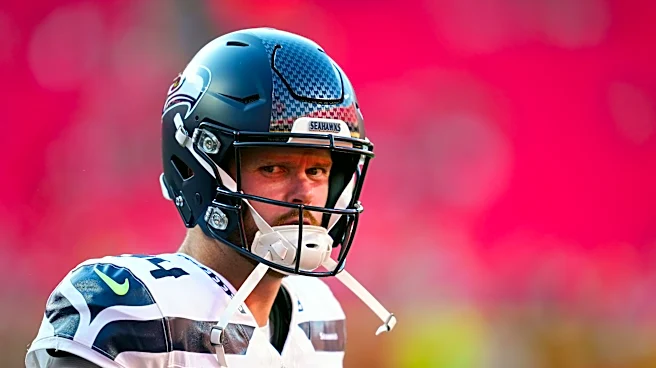
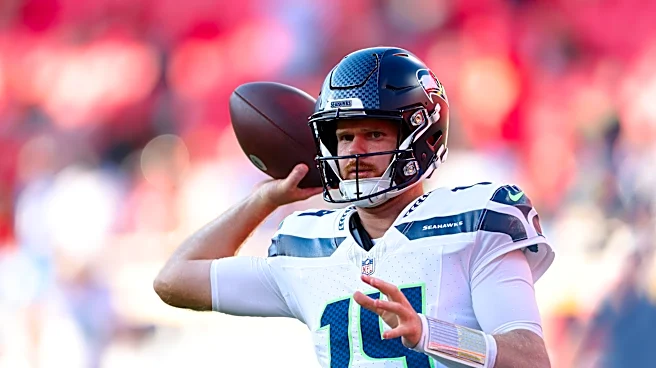
The Seahawks team that won the Super Bowl last year was famously quarterbacked by Sam Darnold, a player the Jets drafted third overall in 2018. Darnold’s time with the Jets was rocky, and he was traded after just three years. Given his subsequent NFL success, there isn’t much doubt that the Jets own a lot of the blame for Darnold not working out in New York. Most observers point to the lack of offensive infrastructure and poor coaching.
Here’s the thing. They are the direct result of two Woody Johnson decisions.
The first was the aforementioned decision to retain Casserly to lead his general manager search in 2015. The result was the hiring of Mike Maccagnan, then the Director of College Scouting for the Houston Texans. It’s a pretty big leap to go directly into the GM’s chair from a Director of College Scouting job. It’s akin to a position coach being hired as a head coach. It can work out, but it is unconventional for an executive to take such a leap.
Maccagnan happened to be a protege of Casserly. Maccagnan had worked under Casserly early in his career. Many noted this and the time and have noted it since. There has been some suggestion that Cassery used his role to knowingly put an unqualified ally into a GM job. I personally don’t think it was anything nearly as nefarious. But I do think it’s possible that Casserly might have had a deep pride and personal affection for someone he mentored through his career. It might be to the point where he was blind to Maccagnan’s flaws.
A savvier owner would have never felt the need to turn to Casserly in the first place. At the very least, Johnson could have seen this complication and asked the tough questions about whether Casserly was giving unbiased advice even if his heart was in the right place.
Maccagnan was hired and despite a 10-6 first season which saw him win the Executive of the Year award, failed to build a sustainable roster. In fact, the Jets were at the bottom tier of talent for Maccagnan’s entire tenure after that first season. That was the root cause of Darnold’s poor supporting cast.
To explain the poor coaching, we can look to another Woody Johnson decision. The owner was nominated to serve as the US Ambassador to the Court of St. James in 2017. This would take him away from the team. Somebody would need to take over the day to day operations. The pool of candidates who would be interested in running an NFL team is deep and distinguished. Instead of opting for somebody with experience or possessing any sort of relevant qualifications, Johnson tapped his brother, Chris.
Chris Johnson didn’t have any background running an NFL team. It wasn’t even clear what his work his history was. Suddenly, though, he was in charge of a multibillion dollar NFL franchise by the decision of his brother
In early 2019, Chris Johnson made the decision to fire Todd Bowles. Influenced by a call from Peyton Manning, Johnson chose Adam Gase as his new head coach. Gase was coming off an undistinguished and unsuccessful run coaching the division rival Miami Dolphins. It might have dawned on a more experienced CEO that Manning’s motivation might have just been trying to help an old friend get a job rather than offer unbiased advice on the best coach for his team. Chris Johnson was no experienced CEO, however, and Gase got the job.
Johnson also made a fateful decision to allow Maccagnan to spend what was then a record amount in free agency and run the Draft in the 2019 offseason before firing him in May.
The Maccagnan roster and Gase coaching contributed to Darnold’s fall in no small degree. All of this can be traced directly to decisions made by Woody Johnson.
I could go on, but by now you should see that the Jets haven’t struggled by accident. Ownership has played a direct role in this team’s failures.
It all comes back to Woody Johnson lacking any sort of savvy about the way the NFL works.
Imagine a scenario the Jets had a general manager opening. An executive reaches out to the team. This executive was recently a GM but had just been demoted by his team into a lesser front office role. He is interested in the role.
Should the Jets be interested? Would it be fair to say the media reaction would be negative if the Jets hired a GM another team just demoted? Is that reason to scare the Jets away?
I think the media reaction would almost certainly be negative. But whether or not the Jets should pursue it depends on the specifics. Who is the GM? What does he bring to the table? What is his body of work? An owner at that stage should work his connections to get to the bottom of it.
The reason I bring up this hypothetical is that according to multiple reports it actually happened. The year was 2015. The Jets were early in the search for a GM that led to Maccagnan’s hiring. The recently demoted executive who reportedly reached out was Howie Roseman of the Eagles.
Roseman was demoted because he had recently lost a power struggle with head coach Chip Kelly.
To be clear, it isn’t a lock the Jets could have landed Roseman. He was still under contract, and he would have needed Philadelphia’s permission to leave. Roseman was respected enough by people in key positions with the Eagles to keep a job even after losing his power.
It’s all moot because the Jets didn’t pursue it. Woody Johnson probably saw a GM who had just gotten fired and thought about the headlines, not an opportunity to poach a talented young executive at a rare point of dysfunction for a model franchise. Woody thinks in terms of headlines, not traits his leaders need. Within a year Kelly was fired, and Roseman was restored to his general manager post. The Eagles have won two Super Bowls since under his leadership and been to a third.
Many Jets fans say that all we need is for Woody to “luck” into hiring the right people. That’s easier said than done. Even top notch franchises with thorough searches occasionally hire a Chip Kelly or a Jerod Mayo.
But without an owner who has any of the conventional tools to make a good hire, luck is all that we have.

If an owner like Woody Johnson was going to luck into a good hire, there are certain pieces of criteria that would need to fall into place.
The right hire would have to be someone viewed as a “hot” coach in media circles. We need that buzz. Unfortunately, history shows us the national media is as good at identifying coaches as they are at judging rosters. The Rams were questioned when they hired Sean McVay because of his youth. The same was true of the Steelers and Mike Tomlin. Andy Reid had never called plays when the Eagles hired him in 1999. John Harbaugh was a special teams coordinator. Of course sometimes a “hot” candidate does turn into a great head coach like Kyle Shanahan in 2017. It just tends to be a coincidence when it happens. Suffice it to say, Woody Johnson thinks headlines are the ultimate, and we can expect his hire to do just that.
The right hire also needs to be somebody who is capable of building a culture. We just spent a long time laying out how broken this organization’s approach has been for years. There’s a lot to fix.
Finally, the right hire has to actually want to be here. The Jets have an earned reputation for being a dysfunctional place where careers get sidetracked. There is now a perception in the league that nobody can win with this ownership. In recent searches many top candidates have completely declined interview requests. It would help if there was a candidate who checked the first two boxes and also happened to be a legendary former Jets player with a love for this franchise instilled in him.
This is what made Aaron Glenn such an appealing hire for the team in early 2025. He was a buzzy head coaching candidate in NFL circles. The reason he was buzzy was his work setting a standard of no excuses for the Detroit Lions defense. In 2024, Detroit was decimated by injuries to the point where they were starting practice squaders and street free agents late in the year. Glenn refused to let his players make excuses, and the Lions still finished 7th in scoring defense. That’s the sort of mentality needed to overhaul a bottom tier franchise.
And Glenn’s history with the Jets is special. One of the greatest players in franchise history, the former first round pick made two Pro Bowls during a distinguished career in green and white. According to reports, Glenn actually chose to come to the Jets over another job. That doesn’t happen much in this day and age.
Glenn came in with big plans and spoke extensively about how he was going to turn the franchise around.
Year one did not go according to plan. The Jets finished 3-14 and had a five game losing streak to end the season that was one of the worst stretches of play in NFL history. The Jets had traded away two of their top three players at the deadline for Draft picks in an attempt to build a better team in the future. They had also lost numerous key players to injury and fielded a starting lineup with several players who appeared in the second half of preseason games this August. Still, it was difficult to completely shake the fear that Glenn was in over his head. A task like this might just be too much.
If you asked a Jets fan their most lasting single memory of Glenn’s first season, many would point to his celebratory dance after Will McDonald’s field goal block and touchdown momentarily gave the Jets a late fourth quarter lead in Week 3 against Tampa Bay. Others might have a more negative memory like Glenn’s inexplicable clock management late in the first half of the Jets’ loss to the Denver Broncos in London or a snippy press conference remark during that dark season ending stretch. If you wanted to be positive, you could point to a beautiful locker room speech Glenn gave to his team the day Nick Mangold passed away.
When I think about Glenn’s first year, what I remember most is something different entirely. It was an otherwise forgettable sequence at the end of the first half in the season finale, a blowout loss to the Buffalo Bills.
With 25 seconds remaining until halftime, the Bills ran the ball in an attempt to expire the clock and get to halftime. Glenn called a timeout. The timeout had no purpose. The Jets didn’t have enough timeouts left to force the Bills to punt the ball. In fact, Buffalo took a knee on the next play to take the game to halftime. The timeout served no purpose. This wasn’t like that end of first half sequence against the Broncos where you could say Glenn was too conservative.
It felt like Glenn lost track of the game situation. In the final game of the season, it felt symbolic to me. Glenn had taken on this monumental job trying to single handedly turn around the most dysfunctional franchise in sports. In year one nothing went right. Every head coach enters the job with a plan, but things don’t always work out how we want them to. It was almost in that moment like the weight of everything, the difficulty of the task, the disappointment of the season came crashing down. The ultimate culture builder in Detroit, turning around the Jets was so daunting that Glenn didn’t know which way was up. He couldn’t even keep track of a basic end of half situation.
Within the next two weeks, the league’s two longest coaching tenures ended. John Harbaugh parted ways with Baltimore, and Mike Tomlin left the Steelers. All of this got me thinking.
As we discussed with Darnold, most people around the league appreciate how important it is to support a young quarterback. Everything about playing quarterback in the NFL is more difficult than in college. The opposition is faster, bigger, and stronger. The players hit harder. The schemes are more complex. The margin for error is far tinier than anything the quarterback has ever experienced. A young quarterback needs to be supported with a strong infrastructure, a good supporting cast, a strong scheme, and excellent offensive coaches.
We don’t talk about head coaches in the same terms as quarterbacks, but maybe we should. Becoming a head coach in the NFL for the first time is a similar drinking water from a fire hose phenomenon to what quarterbacks experience. Suddenly you are responsible for everything. You need to hire a great staff and supervise them. You’re now responsible for the results on both sides of the ball, including the one you are less familiar with. You need to deal with media responsibilities. You’re in charge of player discipline issues. Each aspect of the organization, down to every last minute of the weekly schedule is now up to you to decide.
Maybe head coaches need development too. Remember, Harbaugh and Tomlin were viewed as relatively underqualified when they were hired. But they joined organizations with stable infrastructures. The Ravens and Steelers had strong front offices and deep coaching staff. Both Harbaugh and Tomlin retained at least one coordinator from the previous staff, and reporting indicates these were their own choices, not mandates dictated by ownership. Becoming a first time head coach is a chaotic situation, but the Ravens and the Steelers made it easy.
Tomlin has moved into television, but Harbaugh has taken a new job across town with the Giants. He has taken over a situation not completely dissimilar to what Glenn inherited with the Jets a year ago. Sure the Giants are further along in some ways, but they are another New York franchise whose culture has flailed in recent years.
I’m not sure how Harbaugh will do. If he is unsuccessful after an excellent run in Baltimore, it is probably a sign that the organizational infrastructure matters a lot. Even a head coach isn’t immune from its impact. If Harbaugh succeeds, I’m certain it will because he learned how to build in Baltimore. I doubt that as a rookie coach in 2008 he would have the wherewithal to rebuild a struggling franchise in his image. Harbaugh is the coaching equivalent of a veteran franchise quarterback, the guy with the experience to make it work in less than ideal surroundings.
Part of me wonders whether that’s what the Jets need. This is a team in need of such a deep cultural overhaul that any first time head coach would struggle to execute it.
Based on year one, if you wanted to tell me that Aaron Glenn just isn’t cut out to be a head coach, I think you have a strong case.
But there’s also the possibility that Glenn could work out in the right situation with a team that had the pieces in place to support a first time head coach as he learns on the job. Maybe single-handedly turning around the Jets in their current state is too much to ask any rookie in Glenn’s shoes.
Then again, maybe Rosenblatt is actually onto something, and Glenn has it in him to turn the Jets into a professional organization.
I’ll say this. If Aaron Glenn can make Woody Johnson’s Jets into a credible NFL team, we have a one heck of a head coach on our hands.