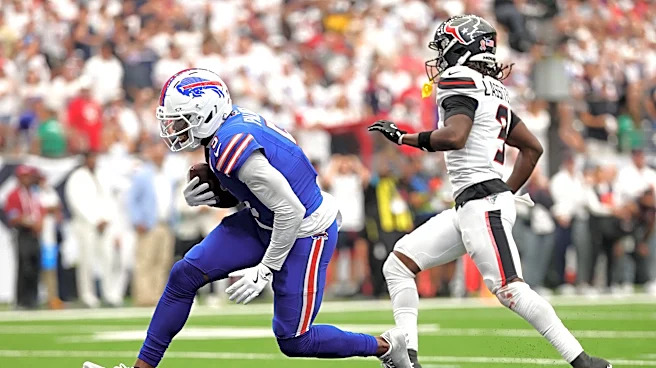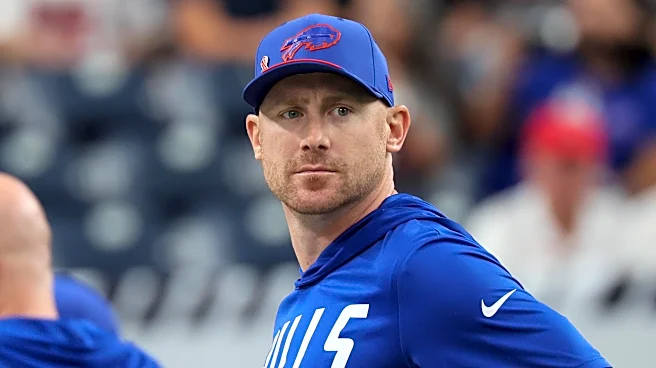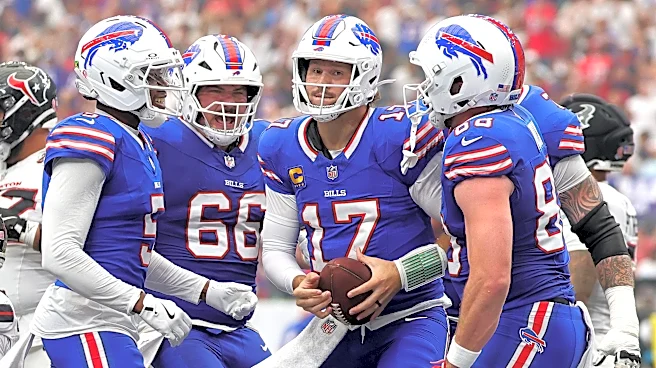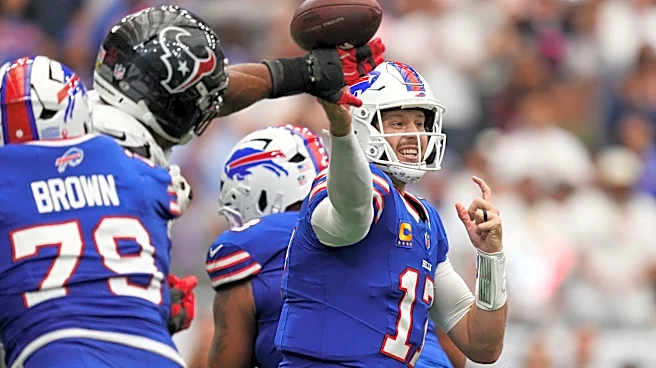


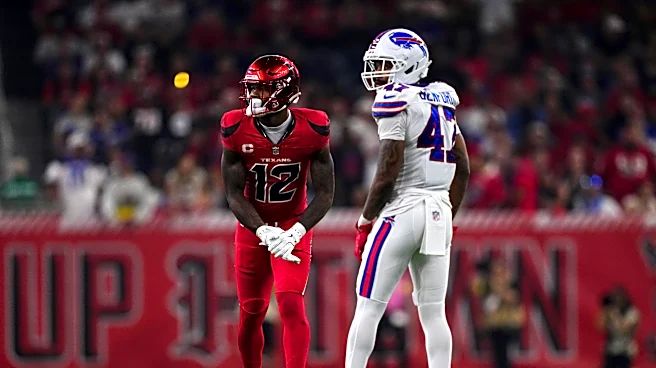
The Buffalo Bills opened the 2026 season with a thrilling 36-31 win over the Houston Texans, but the final score only tells part of the story. Buffalo’s offense produced 36 points and 409 total yards on just 58 snaps. The defense, meanwhile, was forced to play 79 snaps as Houston sustained drives and repeatedly tested Buffalo’s secondary.
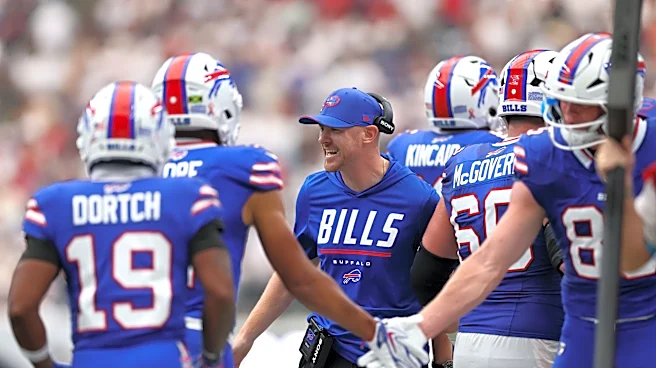
The Week 1 snap counts give us our first meaningful look at how head coach Joe Brady and his staff plan to divide Buffalo’s roles this season. They also reveal several
immediate storylines, including an offense built around multiple tight ends, a surprisingly straightforward running-back rotation and a defensive front that relied heavily on its top four players.
Bills offensive snap counts: 58 snaps
Offensive line starts with perfect attendance
There was no rotation or interruption along Buffalo’s offensive line. Alec Anderson, Dion Dawkins, Connor McGovern, O’Cyrus Torrence and Spencer Brown played all 58 offensive snaps.
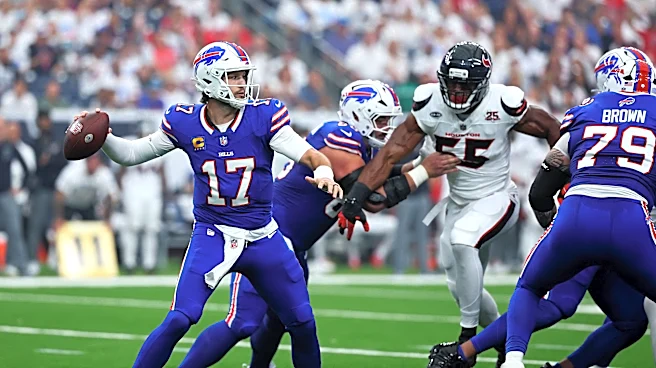
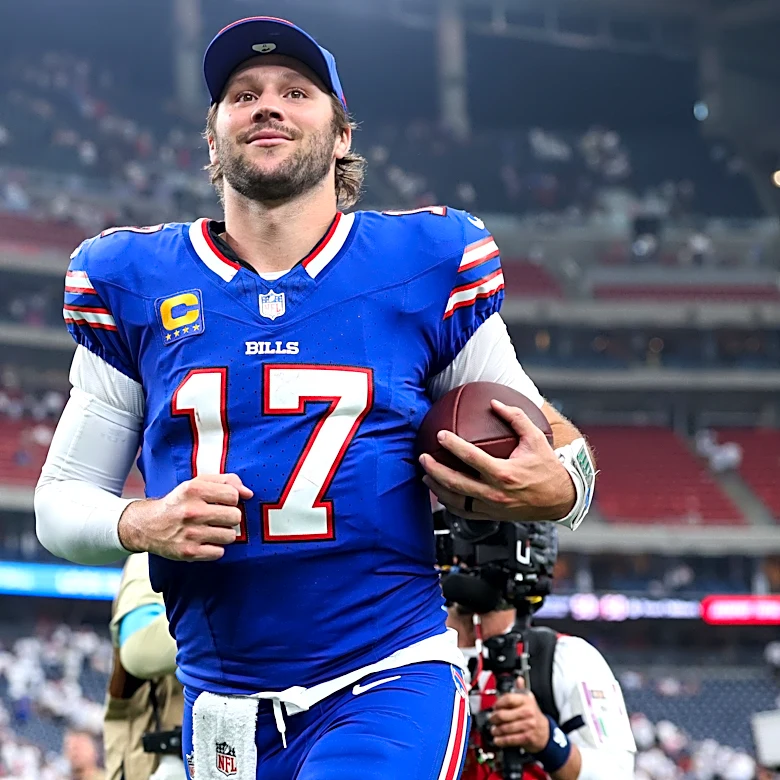
That continuity helped Buffalo avoid a repeat of last season’s nightmare in Houston, when Allen was sacked eight times and took several additional hits. The Texans still created pressure, but Buffalo’s starting five remained intact and gave Allen enough time to throw for 334 yards and lead the game-winning 96-yard drive.
Tackle Tylan Grable was the only reserve offensive lineman to appear, joining the offense for one snap as an extra blocker.
The tight ends were everywhere
Buffalo’s tight-end usage may be the most revealing number from the entire offensive table. Joe Brady did not simply keep four tight ends on the roster for decoration.
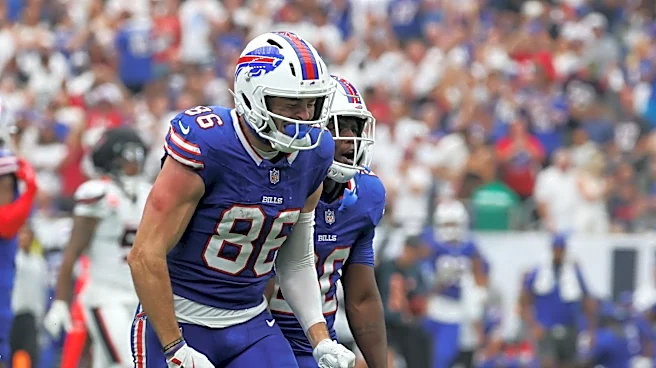
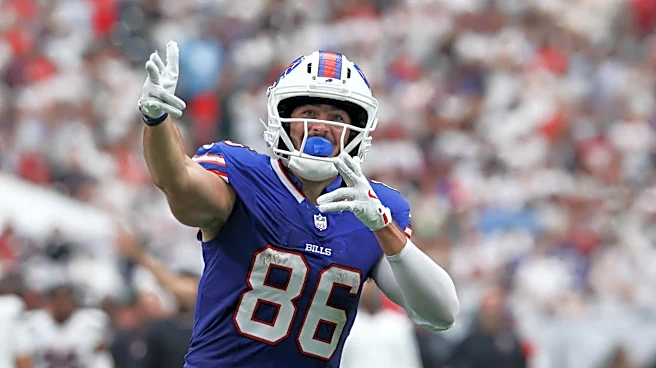
Dalton Kincaid played 42 snaps, or 72%, while Dawson Knox was on the field for 39 snaps, or 67%. Jackson Hawes added another 25 snaps, reaching 43%. Even Keleki Latu saw action, playing four offensive snaps.
Altogether, Buffalo’s four tight ends accounted for 110 player-snaps across 58 offensive plays. That works out to nearly 2 tight ends per play. Buffalo used 13 personnel, featuring one running back and three tight ends, on 37% of its offensive snaps which strongly suggests that multiple-tight-end formations will serve as a foundation of this offense.
James Cook leads a clean running-back rotation
Unsurprisingly, James Cook had 42 snaps, 72% of the offensive counts. The more interesting backfield number came behind him. Frank Gore Jr., elevated from the practice squad with Ty Johnson unavailable, played 11 offensive snaps. Ray Davis received only five.
Neither had much rushing production, with one carry for three yards apiece. Still, Gore receiving more than twice as many offensive snaps as Davis is something worth following.
DJ Moore immediately took over a major role
DJ Moore led every Bills skill-position player with 44 offensive snaps, good for a 76% share.
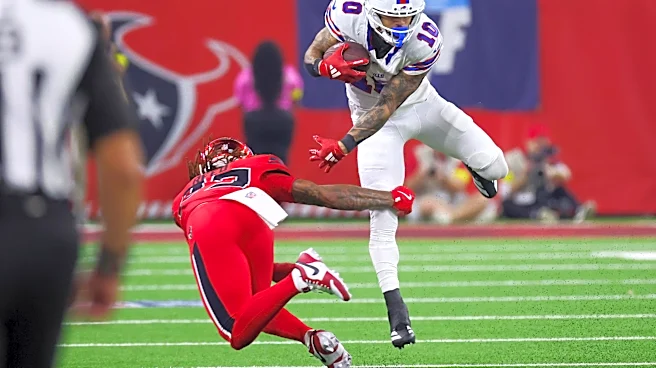
He also delivered five receptions for 100 yards and a touchdown in his Buffalo debut. There should be no question about Moore’s place in this offense after one week. He was Buffalo’s most-used wide receiver.
Khalil Shakir played 31 snaps, followed closely by Keon Coleman with 29. Joshua Palmer received only 18 offensive snaps below that of Coleman, but one of them produced the biggest play of the afternoon: his 34-yard game-winning touchdown reception.
That is an important reminder that snap counts explain opportunity, but they do not always measure impact.

Bills defensive snap counts: 79 snaps
Buffalo’s defense had a much heavier workload than its offense, playing 21 additional snaps. That helps place some of the individual percentages in context. Several members of the defense were asked to handle enormous workloads in the first game of the season.
Three defenders never left the field
The Bills had three defenders play all 79 snaps: linebacker Terrel Bernard, cornerback Christian Benford and safety C.J. Gardner-Johnson.
Cole Bishop played 72 snaps. Maxwell Hairston played 66 snaps, giving the second year cornerback an 84% share in his first start of the season. Dee Alford handled 48 snaps in the slot.
The secondary rotation will be worth monitoring, but the larger concern is how frequently Houston found favorable matchups against it.
The defensive front carried a heavy load
Ed Oliver led Buffalo’s defensive linemen with 65 snaps, an 82% share. That is a substantial workload for an interior defender. Deone Walker followed with 51 snaps, while Dorian Williams played 53.
The snap counts show that Buffalo did not treat Deone Walker as a rotational project. He was one of the defense’s primary players in the opener. The interior rotation existed, but Oliver and Walker carried the overwhelming majority of the workload.
Greg Rousseau and Bradley Chubb each played 63 snaps, or 80% from the EDGE.
Like Oliver and Walker inside, Rousseau and Chubb were clearly established as Buffalo’s preferred edge combination. With the defense playing so many snaps, however, managing those workloads on a four-day turnaround will be worth watching.
Bernard and Williams form the primary linebacker pairing
Terrell Bernard never left the field, while Dorian Williams played 53 snaps, or 67%. Buffalo’s linebacker distribution was fairly straightforward. Bernard handled every-down communication duties, while Williams served as the primary linebacker next to him when the defensive package required it.

Bills special-teams snap counts
Sam Franklin Jr. led Buffalo with 25 special-teams snaps, or 81%, without appearing on defense.
Jordan Hancock was directly behind him with 23 snaps, or 74%. Joe Andreessen and Keleki Latu each played 20, or 65%.
Latu’s usage is particularly informative. He played only four offensive snaps but was one of Buffalo’s busiest special-teams players. That role helps explain his value on a tight-end depth chart that already includes Kincaid, Knox and Hawes.
What do these numbers tell us?
Buffalo’s Week 1 snap counts reveal an offense that wants to use size and versatility.
The Bills kept multiple tight ends involved, made Moore their leading receiver by playing time and trusted Kincaid with a much broader role. They also received steady work from an offensive line that did not miss a snap.
Defensively, the story was different. Buffalo’s starters were asked to play far too much football. Bernard, Benford and Gardner-Johnson never left the field, while Oliver, Rousseau and Chubb all handled heavy workloads.
The Bills have little time to recover or make corrections. Detroit arrives Thursday night for the first regular-season game at the new Highmark Stadium, giving Buffalo only four days between games to determine how the Bills will get their defense off the field.