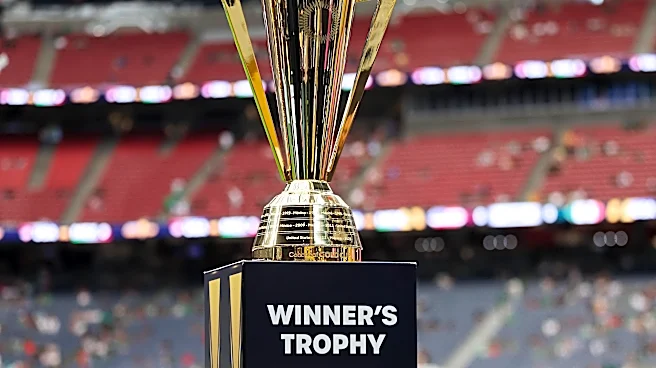





The Concacaf Gold Cup has a new format that will begin in 2027. Mexico will be looking to defend their title where they will be going for a three-peat after winning the 2023 and 2025 edition. The last time they did this was in the ‘90’s when they were crowned champions in 1993, 1996 and 1998.

Since the inception of the tournament back in 1991, the format has stayed the same with only the number of participating teams increasing over time. There has always been a group stage where all teams are split
into two and face each opponent in their respective group. From there the top teams of each group would advance to the knock-out stages until the final two teams would meet in the tournament final and a champion was crowned. Originally, the Gold Cup started with only eight teams but the recent 2025 edition had 16. There have also been guest countries invited to participate as Brazil started that tradition with their participation in the 1996 edition. Since then, there have been eight countries that have played in the Gold Cup with Saudi Arabia being the recent guest participant in the 2025 edition and they are also scheduled to participate in 2027.
Just this week Concacaf announced a change to their original format. This change is not surprising since federations from across the world have decided to make changes to their domestic competitions as well. Concacaf is just following the trend. Here’s how the new changes work:
- 16 teams participating, with the inclusion of a special guest
- Two groups of eight teams
- The top four teams in each group will advance to the quarterfinals
There are three ways for countries to qualify for the Gold Cup:
- Concacaf Nations League
- Concacaf Gold Cup Prelims
- Guest, AKA Saudi Arabia
Once all 16 teams have been qualified, they will then be drawn into two groups.
Group A: Eight Teams
Group B: Eight Team
Within those two groups, teams will play four matches against group opponents. The opponents will then be determined by ranking every team into four different tiers. Each team will be placed either in the higher tier or the lower tier, most likely based on their FIFA ranking though this has not been confirmed. Each tier will have two teams in it. From there, each country will face an opponent from each tier through a predetermined schedule that will come in the future.
Example:
Group A:
- Tier 1: TEAM A and TEAM B
- Tier 2: TEAM C and TEAM D
- Tier 3: TEAM E and TEAM F
- Tier 4: TEAM G and TEAM H
(Group B will have the same format as shown above.)
Each country will face a team from each rank for a total of four matches but they will not face every single country in their group. From there, countries will earn points from the matches where they will fall on a table ranked 1-8 in their respective groups. The top four teams from both groups will then move onto the quarterfinals and the remaining eight teams will be eliminated. In the knockout rounds it will be single-elimination until there’s only two countries standing to face off in the final for the 2027 crown.
How will Mexico compete? We don’t know. They do have a lot of pressure on them as fans and media expect them to defend their crown and three-peat and we don’t even know how the team will look come June 19th. Let’s not forget that Mexico has had two different coaches in both the 2023 and 2025 editions. Jaime Lozano led Mexico to victory in 2023 but was let go soon after. Javier Aguirre was at the helm in 2025 where he stepped down after the World Cup. Currently, Mexico is led by Rafa Marquez who had a very bumpy start to his tenure. While the federation says they have faith in him we will see how long that faith lasts.
So, Mexico fans, are you excited for this new format and how will Mexico perform in the 2027 Gold Cup? Let us know!