



As we do every week in this space, we’re looking at some stats from the Green Bay Packers game this week, courtesy of SumerSports.
Offense
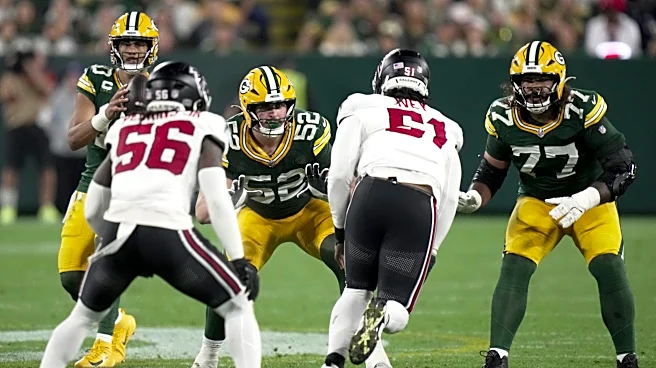
It will not surprise those of you who watched the game, but the Packers leaned heavily into the passing game against the Falcons. On the day, they finished with an 85.7% pass rate, a whopping 30.27% above the NFL average. Lest you think the numbers are skewed based on the game getting out of hand, they had a 79.2% pass rate in the 1st half. Drilling down one more level,
they had an 80% pass rate in the 1st quarter.
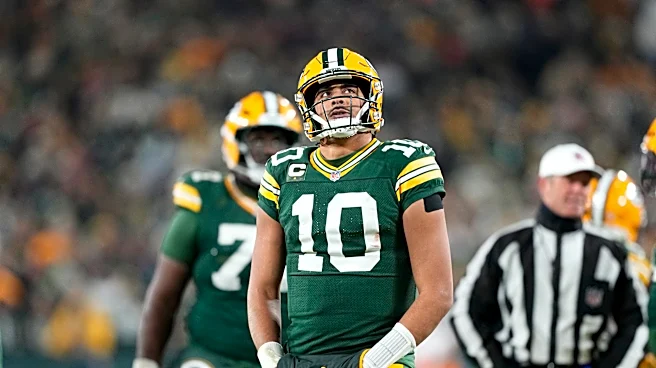
Did it work? Eh, not really, but the passing game was more effective than the running game. For the game, the passing game produced a +0.01 EPA per Play (42.6% Success Rate), compared to -0.33 EPA per Play (33.3% Success Rate) when running the ball. Love’s average time to throw of 2.46 seconds was slightly more than the 2.35 seconds he had coming into the game.

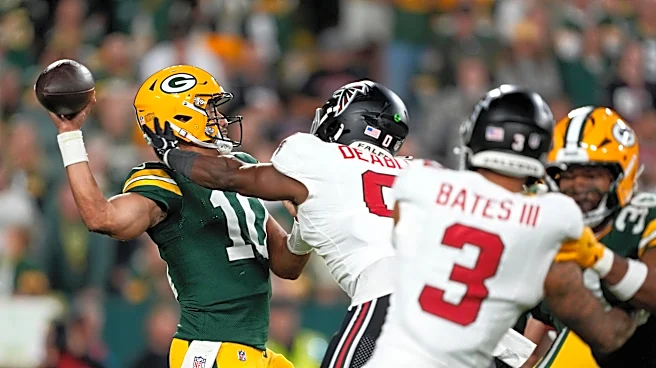
The worst part on the pressure front is that the Falcons barely blitzed. Their Defensive Coordinator (Jeff Ulbrich) did a nice job mixing up looks, but the Falcons only blitzed on 16.67% of their snaps, 14.23% below the league average. Despite that low blitz rate, they pressured Love on 44.44% of his dropbacks and averaged 2.5 seconds to pressure.
This game also saw the Packers lean heavier into 11 personnel (1 RB, 1 TE, 3 WR) than we had seen previously. They were in 11 personnel on 81% of their snaps. That’s skewed a bit by playing catch-up in the second half, but they were in 11 personnel on 66.7% of their 1st half snaps, so they were rolling with more 3WR sets from the jump this week. As a reference, they were in 11 personnel on 47.8% of their snaps in Week 1 and 56% in Week 2. To round that out for this week, they were in 12 personnel on 15.9% and 13 personnel on 3.2%.
They had their best performance in 11. Out of 11 personnel, they posted an EPA per Play of +0.13 (+0.06 in the 1st half). Their other two groupings were both in the negative. They were -0.55 EPA per Play out of 12 and -1.24 EPA per Play out of 13.
In the run game, we once again saw them steering away from a zone-heavy system. They ran something in the zone family on 33.3% of their running plays. It seems counterintuitive given some of the smaller bodies they now employ up front, but they can’t get any movement on zone stuff. The only way they’ve been successful is by pulling those smaller bodies and smashing them into linebackers. They’ve built some fun pass stuff off of that, but the run game itself hasn’t done much of anything.
The only positive EPA per Play they had in the run game was to the B gap, but that was on a single attempt.

I do want to shout out J. Michael Sturdivant real quick. He had 3 catches for 22 yards (+1.11 EPA per Reception). Two of his receptions (+2.23 EPA per Reception) came on slants, which is something he showed nice skill on in the preseason. He’s a big, fast receiver with some suddenness on slants. If he can turn into something on the outside, that gives the Packers an option on the outside to be able to use Watson a little more in the slot.
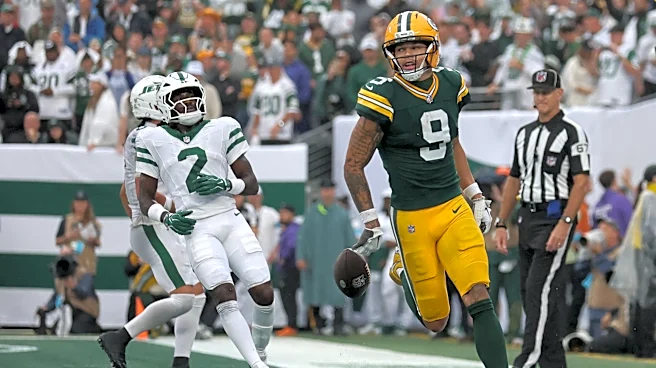
Also, big up to Matthew Golden. He had a 100-yard receiving day and caught his first regular-season TD. His EPA per Reception of +2.12 was the highest of any Packers WR on the day, and he also drew a big defensive pass interference penalty. He hasn’t been perfect, but Golden has shown some really nice things through 3 weeks.
Defense
If the offense looked a little ugly, you’re not gonna like the defense. They were in Man Coverage for 12% of their snaps and Zone for 88%. Here’s the breakdown of the types of zone they ran:
Cover 3: 45%
Cover 4: 27%
Cover 2: 20%
Cover 6: 8%
Gannon continues to blitz above his pre-Packers reputation showed (32% blitz rate tonight), but they couldn’t consistently get home. They only got pressure on 20% of the Falcons’ dropbacks. Part of that was the quick release of Penix: he averaged 2.15 seconds to throw.
The Packers had a missed tackle rate of 13.33% on the game, 0.06 above the NFL average. That may feel low, but you can only miss a tackle if you get close enough to make the tackle. Some of the big gains by Bijan Robinson felt less like missed tackles and more like poor tackling angles. (Although they also did miss their fair share of tackles.)
Remember that Packers run gap chart I showed above? Here’s the Falcons’ chart. Avert your eyes, child.

Looks like a lot more blue than the Packers chart. They had success against light boxes (+0.22 EPA per Play), heavy boxes (+0.23 EPA per Play) and even boxes (+0.38 EPA per Play). I believe they call that getting pushed around.
Lukas Van Ness had another nice game. Due to the rush-heavy approach of the Falcons (they had a 62.1% run rate) and the quick release of Penix, LVN ended up with a low pressure rate (a mere 5%), but his average time to pressure was 2.34 seconds. If the defense was able to make Penix hold onto the ball for a tick longer, LVN could have had himself a very nice night.
Albums listened to: Julien Baker – 2026 Tour EP; Brother Bird – The Lodge in Miller County