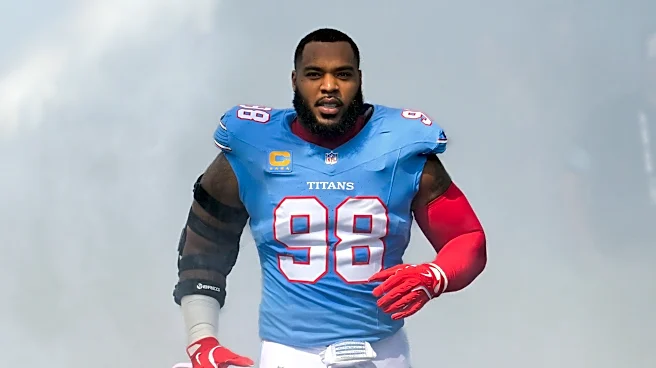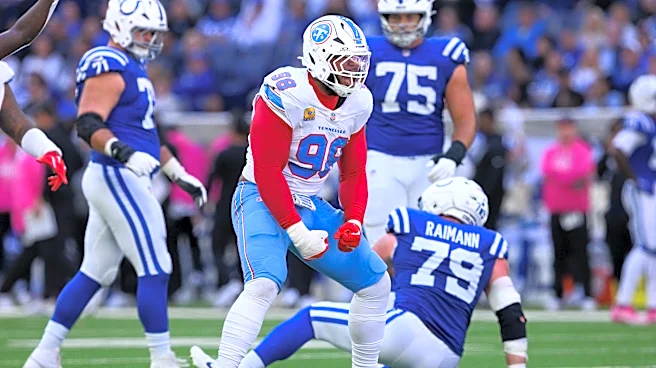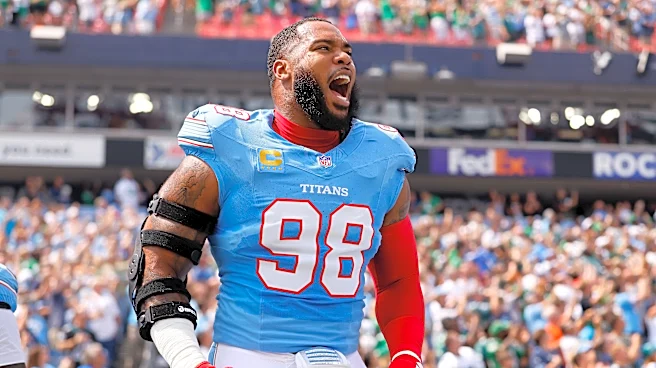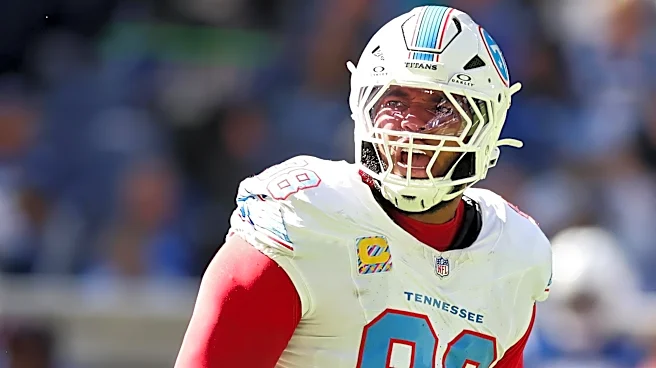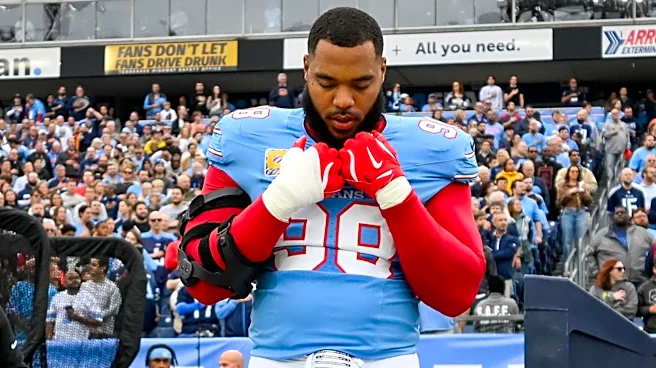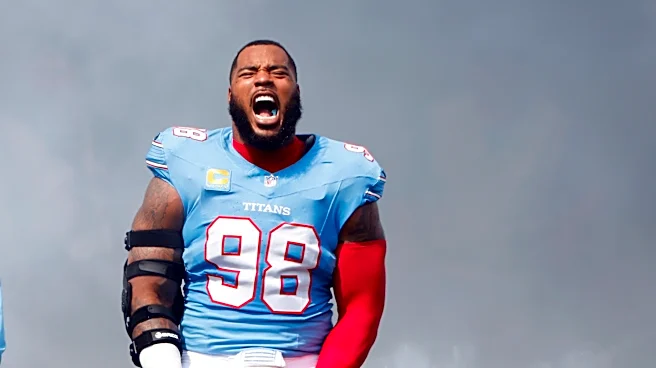

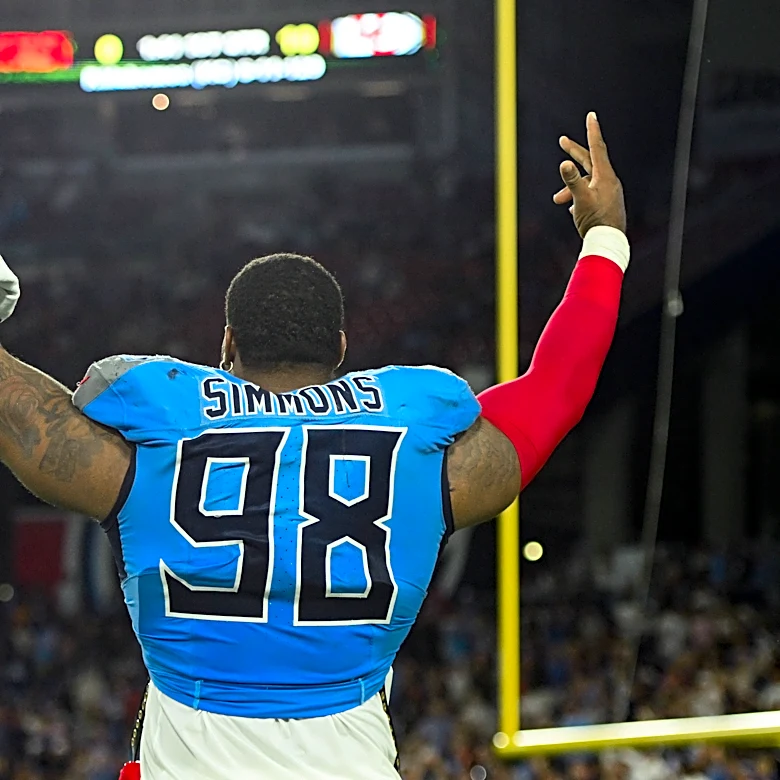

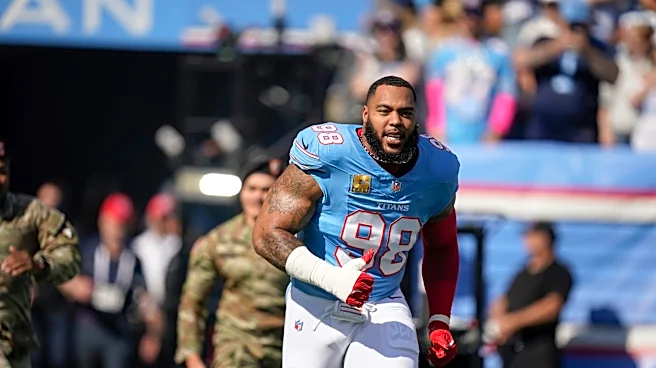
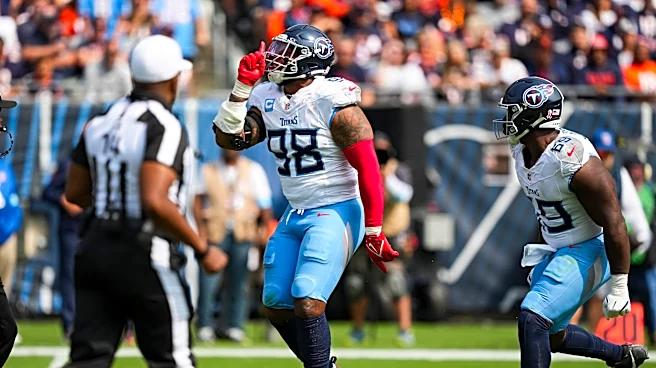

The Chicago Bears were the talk of the NFL world on Thursday, as they traded a package headlined by two first-round picks to the Tennessee Titans for All-Pro defensive tackle Jeffery Simmons. From a draft capital perspective, it’s the largest in-season trade made so far this season, and it’s the most aggressive trade that Bears general manager Ryan Poles has made for a player.
With the Nov. 10 trade deadline looming near, the expectation was that the Bears would remain active in discussions to add
talent on the defensive side of the ball. That part wasn’t particularly surprising, but what was surprising was the fact that Simmons got dealt, especially after the Titans signed him a massive contract extension just this offseason.
As a result of that extension, the Bears have Simmons under contract until 2030, and they acquire a relatively light cap hit for the 2027 season compared to what his annual average salary is. That long-term contract security likely played a role in why Tennessee was able to get multiple first-round picks for him.
Bears general manager Poles knows that the NFC is wide open this year, and he’s making an all-out push for the Bears to win the Super Bowl, particularly within the next two years. In a conference where all of the top teams are either underperforming, weak on one side of the ball, or banged up with injuries, Chicago had a legitimate chance to win before acquiring Simmons.
The Bears had a major weakness at the defensive tackle position. They now have arguably the best defensive tackle in the entire NFL on their roster.
Analytically, it would be hard to argue against that statement. With a 98.9 PFN DT Impact grade, Simmons has far and away the best grade of any defensive tackle in the NFL. He’s over five points higher in grading than Dexter Lawrence, who himself has been a phenomenal addition for the Cincinnati Bengals’ defense. Simmons has graded as a top-ten player by that metric in six of the last seven years, and he led the league in the metric in 2025 as a first-team All-Pro, as well.
When you look at the individual statistical categories, it’s not hard to see why he grades so highly:
That’s not all. Simmons is also double-teamed at a well above-average rate, yet he still generates run stops at a well above-average rate.
Not only is Simmons a force multiplier whose sheer presence commands double-team blocks, thus creating more one-on-one opportunities for his teams, but he’s also able to shed double-team blocks much better than the average NFL defensive tackle.
Elite pass-rushing defensive tackles are incredibly hard to come by, and the Bears now have one of them on their roster. This should be extremely beneficial to defensive coordinator Dennis Allen, who has dialed up a blitz-heavy approach in lieu of a lacking four-man rush from his defensive line.
Having Simmons up front makes their double-mug A-gap blitz look that much more dangerous, because not only do you have to worry about determining who’s rushing the passer and who’s dropping back into coverage, but you also need to know where Simmons is on the field at all times.
This is one of the biggest splashes Chicago has made in recent memory, and arguably in team history. Simmons gives them an elite player at a premier position who’s in his physical prime, and it happens to come at arguably their biggest weakness on the roster. It’s a good day to be a Bears fan.