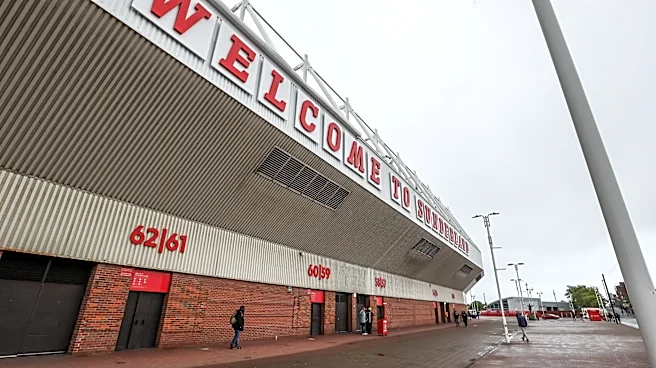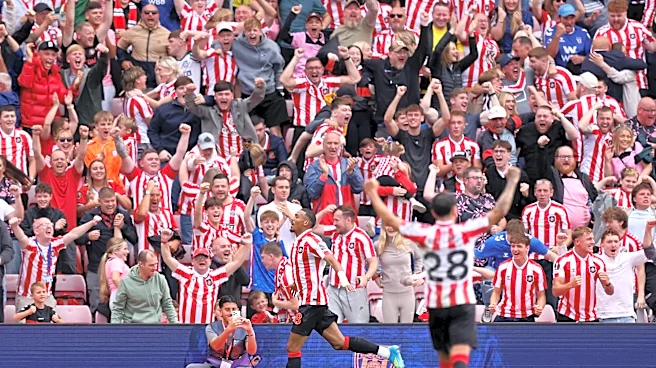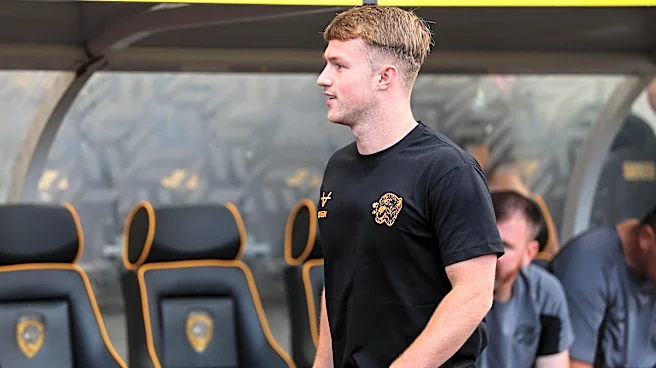





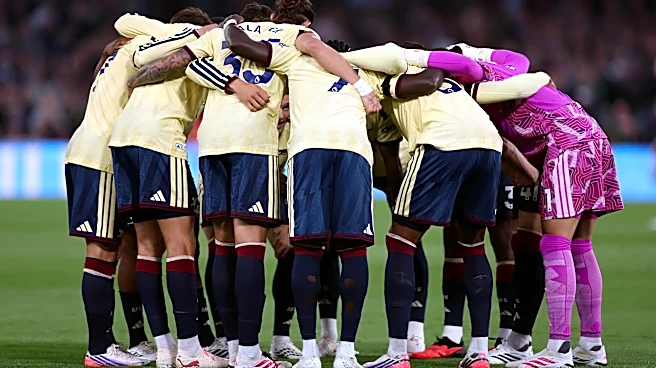
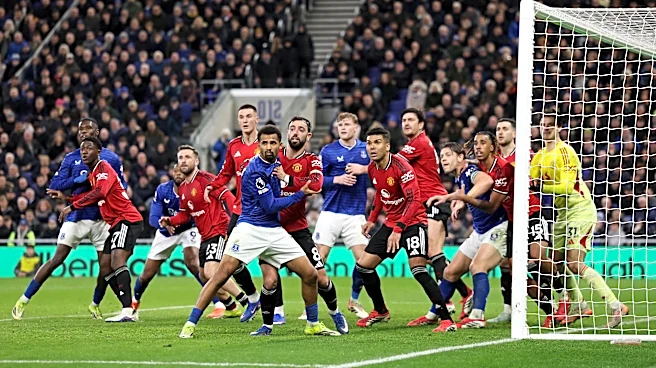
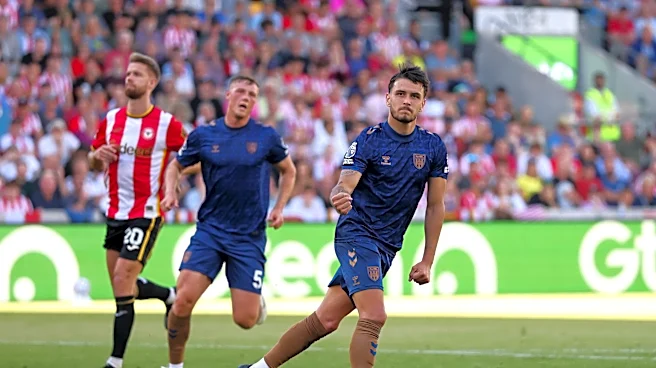
Sunderland welcome Hull City to the Stadium of Light in the Carabao Cup as the Black Cats kick off their League Cup campaign for the first time in the third round due to European qualification.
We face a Tigers side that haven’t conceded a goal in the Premier League after three games and are coming off an impressive draw that Hull felt they should’ve won against Aston Villa on Saturday.
The quirk of the draw
So, how did Hull draw Sunderland in the Carabao Cup?
First of all, they were promoted to the Premier League, which
earned them a bye into round two against Championship side Stoke City, in which the East Yorkshire outfit defeated the Potters on penalties following a 1-1 draw.
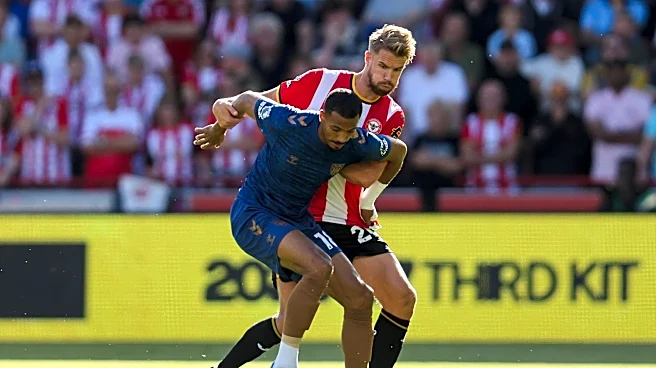
We come into this game after a draw with Brentford, with Régis Le Bris predicted to make at least ten changes ahead of due to a quick turnaround ahead of Saturday’s clash with Arsenal at the Stadium of Light.

Tactical analysis: The Sergej Jakirović approach
Under Jakirović, Hull City have shifted away from a sterile possession-based game towards an outright pragmatic, highly direct and robust style when they are on the ball.
Rather than dominating territory, Jakirović sets his team up to absorb pressure and punish opponents quickly through fast, vertical sequences and transitional play.
Key aspects of how Hull play on the ball include:
Verticality and minimal passes rapid transitions
Hull move the ball upfield with fewer passes per sequence than almost any other side in the Premier League, focusing on direct speed and aiming to progress the ball into the final third before the opposition can set their defensive block.
Low possession volume
They are entirely comfortable surrendering possession, notably holding just 28% of the ball during their 2-0 win over Manchester United. This means their on-the-ball actions are focused on high-efficiency, fast counter-attacks rather than sustained build-up play.
A physical focal point
Striker Oli McBurnie acts as the primary target for long, vertical distributions. Hull look to play directly into him to hold up the ball, disrupt defensive midfielders and bring their wide players into the game.

Overloads on the flanks, crosses and wing-back switches
Whether executing a 5-4-1 or a 4-2-3-1, Jakirović heavily emphasises stretching the pitch and switching play rapidly to their wing-backs (like Ryan Giles and Lewie Coyle) to catch flat-footed defences out.
A cross-heavy attack
Once the ball moves wide, Hull look to pump crosses into the box immediately. They identify crossing weaknesses in the opposition and look to overwhelm the penalty area with supporting runs from midfield.
Direct long-range shooting slowing tactics adaptation
When opponents adapt by packing their own box with deep defensive lines — as Aston Villa did in their 0-0 draw — Hull don’t hesitate to build their plays quickly and conclude possessions with long-range shooting attempts from outside the box rather than trying to walk the ball in.
Tactical Breakdown
Bypassing the press
When Hull recover the ball deep in their own half, they have no intention of engaging in risky, short tiki-taka build-ups.
The long launch
The goalkeeper and centre-backs look to immediately bypass the opposition’s high-pressing forward line. They deliberately hit high, vertical balls into the middle third
Second-ball stratagem
Jakirović positions his central midfielders close to the target zone.
The goal isn’t necessarily to win a clean header, but to overload the area and win the second ball while the opposing defence is stepping up.
Oli McBurnie’s ‘Wall’ Role
The entire attacking sequence relies on Oli McBurnie.
He does not play as a traditional shoulder-on-the-defender striker — he plays with his back to goal.
Disrupting the pivot
McBurnie actively drops onto the opposition’s defensive midfielder.
His role is to physically pin them, shield the ball and act as a ‘wall’. Once he absorbs the contact, he lays the ball off in one or two touches to Hull’s fast-moving interior midfielders or surging wing-backs.
Rapid flank overloads and the cross-heavy metric
Once the ball is worked into the middle third, it is immediately shuttled wide.
The system relies on catching defences before they can shift laterally.
Wing back isolation
Hull focus on quick, sweeping diagonal switches to their wing-backs (like Elliot Stroud or Ryan Giles), isolating them one-on-one against the opponent’s full back.

Low touch crossing
The instruction is to cross early rather than attempting overlapping cutbacks.
Hull rely heavily on crosses to create chaos, trusting McBurnie and arriving midfielders to win physical duels in the penalty box.
Direct shot mentality
Hull don’t overcomplicate things in the final third.
If an opponent drops deep and denies them crossing space as seen in their cagey 0-0 draw with Aston Villa, they adapt immediately by shifting to long-range shooting. Midfielders like Matt Crooks are explicitly instructed to shoot from twenty to twenty five yards out.
The strategy is simple: either score a wonder goal or create a corner/rebound opportunity that favours Hull’s immense physical size.
Blending in the new signings?
The club completed a massive transfer window with eighteen new signings, and Jakirović has noted that these players were scouted specifically to enhance this direct, energetic style.
Lucas Gourna-Douath was brought into midfield to add steel and accelerate the recovery-to-attack transition, whereas options like deadline-day signing Robinio Vaz give Jakirović the tools to execute this counter-attacking model even deeper into games when opposing defences tire.
Off the ball, Hull City are entirely defined by defensive rigidity, extreme compactness and tactical adaptability
They’ve started their Premier League campaign with three consecutive clean sheets — precisely because of how flawlessly drilled they are without possession.
The defensive approach
Opponent-specific shape shifting
Jakirović does not enforce a dogmatic defensive structure – he shapes it entirely around his opponent’s structural weaknesses
The back five pivot
While Hull frequently drilled a back four during pre-season, Jakirović immediately pivoted to a 5-4-1 deep block to face Manchester United after identifying their issues breaking down numbers.
Denying the midfield overload
By dropping their wide midfielders deep to align with the central pivot, Hull focus heavily on reducing the gap between the lines.
This starves the opponent’s creative playmakers of space to turn in the ‘pockets’.
Low block submissions and box defending
Hull are statistically comfortable spending vast stretches of the game deep in their own final third.

Passive punting over aggressive pressing
Rather than burning energy chasing centre backs high up the pitch, they allow opponents safe possession in non-threatening areas. They only trigger their intense press when the ball enters the middle-third channels.
Overcrowding the box
When the ball is forced wide, Hull’s three central defenders collapse tightly into the six-yard box.
They rely heavily on their immense physical size to win individual aerial and physical duels, effectively turning the penalty box into a crowded bottleneck.
Rigid rest defence
Even when Hull do have the ball, their off-the-ball positioning is engineered to prevent counter-attacks.
The “stay back contingent”
Jakirović rarely permits both wing-backs to bomb forward simultaneously.
If one pushes up to cross, the opposite wing-back tucks in defensively to form a temporary back four.
The shield
At least one central defensive midfielder remains anchored right in front of the centre-backs at all times, ensuring they are never exposed to rapid vertical counters if possession is overturned.
Outperforming the metrics
While analytics models and underlying data from their promotion season suggested they gave up too many high-quality chances, Jakirović’s off-the-ball approach relies heavily on mental resilience and physical sacrifice.
Players are drilled to actively throw themselves into blocks and rely on the positioning of experienced defenders (like John Egan) to force opponents into low-probability shot selections from distance.

A transformational transfer window?
Hull City’s transfer deadline-day business was an absolute frenzy, with club owner Acun Ilıcalı pushed through a staggering six late signings in the final hours of the window.
This capped off a summer during which Hull brought in eighteen new players in total, overhauling their squad for life in the Premier League.
Jakirović’s pragmatic system relies completely on immense physical exertion, physical size and vertical speed, and these late arrivals look perfectly tailored to turbocharge his out-of-possession defensive structure.
Midfield Steel — Tim Iroegbunam
The marquee deadline-day move was securing midfielder Iroegbunam permanently from Everton in a deal worth up to £22 million.
Iroegbunam gives Jakirović the ultimate physical engine in the middle of the pitch. In Hull’s deep 5-4-1 or 4-2-3-1 shapes, he serves as a destructive, high-mobility shield directly ahead of the three centre-backs.
His ability to cover ground quickly means Hull can block central passing lanes without dragging their backline out of position.
Wing back endurance: Brooke Norton-Cuffy
Hull completed a deal to bring right-back Brooke Norton-Cuffy in from Genoa, with Cody Drameh moving the other way.
Jakirović’s low block demands his wing backs push up to press wide players but immediately sprint back into a compact back five.
Norton-Cuffy brings incredible natural athletic recovery pace. This ensures Hull can transition from a mid-block to a deep block seamlessly without leaving the wide centre-backs exposed on the flanks.
Transition catalysts: Sorba Thomas and Christos Mouzakitis
To round out the midfield and wide areas, the club signed winger Sorba Thomas from Stoke for £7 million and secured highly-rated Greek youngster Christos Mouzakitis from Olympiacos.
For a team that sits in a deep low block for 70% of the match, off-the-ball discipline means nothing if you can’t immediately transition when the ball is won. Thomas provides massive work-rate tracking back, but crucially gives them an instant vertical outlet to stretch the pitch on the counter.
Meanwhile, Mouzakitis offers technical security under pressure to help release the ball out of tight defensive bottlenecks.

Direct firepower: Ilyas Ansah and Robinio Vaz
Up front, Hull signed physical German striker Ilyas Ansah from Union Berlin and nineteen-year-old French forward Robinio Vaz on loan from Roma.
When McBurnie inevitably tires from constantly battling opposition centre-backs, Hull’s defensive structure has previously sagged because the ball kept coming straight back. Ansah and Vaz provide the raw physical presence required to hold the ball up top, allowing Hull’s defensive block a chance to step up, breathe and reset their lines.
It’s an intriguing match-up that could see both sides heavily rotated, with players like Jules Ahoka, Malick Fofana, Chris Rigg and Wilson Isidor potentially getting ninety minutes under their belts for Sunderland.