



Craig Stutzmann’s offense has a nickname that does half the marketing for it. Spread-and-shred sounds like a system built entirely on space, tempo and receivers running free through a defense that can’t cover sideline to sideline. That part is real.
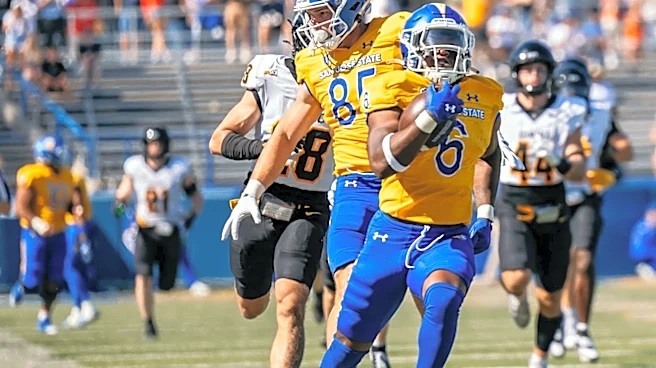
San Jose State has produced a high-volume receiver and passing game the last two years with former Spartan’s Nick Nash and Danny Scudero as focal points, and there’s no reason to think that streak stops in 2026.
But sit with Stutzmann or running backs coach
Michael Smith long enough and a different picture starts to form this season.
This isn’t an offense allergic to contact. It’s an offense that wants both identities available on the same play call and it’s betting that duality is what actually wins more games in the new Mountain West.
What the scheme actually demands
The label undersells how much this offense leans on math, not just speed. Smith put it plainly when asked how the run game fits inside a passing-first reputation.
“I like saying change the math,” said Smith. “If the math’s in our favor, we’ll take advantage if it’s a run play or a pass play.”
That’s the whole engine in one sentence.
Stutzmann isn’t scripting an offense around a single skill set. He’s scripting one around whatever answer the defense hasn’t solved yet and that requires a roster deep enough to punish either choice; assuming across the board execution.
This is where the “spread-and-shred can’t run it” assumption breaks down.
Smith’s running back room is deliberately split between speed backs like Jabari Bates, Sir Autry and Viliami Teu and power backs like Isaiah Carlson and Tyler Jacklich. Smith is explicit about deploying each on their terms.
“If it’s third-and-short, sure, I would love to put my bigger backs in,” Smith said.
Stutzmann’s own scorecard for the offense strips away style points entirely.
“When it’s all said and done, does the ball move forward and end up in scoring positions and in the end zone?” said Stutzmann.
Nowhere in that answer does he mention how the yards were earned. A physical, clock-eating drive counts the same as a 60-yard strike, though the latter is a Spartan signature.
The receiver room still finds a way to shine
None of that changes the obvious.
SJSU keeps finding wide receivers who become the story and 2026 should still follow the pattern.
Jerry McClure quietly generated buzz through spring practices and looks like the next high-potential player this offense builds a highlight package around.
McClure arrived at SJSU already aware of what he was walking into.
“I knew those were great guys who came out of this program,” McClure said of Nash and Scudero. “I knew it wasn’t going to be easy, but as long as I put my best foot forward every day, I’d get my chance coming here.”
That mentality tracks with how he describes the room around him, which sounds less like a competition for targets and more like the collaborative environment Stutzmann’s system depends on.
“We have really good chemistry. We’re all close and everybody knows each other well,” said McClure. “If we need help, we ask the guy next to us. It’s never about one person trying to take over. We work together and get better altogether.”
He describes the quarterback relationship the same way, which matters given how unsettled that room still is.
“We need to know our pre-snap reads and how the defense is playing, but it comes down to getting to the spot we need to get to,” said McClure. “The quarterback trusts us to be there. It’s a give and take relationship.”
There’s also a personal layer to McClure’s story that caught Stutzmann’s attention specifically.
McClure says coming to SJSU is what brought “it” back.
“I realized again how much I love this game,” said McClure after stints at UCLA and SDSU. “Coming here brought that back out in me and I’m going to make the most of it, game one, the rest of the season, a Mountain West Championship, everything, in any and every way I can.”
When it’s working and when it’s not
At its best, this offense looks unfair.
Having a run game keeps a defense honest enough that Stutzmann’s receivers get the matchups the system was built to exploit, along with a quarterback who’s mastered what Stutzmann calls “de-cluttering” the read before a pass rush ever arrives. Smith’s backs also aren’t just runners. They’re supposedly rebuilt to catch the ball too.
“It’s all about the touches, not the carries,” said Smith on his backs. “Can you be effective in the pass game as well as the run game?”
When that answer is “yes” across the room, SJSU is efficient and explosive, which is exactly the phrase Stutzmann uses to describe his own vision for the offense once it clicks.
The flip side is just as clear.
If the offensive line struggles, the run game loses its threat and defenses stop respecting play action, the opposition will pin its ears back. Smith has already built accountability into his room so backs don’t lean on that excuse.
“There’s no bad o-line for the running backs,” said Smith. “It’s basically a bad mentality if we’re using that excuse.”
A young or unsettled quarterback room also adds the second failure point with any micro-second slowness or indecisiveness or misreads.
A week 0 measuring stick at USC
All of it gets tested immediately.
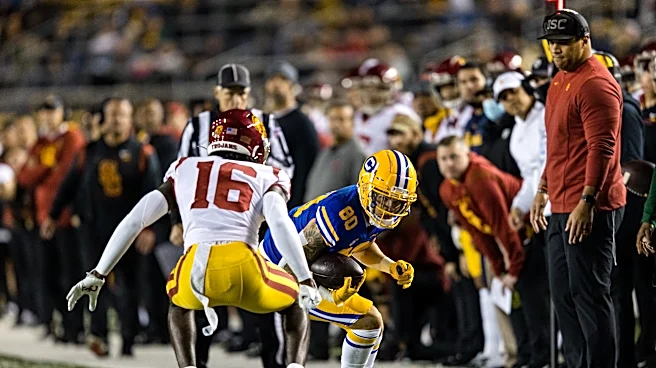
SJSU opens the season on the road against USC on August 29 at the Los Angeles Memorial Coliseum, a rivalry the Trojans have won all six previous meetings, including a 56-28 result the last time these two played in 2023. USC returns quarterback Jayden Maiava off a 9-4 season and enters as one of the more talented rosters SJSU will face all year.
It’s an unforgiving opener for a program still finding its quarterback and adjusting to a new offensive line coach. But it’s also the cleanest possible test of everything Stutzmann, Smith and McClure have described all offseason. If the run game forces USC into difficult decisions and the receiver room turns those decisions into explosive plays, SJSU will be competitive like they did in 2023 against the Trojans.
It’ll be proof that spread-and-shred was never as one dimensional as its name suggests and for a receiver like McClure who says the game itself only recently came back into focus, there’s no bigger stage to make that case.