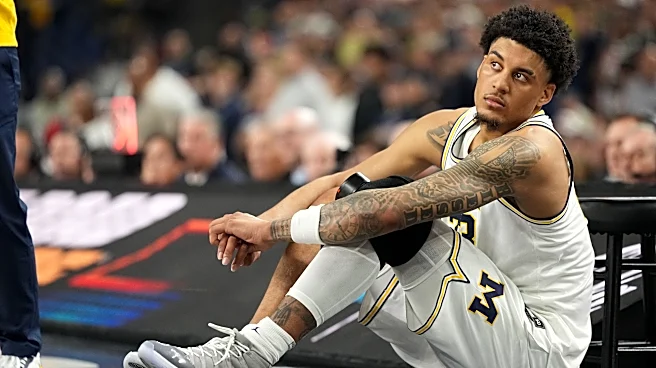





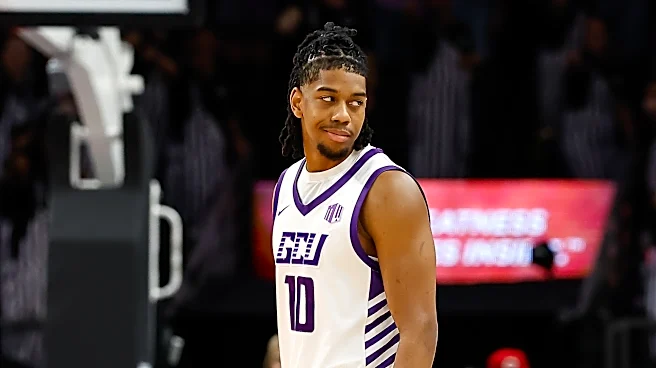
For the next month before the 2026 NBA Draft, we’ll take an in-depth look at different prospects here at Liberty Ballers and try to figure out which players would be the best fit for the Sixers at No. 22. First up in this series is Michigan’s Yaxel Lendeborg.
Lendeborg is coming off a stellar season, combining strong individual production with team success as Michigan won the 2026 NCAA Tournament behind him, Morez Johnson Jr. and Aday Mara. Now Lendeborg looks to carry that winning track record to the NBA.
He’s one of the more unorthodox players in this class, having come to organized basketball late, and despite being one of the older prospects, he’s a candidate to rise significantly up draft boards ahead of June. He won’t be available at 22, but the Sixers should think long and hard if a trade-up opportunity presents itself.
Profile
2023-24 Stats: 40 games, 30.2 minutes, 15.1 points, 6.8 rebounds, 3.2 assists, 1.1 steals, 1.2 blocks, 51.5% FG, 37.2% 3P, 82.4% FT
Team: Michigan
Year: Graduate Student
Position: PF/C
Height & Weight: 6’8.75” | 241.4 lbs
Born: September 30, 2002 (23 years old)
Hometown: San Juan, Puerto Rico
Strengths
When it comes to Lendeborg’s strengths, there is no shortage of skills and physical measurements to bolster his case as a draft prospect. He possesses a blend of both that checks just about every box you’d want in a modern NBA frontcourt player.
Physically, he boasts a 6-foot-8.5 frame (barefoot) with a massive 7-foot-4 wingspan. By big man standards he’s somewhat undersized, but that wingspan has compensated for any deficiencies at the NCAA level. Despite picking up the game late, starting organized basketball as a freshman in high school at 15, Lendeborg has tremendous touch and feel that shine through every time he’s on the court. Most can’t tell how new he is to the game. He anticipates well, always seems to be in the right position, and plays with a relentless motor.
There’s a lot to like physically, but most people come away most impressed by his basketball IQ. For a bigger player, he’s a tremendous playmaker, capable of grabbing a board and pushing in transition. At Michigan, he posted a 3.2 to 1.1 assist-to-turnover ratio. Despite his age being a constant talking point, there’s real evidence of untapped upside, whether as a connector, facilitator, or two-way contributor. There are various roles Lendeborg can step into and play from day one, which is something you can’t say about a lot of players projected to go in the late lottery or teens.
On the offensive end, Lendeborg has steadily refined his game. This season at Michigan, he was featured heavily alongside massive big man Aday Mara and took on a larger perimeter role than ever before. He converted 37.4% of his threes on solid volume (61 of 163), more than doubling his perimeter attempts from the prior year. He has also shown some ability to step into pull-up jumpers. At the NBA level, that shooting should translate well and open up minutes in super-sized lineups alongside another big.
He’s not the draft’s best athlete, but Lendeborg is plenty explosive, particularly when finishing in transition. His huge frame makes him a freight train at the rim, with few willing to step in front and take a charge. Per Synergy, he shot 68.6% at the rim and 65.5% on putbacks, adding 1.9 offensive rebounds per game. Factoring in his age and skillset, he’s unlikely to ever be an alpha or even secondary scorer, but he’s far from a liability. Wherever he’s slotted, he’ll find ways to be effective and fill gaps.
Defensively, there’s very little Lendeborg can’t do physically. Against smaller players he’s light on his feet and avoids lunging or gambling. He has the strength and size to hold his own against wings and most bigs. He’s often labeled an analytics darling, but honestly a lot of the numbers available don’t fully do him justice. His 16.6% defensive rebounding rate, 2.2% steal rate, and 4.8% block rate are all solid to great, but Lendeborg does so much that doesn’t always show up in a box score. He’s disciplined on and off the ball, consistently closes out without overcommitting, and can generate steals in a variety of ways, whether that’s defending a post-up, playing the passing lanes, or anything in between.
The bottom line on Lendeborg is that there are very few holes in his game. While his age gets brought up often, it’s worth remembering that much of his development happened in a relatively small sample, and a lot of what he does comes down to natural talent and feel that simply can’t be taught. The numbers back him, and so does the eye test. At the next level, Lendeborg profiles as an elite gap filler who can contribute on both ends from day one.
Weaknesses
If you want to make a quick buck, ask any draft evaluator or NCAA scout for their first impression of Lendeborg. Odds are the first thing they bring up is age, and if it isn’t first, it’ll be second or third. Lendeborg is 23 years old and will turn 24 at the end of September. Physically, it’s true that his age puts him ahead of other prospects in terms of development. Some will argue it also caps his upside considerably. What you see now, albeit a widely agreed upon good player, might be about as good as it gets in terms of his development and NBA production going forward.
Outside of age, Lendeborg is a pretty complete prospect, but there are a few nitpicks worth calling out. His foot speed is solid and he can hang with most players, but he may struggle to keep up with athletically gifted players at the next level, particularly quicker perimeter guys. He can get his own offensively, but he’s not a natural go-to scorer and lacks advanced shot creation. His offensive game is best described as complementary rather than primary. It relies on reads, movement, and overall team structure. He’s also heavily left-hand dominant, something defensive scouts at the NBA level will surely look to exploit.
Ultimately, Lendeborg’s fit comes down to team context and what you’re looking for. If you’re an early rebuild hunting for a franchise cornerstone, he probably won’t fit the bill. But if you’re a team with an established player or two looking for someone to slot in and provide production across the board with some untapped upside, you’ll love what Lendeborg brings to the table.
Positional Fit
When it comes to positional fit at the next level, Lendeborg is up there with the best in terms of plug-and-play ability. His high basketball IQ and lengthy frame should slot in beautifully on both ends for a team with established talent. In the NBA, most of his minutes are likely to come at the four, and while he did play some center at Michigan, he’s best utilized as a secondary or complementary rim protector rather than the last line of defense himself. His growing perimeter game and mobility should pay dividends in that role. Long-term, you’ll likely see him earn more time at the five as he adjusts to NBA game speed and continues to develop, but the foundation is already there for him to contribute early and often.
Draft Projection
SB Nation mock draft: No. 9, Dallas Mavericks
In this mock, the Mavericks scoop up Lendeborg at the ninth overall pick, which depending on your view of him could be a reach or an absolute steal. In Dallas, Lendeborg could slot in from day one and provide meaningful minutes as they look to turn things around. Alongside Flagg, Lendeborg and another big would present a lengthy and versatile frontcourt with real connective playmaking.