


If you’re new to this series, we’re reviewing how the Green Bay Packers offense performed in 2025 by situation. We’re doing that by building out a call sheet, which I ran down in my initial post. This is the 10th article in the series, where we’re looking at the Low Red Zone. Generally I look at the Low Red Zone as plays between the opponent’s 1-10 yard line, but I wanted to break it down 1 step further this year and bring in a goal line section. Based on some research, I’ve decided that the goal line package
should start at the 3 yard line. So, today, we’re looking at Low Red Zone Non-Goal Line (4-10 yard line). In our next post, we’ll look at the goal line.
The Packers averaged 2.4 plays per game in this area of the field in 2025, tied for 13th in the league. While their goal line offense comes out looking pretty good, this area of the field was a struggle. Their Success Rate of 46.8% was 16th (right in the middle of the pack), but their TD Rate of 12.8% was 28th in the league. TD Rate in this area isn’t necessarily an indicator of good offenses (the Raiders led the league in TD Rate with 38.2%), you’d like to see more production.
If we’re just talking volume stats, the Packers scored 6 TDs in this area of the field in 2025, tied for 28th in the league. The top team was the Jaguars, who scored 19 TDs in this area. That’s 13 more TDs!
If you want to be a good red zone scoring team, you need 1 of these 3 things:
1. A freak at WR who you can just throw up some 50/50 balls to,
2. A good running game, or
3. A QB who is a running threat
There are, of course, other factors, but the best Red Zone scoring teams in the league generally have at least 1 of those things. That’s especially true outside the goal line. Watson fits the bill of point #1, but he missed half the season. The run game wasn’t great this year, and Love – while a solid scrambler – isn’t the quick-twitch type of runner who can thrive in this area. Provided everyone stays healthy, I think they’ll be a much better team in this area of the field in 2026, but 2025 didn’t see the Packers at their best.
We’re looking at 3 plays this week. In this area of the field last year, the Packers had a pass rate of 48.9%, 26th in the league. While normally that’s something I’d frown at, there’s a good reason for that. They had a 32% success rate while passing and a 66.7% success rate while running. However, they had a 20% TD rate while passing and an 8.3% TD rate while running.
So I opted to split the difference. We’ve got 1 pass, 1 run and 1 RPO.
Pass
TE Pop (8.0 YPA, 100% Success)

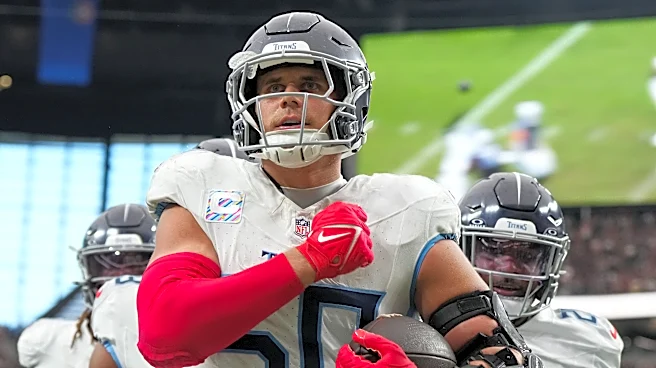
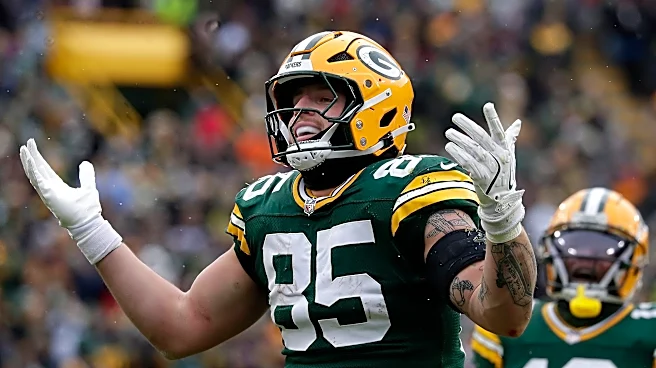
I love this play because it has the presentation of a run in terms of formation. They’re in 12 personnel (1 RB, 2 TE, 2 WR) in a YY Wing formation (both TEs tight to the line on the same side of the formation). I don’t have the numbers on what the Packers did out of this specific formation in 2025, but it’s something that worked well for them. In these formations, you’d see Tucker Kraft as the inside man. On run plays, that puts the strongest blocking TE closer to the formation, but it makes him more difficult to cover on pass plays.
On the play above, you can see the Commanders leaning heavily on the strong side of the formation. Kraft engages briefly on a block, then disengages and releases into open space.
In this area of the field, all you need is one little misstep in the defense to take advantage of. This plays so well off the power run game.
Run
Inside Zone (4.4 YPA, 80% Success)

The fastest path to your destination is a straight line, etc.
RPO
Inside Zone / Bubble (4.0 YPA, 100% Success)

While the Packers RPO game hasn’t been nearly as effective as it used to be, it can still be a weapon in this area of the field. Again, all you need is a slight misstep. The issue with this kind of RPO in the open field is that teams can bait you into throwing the Bubble by showing one defender over the stack, with an overhang defender on that side (aligned between the tackle and the closest receiver). It can look like there’s only one defender, but that overhang is looking to just shoot the gap. That’s tougher in this area of the field – especially against this YY Wing look – as you leave yourself vulnerable to the run.
Still, this gives you the option to throw the ball to the bubble if the defense gives you a favorable pre-snap look. The entire idea is to make the defense wrong no matter how they play it, and that can work well down here.
Here’s how that section looks on our callsheet:

Here is where you can find the other parts in this series:
An Introduction
1st & 10
2nd & Long
2nd & Medium
2nd & Short
3rd & Long
3rd & Medium
3rd & Short
4th & Short
High Red Zone
Albums listened to: Ethel Cain – Willoughby Tucker, I’ll Always Love You; Charli xcx – Music, Fashion, Film; Marco Benevento – Glera; The Strokes – Reality Awaits