



In a tradition nearly as storied as the Festival di Sanremo, the calcio press is picking through the rubble of how Serie A sides did in European competitions this year. The Champions, Europa, and Conference Leagues have all set their matchups for the round of 16. As usual, everyone’s trying to figure out what it means for the game in Italy as compared to the rest of the continent. And, as so often happens, the conclusions are universally grim.
Atalanta is the only Italian side to advance in the Champions
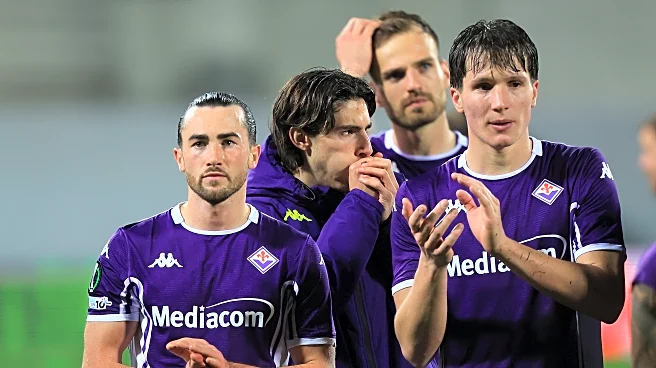
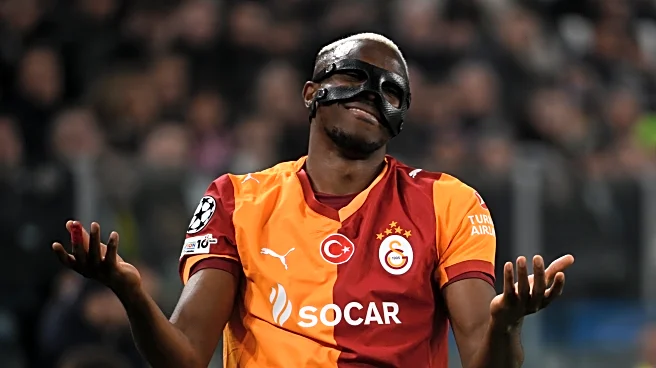
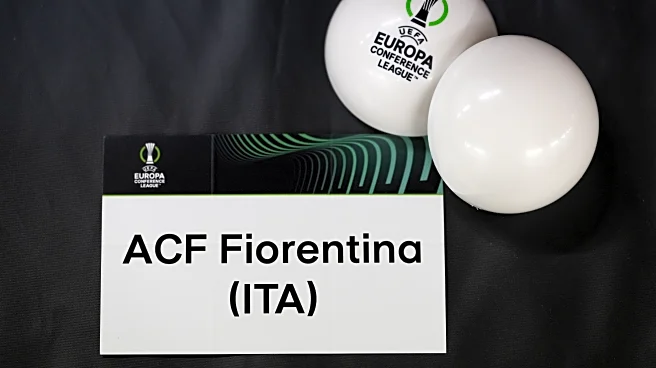
League and gets Bayern Munich, so la Dea’s race is probably run. Inter Milan and Juventus crashed out to Bodø/Glimt and Galatasaray. Napoli didn’t even make it out of the league stage. In the Europa League, Bologna eased past Brann to join Roma in the next round. Fiorentina, of course, did everything in its power to drop the ball against Jagiellonia but couldn’t round off its own idiocy with a defeat.
I don’t subscribe to the knee-jerk reaction that Serie A is in a state of decline. Italian teams have reached 7 of the past 12 tournament finals. Sure, this is a down year in the Champions League, but single season variance is a real thing. If anything, Serie A’s been better relative to other leagues of late per the results, although there’s certainly a discussion to be had about the overall quality of the division compared to the other mega-elite teams. Anyways, it all got me thinking about the UEFA club coefficient. Italy’s remains second in Europe, behind England. But who’s ensuring that it stays high?
To find out, I looked at the past 15 years of UEFA rankings to see which Serie A teams have represented the league best, starting in the 2010-2011 season. As you may recall, Fiorentina’s last Champions League season was 2009-2010 and I wanted to avoid inflating the coefficient based on that result (which should’ve been the quarterfinal but for Bayern cheating like the cheatingest cheaters who’ve ever cheated). These numbers are incomplete because the current European campaigns are ongoing, of course, but I figured adding this season was still useful. You can sort the table by clicking on the columns.
By the numbers, it doesn’t look like Fiorentina’s lifting particularly heavily. Of the 8 continental regulars (i.e. 8 or more seasons in Europe), the Viola’s 15.47 points per European campaign is 5th, which indicates that the club’s pulling its weight but no more. This chart shows that actually it’s the Champions League teams doing the yeoman’s work, although AC Milan and Napoli have shirked. So no, Fiorentina hasn’t been helping the rest of Serie A with deep European runs to boost the league’s coefficient. I’m clearly suffering from delusions of grandeur by proxy. Case closed.
And immediately reopened because UEFA weights all these competitions differently. In the 2022-2023 season, Inter got 29 points for reaching the Champions League final. Napoli got 25 for reaching the quarterfinal and Milan, who eliminated the Partenopei, got 24 for reaching the semis. Meanwhile, Fiorentina got 20 for reaching the Conference League final; 11 other teams got more.
That’s fine and correct, of course. The Champions League is more difficult than the Conference League and the coefficient points ought to reflect that. In terms of judging a nation’s teams on progress through their respective continental competitions, though, it skews the numbers towards the Champions League; Napoli earned 12 points for crashing out in the league stage of the Champions League this year while Fiorentina’s into the Conference League round of 16 and has received just 7.75 point for its endeavors.
This is small-team bias at its most glaring, of course, but that’s what I’m all about and it drove me to create my own system of points from scratch. What I wanted was less about UEFA’s coefficient and more about which Italian teams take Europe seriously; I’m still scarred by the Udineses and Palermos of the world getting grouped in the early aughts, eventually resulting in Serie A losing its 4th Champions League spot just in time for the Viola to finish 4th for 3 straight seasons.
I was therefore more interested in how deep clubs go into whichever competition they’re in because that seems like a decent proxy for seriousness, especially since the Champions, Europa, and Conference Leagues roughly sort clubs by financial power. Since I’m starting from scratch and it’s my own idiotic system, I get to make the rules as I see fit and enact statistical tyranny as I so desire. Here are my scoring criteria, which I’ve named Tito’s Arbitrary Scoring Table for Europe (TASTE).
Why did I choose these numbers? Why didn’t I choose other numbers? Is this the product of lazy thinking from someone with no background in statistics or math in general? Why is this so important to me? Why do I have Mark Zuckerberg’s mortgage written in Church Latin? Some questions have no good answers.
Anyhow, here’s the TASTE table since the 2010-2011 season. Two bits of bookkeeping: first, group stage playoff means any games between the group stage and the round of 16; second, I subtracted 2 points for those teams that got knocked out of the Champions League but parachuted into the Europa League back when that was a thing because it seems to me there should be a penalty for being knocked down a level.
Did you? Did you scroll all the way to the right hand column? Of course you did. That’s why you saw it. You saw the sorting. Yes, by my completely meaningless and utterly biased standard, Fiorentina has done more in its European seasons than any other side in Italy. Roma’s done its best as well. Napoli, Milan, and Lazio, on the other hand, consistently flame out early. And full credit to Atalanta, which took a couple of years to figure out how this continental tournament thing worked before getting really quite good at it.
Vindication is a wonderful thing even when you have to torture some data into providing it. Fiorentina isn’t a European power even in my fevered imagination but it does make me rest easier seeing that, by at least one entirely fictional standard, the Viola have given more to their European efforts than any of their Serie A brethren. That all the other teams with more than a couple years in Europe over this span have averaged a higher league position and spent more money on salaries and transfer fees only reinforces the quixoticity.
Despite the disappointments and the shortcomings and the general incompetence, Fiorentina’s done its best, averaging a run to the quarterfinals in each of its European seasons. No, it’s not the same as going toe to toe with your Manchester Cities and your Reals Madrid but the Viola battle with an honor beyond any of their peers. For a fan base desperate for something positive, that’ll have to be enough.