

“They talk about all the other fellas on that team, but I notice the man who hurts us when it counts is that third baseman. There is a real ballplayer.”
The Athletics entered the 1930s as the class of the American League, winning their second straight World Series title in ‘30 and taking the pennant again in ‘31. But the decade would belong to another team, one that rebuild itself after the departure of the game’s brightest star. Led by Lou Gehrig and Bill Dickey and, later, Joe DiMaggio and Joe Gordon,
with Red Ruffing and Lefty Gomez in the rotation, that incarnation of the Bronx Bombers won four straight championships to close out the decade. But, when asked to identify the most dangerous player on the club, legendary A’s manager and owner Connie Mack named none of those Hall of Famers. Instead, it was the team’s cerebral, ultra-consistent third baseman who Mack feared most.
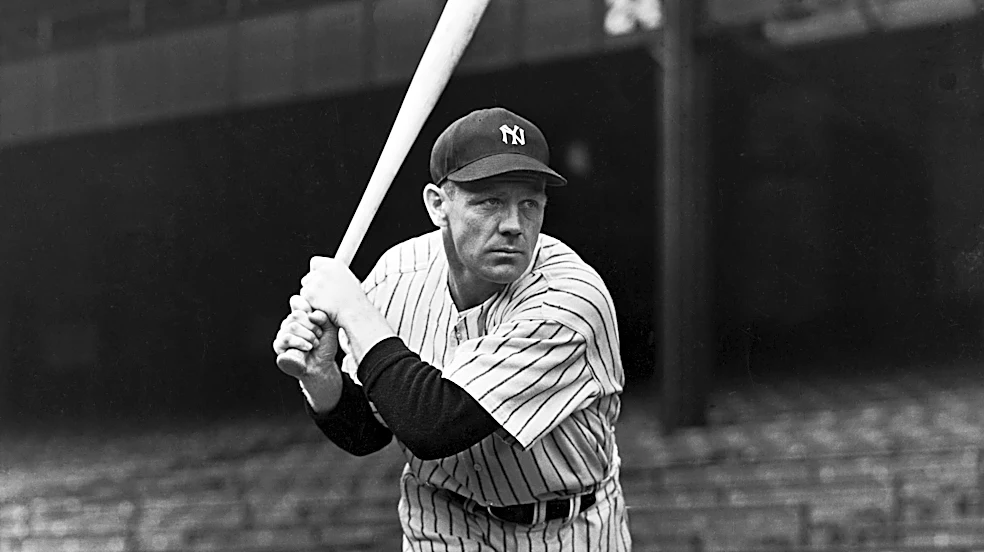
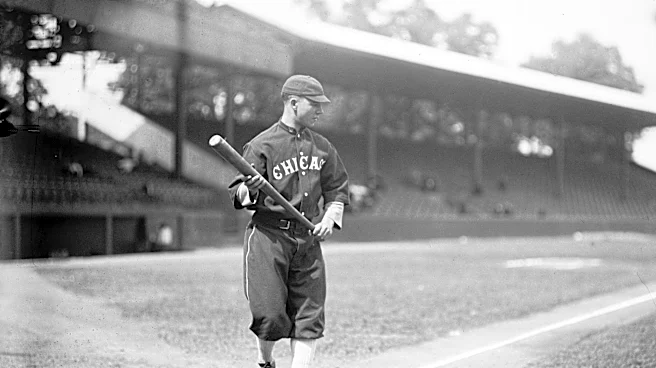
Robert Abial “Red” Rolfe
Born: October 17, 1908 (Penacook, NH)
Died: July 8, 1969 (Gilford, NH)
Yankees Tenure: 1931, 1934-42
Growing up in New Hampshire, Red Rolfe quickly distinguished himself in both academics and athletics. He earned acceptance to Dartmouth, where he performed well enough to draw the attention of several big-league teams. Mack offered the youngster a tryout, but he ended up signing with the Yankees, who pitched him on the potential to play alongside Gehrig and Babe Ruth.
Rolfe would get his chance before long, appearing in a single game as a defensive replacement a few months after his signing in 1931. He’d spend the next two years with the Double-A Newark Bears, consistently hitting for average while continuing to hone his defensive skills on the left side of the infield. He wouldn’t return to the Show until ‘34, when he broke camp with the Yankees. Rolfe’s first year in pinstripes was a mixed bag, as he dealt with maladies and a position switch from shortstop to third due to a lack of arm strength. Still, he immediately impressed some of his more seasoned teammates. “I never saw a kid with so much spirit and desire to learn as Rolfe has shown me,” said Gehrig. “When you start to discuss things, this Rolfe sticks his ear right into your tonsils. He wants to know everything. I think he’s a natural.” The two Ivy League men would become close friends, bonding over a shared appreciation for cribbage and literature.
If ‘34 was a step forward, ‘35 would be Rolfe’s breakout. He hit .300 and, while he was yet to show much power, he made up for it with his acumen. He was a progenitor of the shift, keeping detailed notes on opposing hitters’ tendencies and implementing his findings on the field. The following season went even better, as the third baseman hit .319 with an MLB-best 15 triples while settling into the two-hole. He also got his first October action and made the most of it, hitting .400 in a six-game victory over the rival Giants.
The Yankees settled into a familiar rhythm through the rest of the decade, winning four straight titles. And, while not able to compete with the fame of some of his teammates, Rolfe became a bone fide star, earning four straight All-Star berths and twice receiving down-ballot MVP votes. His career year came in ‘39, as he slashed .329/.404/.495 while leading the league in hits (213), doubles (46), and runs scored (139).
Rolfe’s performance took a downturn after that stellar campaign. A series of health issues, including a tonsil condition, a vision issue, and intestinal colitis, sapped him of much of his strength. Rolfe hit just .250 with little pop over the next three seasons as he saw his playing time decline. He had one more shot at playoff glory in ‘42, his final season, and made the most of it, hitting .353 in an eventual loss to the Cardinals.
Rolfe retired after that season to take a coaching job at Yale. In ‘46 he returned to the Yankees as a coach, and his longtime manager Joe McCarthy began grooming Rolfe to succeed him at the helm. But McCarthy found himself out of a job after the Yankees were sold to a new owner. Rolfe was forced to leave the only pro team he’d ever known, joining the Tigers first as farm director and then as manager. He took home Manager of the Year honors in 1950 as a previously moribund Detroit squad ended the season just three games back of the pennant.

That success proved unsustainable, though, and Rolfe was out by ‘52. He returned to his alma mater, Dartmouth, where he served as athletic director until health issues forced him to resign in 1967. Two years later, the man who had struggled with his health throughout his playing career died at the age of 60 from kidney failure.
Red Rolfe’s statistical impact is clear and impressive. But his impact on the Yankees and the game of baseball extend far beyond that. “Red was often sought out by teammates for help with income tax filings, advice on investments, counsel on their bridge game, and even their domestic difficulties,” said the Sporting News upon Rolfe’s retirement of his role as the consummate teammate. McCarthy, who managed for 24 years and won seven championships, called his protégé “one of the greatest third basemen of all time.” And he accomplished it all while dealing with health issues that would have led many others to walk away from the game. All this paints a clear picture of a player who, if you’d had the chance to watch him play day in and day out, would have been a beloved favorite, the kind of player who transcends on-field performance through strength of character. Or, in the words of the great Connie Mack, a real ballplayer.
See more of the “Yankees Birthday of the Day” series here.