
As we round the bend towards the top of the list, today features perhaps the most eclectic mix of four players I can recall in one grouping. The almost ready to the not having debuted; the highest of floors to the high impact.
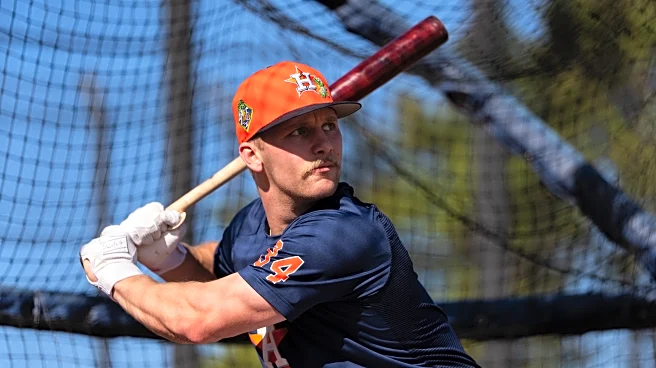
20. Brandon Valenzuela, C, age 22 (DOB: 10/2/2000), grade: 35+/40, 2025: San Diego system
Signed by San Diego as a 16-year old international free agent in 2017 out of Mexico, Valenzuela climbed level by level though the Padre system before being traded to the Jays for Will Wagner in July. He impressed behind the plate for the Bisons and added to the 40-man after
the season, he’s on the literal cusp of the majors and will be the first in line if the Jays need reinforcements behind the plate.
Defensively, Valenzuela is solid and major league ready. His bat leaves more to be desired, as he hasn’t hit for much average in the upper minors. On the plus side, he’s run low-double digit walk rates year-in-and-year out, so there is some patience/eye. And he did show a little bit more pop last year with a career high 12 home runs. But any offensive contribution will be largely bonus.
How one feels about this ranking will largely be philosophical. If it’s upside and impact potential one values, he’s not your guys and could rank a dozen or two spots lower. But the flip side he’s major league ready and given the perennial need for competent backstops, there are few players in the system who are better bets to have a 10-year career.
19. Landen Maroudis, LHP, age 21 (DOB: 12/16/2004), grade: 35+/40, 2025: 11th
The Blue Jays gave Maroudis the equivalent of second round money to sign as their 4th round pick in 2023 due to the standout athleticism and projection in his 6’3” frame with plenty of room for development as he focused on pitching versus playing both ways as a shortstop. The almost immediate returns were appeared to vindicate the gamble, as Maroudis went right to low-A and looked terrific in debuting with four perfect innings 5 strikeouts and a lot of weak contact.
Maroudis sat 93-94 with his fastball from a low three quarters arm slot, touching 95-96. Both his slider and curve looked very sharp, both drawing swings-and-misses with the latter relied on a little more often. He showed a change-up sparingly, but it looked promising and had been noted earlier in spring training. It was a clear higher end starter upside, and allayed the not insubstantial risk that prep pitching prospects get to pro ball and their stuff backs up in the professional setting.
But there’s a reason high school pitching is an ultra high risk demographic, underlined when Maroudis left his third start early with a UCL injury. He dodged full Tommy John surgery, instead undergoing an internal brace to reinforcement the damaged ligament and returned mid-last year. Unfortunately, the immediate returns were disappointing as the stuff was well short of prior to the injury.
Maroudis’ fastball last summer usually sat just around 90 MPH, and while he could still spin curveballs with nice depth his slider lacked bite. Moreover, the feel and strikethrowing weren’t back, as he frequently lost the zone (45 walks and 12 HBP in 45.1 innings). The most optimistic possibility is the stuff was just slower to bounce back and he’ll bounce back in 2026. This ranking is a hedge between that possibility and retaining a significant upside tail, and the reality that the stuff and performance observed was that of a non-prospect. Accordingly, next year he’s likely much higher or lower.
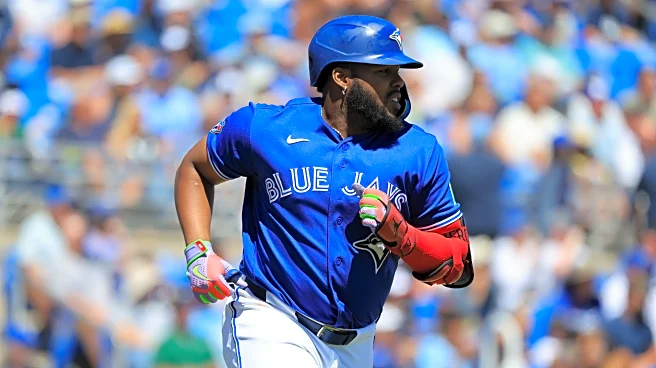
18. Jake Cook, CF, age 22 (DOB: 7/13/2003), grade: 35+/40, 2025: college junior
For those not partial to Valenzuela’s profile above, the Blue Jays third rounder last summer from Southern Miss is at almost the exact the opposite end of the spectrum with a plethora of raw tools to dream on if things come together. Given the reputed tools, that he did not debut after the draft, and effectively had only a one year track collegiate track record, Cook will arguably be the most interesting player to watch in 2026.
Starting with those tools, Cook is a burner with top end speed that is given 80 grades. He was initially a pitcher, so he’s got a big arm to be a big asset in the outfield. He lacks the usual experience, but the building blacks are there to be a standout in centre field. He also stands out at the plate for a an extreme contract oriented approach that resulted in a .350/.436/.468 triple slash in one of the better non-power conferences. Impressively, he was still managed to draw walks more than 10% of the time, and all this after not hitting regularly for a couple years.
Somewhat paradoxically, in a profile reminiscent of Anthony Gose once-upon-a-time, Cook may have both one of the higher floors and higher ceilings or upside tails in the system. He doesn’t have to hit much to add value with speed as an extra outfielder, providing a viable path to a major league role even barring much development. Likewise, while his 2025 offensive approach limits production upside in the modern game, numerous players have demonstrated that just enough to not be a black hole as a regular with standout defense and good baserunning can get players to the 3-4 WAR threshold consistently. To say nothing of the potential for reworking things to unlock a more upside.
While there’s a high ceiling and high floor (relatively, in prospect terms), where Cook’s value profile falls down relative to others is in the middle. Basically, either reaches the minimum offensive viability threshold to be a regular and be able to leverage the other tools, or otherwise the realistic upside is a Dewayne Wise type journeyman career.
17. Sean Keys, CIF, age 23 (DOB: 5/26/2003), grade: 35+/40, 2025: 22nd
Keys raked over his last two years at Bucknell (1.122 and 1.333 OPS), as well as during the summer in between which included a short stint in the premier wood bat Cape Cod League. The Patriot League leaves something to be desired as a measuring stick, but that prodigious performance prompted the Jays to take him in the fourth round of the 2024 draft.
Keys’ brief post-draft debut with Dunedin was solid, with a 134 wRC+, characterized by drawing walks (13%) and a fair bit of swing-and-miss. The power didn’t really show, but the hits fell in. His first full season in 2025 with both more or the same (plate outcomes) and very different (batted ball outcomes). 19 home runs tied for 4th in the Northwest (in a tough home park for lefty power), though Keys only hit .217. He continued to show a very patient and disciplined approach, walking 16% to cushion the fall in BA, again with a fair amount of sign-and-miss.
Keys split the season defensively between third base and 1B/DH, and while he wasn’t butcher, his future isn’t going to be at third. He’s an offensive-driven profile, and in that respect the subpar batting average/hit tool is a yellow flag even with good power. In 2026, it wouldn’t be surprising if he put up some very big numbers in AA, taking aim at the short RF porch of Delta Dental park. So far, so good. But there’s a long way to go and he’ll have to prove it level-by-level and really hit to project as a MLB regular.