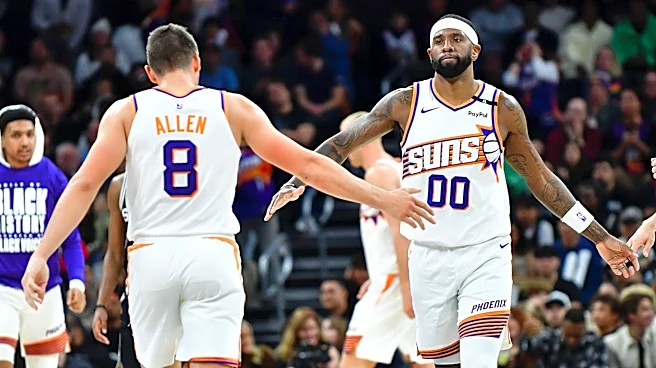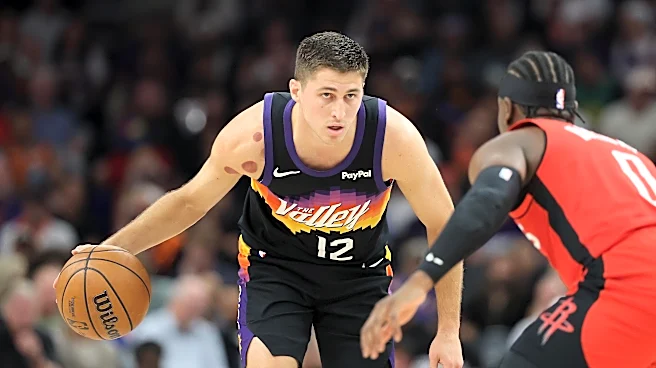





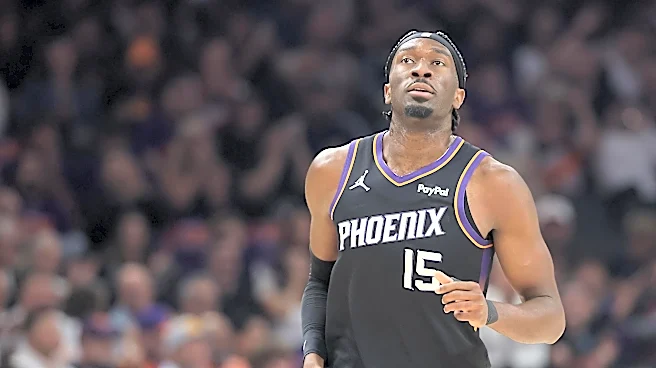


The first transactional domino of the 2026-27 season fell on Saturday as the Phoenix Suns reached an agreement with Collin Gillespie, bringing him back on a four-year, $48 million contract. The exact structure remains to be seen, but the assumption is that Gillespie will earn $10.7 million this upcoming season, with 8% raises in each of the following three years. That would culminate in a $13.6 million salary in the final year of the deal, when Gillespie is 30 years old.
As it stands right now, Gillespie’s contract will account for roughly 6% of the Suns’ salary cap for the 2026-27 season.
This is where I slowly get up from my chair, clap my hands, and applaud the Phoenix Suns for getting this deal done, and doing so at the number they did. It was the right thing to do. It needed to be done. And it rewards the success of internal development for a player who arrived in Phoenix on a two-way contract, earned a guaranteed deal, and has now earned a respectable NBA contract. For a team whose mantra revolves around alignment, identity, and development, this is a win.
Yes, the Suns will continue paying for the transgressions of the past, for the narrow-minded roster construction strategy initially deployed by Mat Ishbia upon arrival. That’s going to hurt for the next four years. But in the same breath, the course correction that began last offseason has been positive. The Suns are operating like a competent franchise. And after 20 years of often failing to operate astutely, it’s nice from a fan’s perspective to see them doing so.
Not every transaction will be a winner. Not every player selected for development will produce positive results. That’s part of the process. But as long as you’re operating like a competent franchise, you can absorb some of those misses. You can survive mistakes because they’re part of a larger plan rather than desperate attempts to fix yesterday’s problems.
For the Suns, that’s what makes this signing so encouraging. It’s not simply about Collin Gillespie. It’s about the process that got him here. The Suns most certainly got a hometown discount on Gillespie.
He could have made more money elsewhere. Phoenix could have paid upwards of $3 million more annually to retain his services, yet Gillespie chose to stay. He wanted to be here. And in doing so, he put the Suns in a position to be more successful. By saving money on his contract, the Suns now have the flexibility to allocate those funds elsewhere. The question becomes, where?
The assumption is that Jordan Goodwin is the next domino to fall, followed potentially by Mark Williams.
As things currently stand, the Suns are staring at a future that includes the luxury tax and perhaps even a trip over the first apron. That can sound daunting, especially considering everything we’ve endured with second apron hell over the past few seasons. But as long as a franchise is operating confidently, with the ability to see both the short-term and the long-term strategy, it’s okay to go over the first apron.
The Suns want to be competitive. Bringing back Collin Gillespie reinforces that desire. The next question becomes what this looks like strategically for Phoenix. Do they embrace three-guard lineups again next season? Or does Gillespie become the Suns’ version of T.J. McConnell, a competent and capable backup point guard who keeps the intensity high on both ends of the floor while leading the second unit?
That remains to be seen. But now that Gillespie is officially back, the Suns can begin having those conversations.