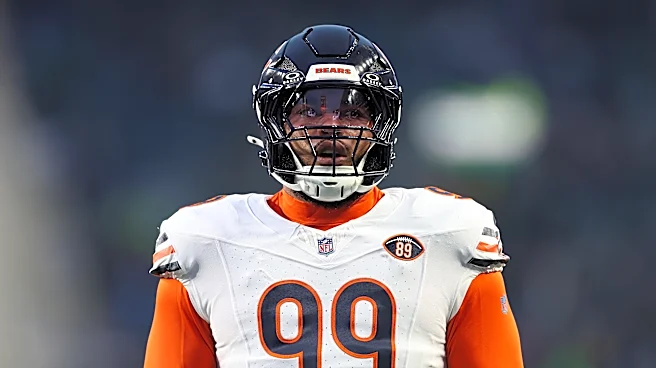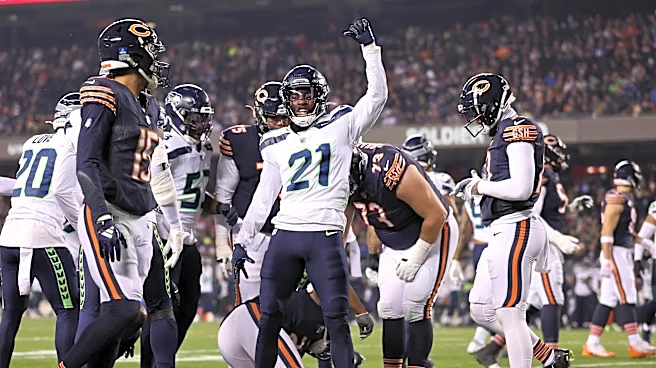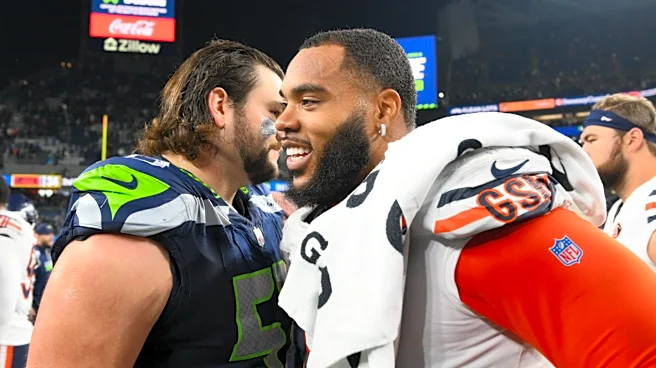



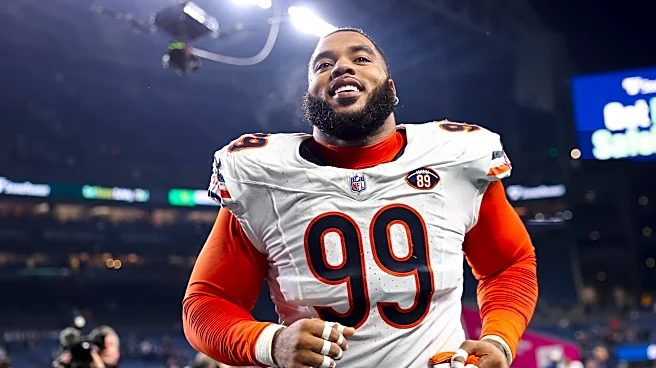

Monday Night, November 2, 2026. Lumen Field, Seattle.
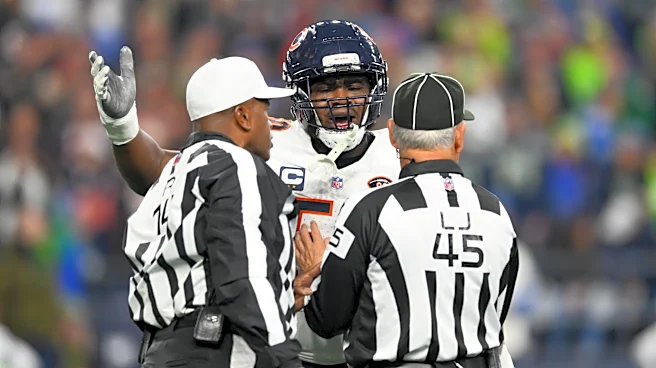
Crew: Shawn Smith (R #14), Tra Blake (U #3), Jay Bilbo (DJ #84), Jeff Seeman (LJ #45), Dyrol Prioleau (FJ #109), Keith Parham (SJ #41), Dino Paganelli (BJ #105), Mike Wimmer (RO #0).
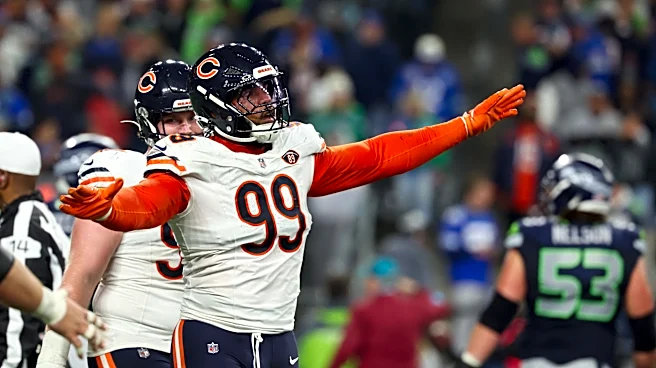
Hello Chicago Bears fans! Chicago flew to Seattle on Monday night and departed with a 34–17 statement victory in Big Jeff’s first game. But let’s dive into the calls and no-calls in the game. The Hawks fans are squawking, but we here at UFR take a bird’s-eye view on the calls in the game and no amount
of fan noise will ruffle our feathers. Official totals: Bears 10–85, Seahawks 5–43. The accepted tape is not, however, where the true story lies. Several judgment calls went against Seattle; several others, however, went against Chicago. One delay of game erased a tackle-for-loss and became the spark for a scoring drive.
The same four-tier scale is applied to every accepted flag and every meaningful no-call: Correct, Arguable, Incorrect, Horrible. Weight runs 1–4 by impact (1 for housekeeping, 2 for drive disruption, 3 for scoring or red-zone leverage, 4 for wiped score/turnover or game-ending leverage). Replay overturns are judged against the “clear and obvious” standard. No-calls receive the same grades and weights as thrown flags. The goal is a transparent differential, not a birdbrained screed.
The crew under Shawn Smith is under the microscope, but for the most part they were right, so I’m afraid the Hawks fans will be eating crow after this UFR. The Flag of the Game is the fourth-quarter delay of game on Chicago that erased a Seahawks tackle for loss on D’Andre Swift and, on the next snap, set up Kalif Raymond’s 39-yard lateral that put the ball on the five yard line, goal-to-go. The League File is the clear Kyle Williams touchdown that was initially ruled incomplete in the Patriots–Dolphins game. Same method. Same scale. Full breakdown follows.
First Quarter
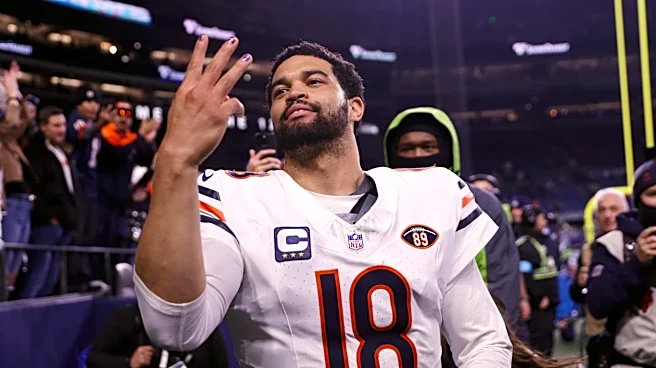
CHI 7, SEA 0 (after the opening 17-play, 80-yard drive that ended with Caleb Williams’ 1-yard touchdown to Luther Burden).
No-call: Hit on Sam Darnold while sliding.
Darnold scrambled on third-and-8 from the Seattle 31. Devin Bush hit him as he went to the ground. No flag. Shawn Smith’s pool-reportexplanation: “He was scrambling and became a runner. We didn’t see any contact to his head and neck area when he hit the ground.” Darnold had left the pocket and was a runner at the moment of contact. The protection that attaches to a quarterback in the act of passing does not attach once he is a runner. Correct (no-call). Wt 2.
No-call: Hit on Tory Horton.
On Seattle’s opening possession, third-and-5 from the Seattle 37. Horton was hit. No flag. Smith: the contact was not forcible to the head or neck area. Available angles show the blow to the chest. Correct (no-call). Wt 2.
Second Quarter
Santos field goals from 44 and 38 push the lead to 13–3. With 30 seconds left, Jaxon Smith-Njigba beats coverage for a 43-yard touchdown from Darnold (extra point missed). 13–9 at the half.
Process flags and standard holds pad both totals. Correct on the bright-line ones. Wt 1.
Third Quarter
CHI 20, SEA 9 after Swift’s 1-yard touchdown.
Jaxon Smith-Njigba, offensive pass interference, 10 yards.
End of the third quarter. Seattle driving deep. Darnold completes a pass to JSN near the goal line. Flag. Smith’s explanation: full arm extension and locked elbow into the defender’s chest; the arm affected the defender’s ability to play the pass. The contact is not incidental hand-fighting. The elbow is extended and the push is active. Correct. Wt 3. Instead of first-and-goal, Seattle faces second-and-18 from the 22. The drive dies.
Fourth Quarter
CHI 20, SEA 17 after Cooper Kupp’s 7-yard touchdown and the successful two-point conversion to Tory Horton.
Delay of game on Chicago (the Flag of the Game).
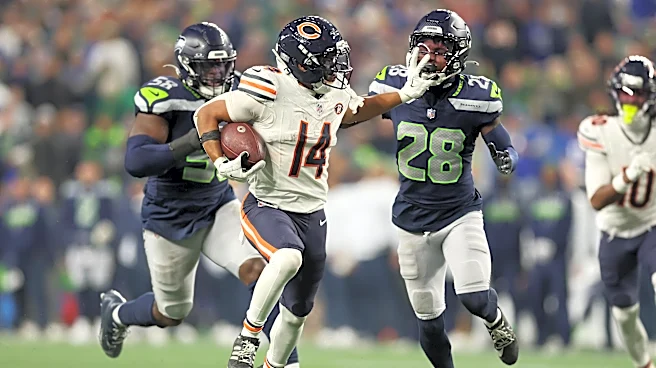
~9:01 remaining. Third-and-4 from the Seattle 39. The Seahawks had a stop: D’Andre Swift was dropped for a loss in the backfield. The play is wiped by a delay of game on Chicago. The penalty occurred before the snap, so the tackle-for-loss never counts. Chicago is given third-and-9. On the next play Williams throws a backward lateral to Kalif Raymond. Raymond takes it 39 yards to the Seattle 5. Swift scores from 5 on the next snap. 27–17.
Correct. Wt 4. It erased a tackle-for-loss that would have forced a punt and produced a touchdown that stretched the lead to two scores. We will talk about it more in our spotlight.
Interception by the Bears eliminated by a holding call on Clark Phillips — Incorrect (All-22).
Later in the quarter, a Bears interception is wiped by a defensive holding flag on Stevenson. All-22 shows the contact does not meet the standard. The flag is Incorrect. Wt 3. The interception is erased; the drive continues. (Chicago later intercepted Darnold on a different snap.)
No-call: Hold on Jeffery Simmons on the two-point attempt.
On the Seattle two-point conversion that made it 20–17, a hold on Simmons is not called. The contact is visible and restrictive. Also – it looked like two players were in motion on the play. Incorrect (no-call). Wt 2.
Additional process and holding flags on both sides. Correct or Arguable depending on the angle. Wt 1–2.
Delay of Game #2: Chicago, goal-to-go.
Later in the fourth quarter, with the Bears inside the Seattle 10 and the game still within reach, the officiating crew stood over the ball and would not allow Chicago to snap. The play clock expired while the officials were positioned in a way that prevented the snap. Delay of game was called. This is distinct from the earlier flag that erased the Swift tackle-for-loss. The second delay occurred in a goal-to-go situation and was the product of the crew’s positioning rather than a pure late substitution by the defense. Correct under the written rule (clock expired). Wt 2. The enforcement is technically accurate; the circumstance that produced it is the same structural timing risk placed entirely on the offense. It is also an egregious loophole. A Seahawks defender had lollygagged onto the field after a late substitution, contributing to the timing. The rule does not require the defense to be set in a reasonable time; it only requires the offense not to snap after the clock expires. The crew applied the rule as written. The system allowed the defense to create the condition that produced the flag.
Swift scores again from 5 after the Booker-tipped interception by James Lynch. 34–17 final.
Calls against Chicago
10 accepted. Majority Correct or Arguable; 1 Incorrect.
Calls against Seattle
Seattle total accepted: 5–43. Scored items above include the high-weight and named plays plus the process group.
Crew card (Shawn Smith): Accepted flags mostly Correct on the bright-line plays (JSN OPI, both delay-of-game flags). One Incorrect against Chicago (Stevenson holding that wiped an interception). Two Correct no-calls on the Darnold and Horton hits. One Incorrect no-call on the Simmons hold.
Differential. The accepted volume favors Seattle (5–43 vs. 10–85), but the highest-weight Correct flag of the night is Delay of Game #1 on Chicago that erased a tackle-for-loss and produced a touchdown. Delay of Game #2 is a separate Correct flag, lower weight, produced by the crew’s positioning over the ball in a goal-to-go situation. The JSN OPI is a Correct Weight 3 against Seattle. The Phillips holding is an Incorrect Weight 3 against Chicago. The Simmons no-call is an Incorrect against the Bears. No Horrible flags. The game was decided by Swift’s three rushing touchdowns, the Raymond explosive, and the defense more than by the flags. Delay of Game #1 is the snap that most cleanly shows a correctly applied rule, Delay of Game #2 shows an egregious loophole the league needs to close.
Grade: One Incorrect against Chicago, otherwise clean enough on the judgment calls that matched the tape.
Flag of the Game: Delay of Game #1 on Chicago, fourth quarter (~9:01).
Correct. Weight 4. While this was a correct call, the impact is off the charts. Erased a tackle-for-loss on Swift on third-and-4, the Bears would have either been trying an extremely long field goal or punting. Instead, on the next play Williams lateraled to Kalif Raymond, who took it 39 yards inside the 10. Swift scored. The rule was applied correctly. It isn’t a call that can be declined, as it was a dead-ball foul. That is the Flag of the Game. Runner Up: Delay of Game #2 is Correct, and its a lower-weight flag, since the Bears scored, but it was produced when the crew stood over the ball and would not allow the snap in a goal-to-go situation.
League File — Patriots vs. Dolphins, Nov. 1.
Kyle Williams clear touchdown ruled incomplete.
Drake Maye to Kyle Williams, 43-yard pass into the end zone. Williams catches the ball, breaks the plane, and loses control only after he is already in the end zone (knee knocks the ball loose after the plane is broken). Officials rule incomplete. Mike Vrabel challenges. Replay confirms the process of the catch was completed and the ball broke the plane before control was lost. Touchdown. The call on the field was Incorrect. Weight 4 (wiped score). The review corrected it. The initial ruling is the miss. But hey, at least this time replay worked. Imagine if there hadn’t been a review?
What did you think about the calls and no-calls in the Bears vs Seahawks game on Monday night? Are the Hawks fans out of line crying fowl? What about the Patriots being robbed of a TD? Tell us in the comments below!