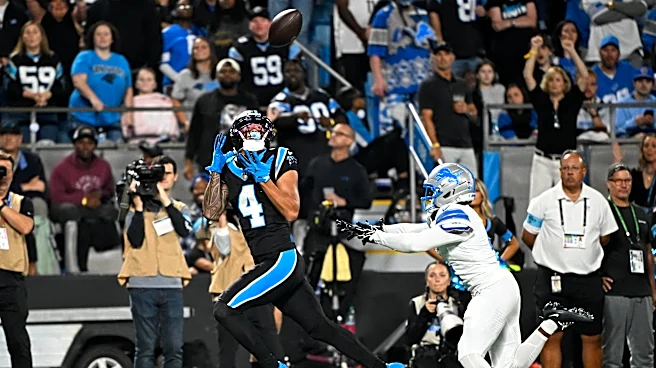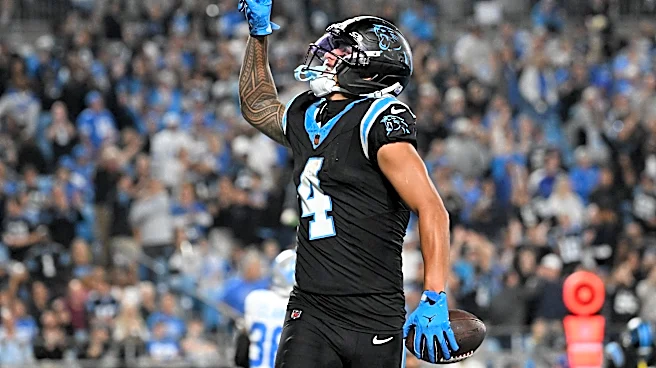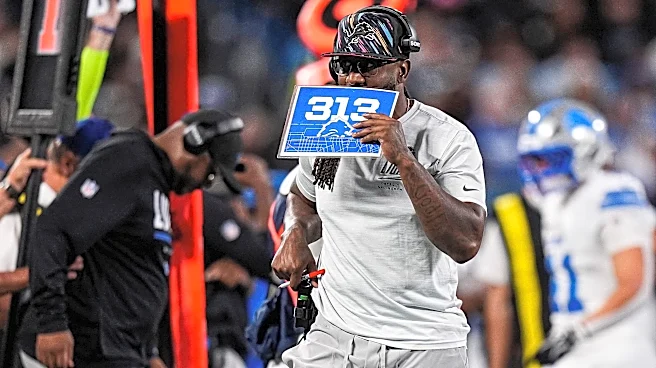

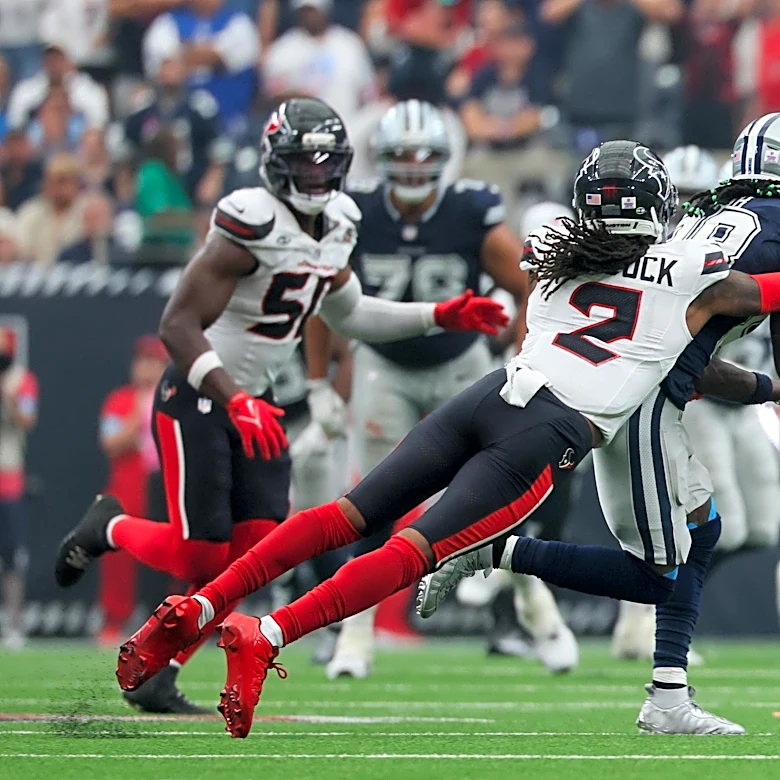
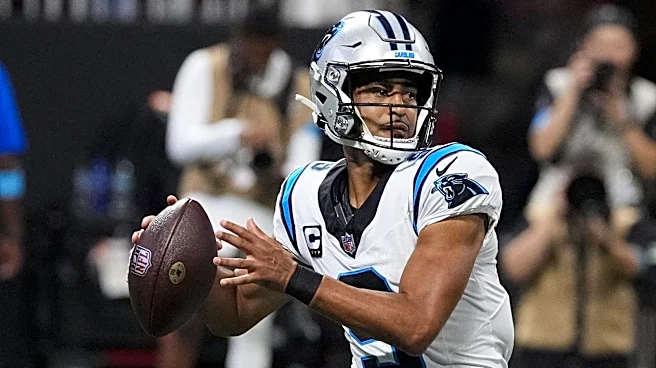
The Detroit Lions frustratingly lost to the Carolina Panthers on “Sunday Night Football,” taking a massive step backward from whatever progress they appeared to make in Week 3 against the New York Jets. Following the loss, the heat is at an all-time high on second-year defensive coordinator Kelvin Sheppard, and pressure has been put on Dan Campbell to provide answers.
Twenty plays? Really?
Yes. Really.
The purpose of making this film breakdown so long is to be as transparent as possible. Each play selected
was either an explosive or significant chunk play, as well as any conversion on a critical down.
The goal is to perform a root cause analysis where every problem is drilled down, asking “why” problems occurred. Is defensive coordinator Kelvin Sheppard truly the root cause issue for the defense’s performance? Or are there other underlying player issues that deserve the bulk of the blame?
The process will go as follows for each play:
- Does the play’s failure initially appear to stem from player execution or from coaching?
- If it appears to be player execution, we’ll ask whether the coaches put the player in the best position to succeed.
- If it appears to be coaching, we’ll ask why the coaches may have made the decision for the scheme choice.
By the end of the analysis, we should get closer to some answers. There’s a lot here, so I’m just going to attack it chronologically.
WARNING: Twenty painful plays have been clipped below. Swim at your own risk.
First quarter
Play 1
First third-and-long of the game and the Kelvin Sheppard calls a cover-2 man scheme, rolling the deep shell toward the field-side trips set. Off the top, it’s a reasonable call given the situation. But the devil is in the details.
The Panthers made it a strategic point to align second-year wide receiver Tetairoa McMillan in the slot, attacking the middle of the Lions defense. This created a matchup problem.
Linebacker Jack Campbell is forced into man coverage against the Panthers’ best offensive weapon, a task that no linebacker in the NFL is equipped to win.
Who is to blame?
Jack Campbell loses the rep, but was not put in the best position to succeed.
Why did the Lions stay in this bad matchup and not adjust the call? While we do not know for certain, there are a few possible reasons. One could be that Sheppard has little faith in his cornerbacks and felt the two-high shell coverage safeties were more important to prevent a major explosive than the risk of Campbell losing a bad matchup in the center of the field. Another possibility is that Sheppard wants to avoid using safeties Chuck Clark and Christian Izien in man coverage as much as possible (more on this later).
Not-so-scientific blame meter: 75% coaching, 25% player execution.
Play 2
The RPO (run-pass option) game was a clear emphasis for the Panthers’ offense from the start. While they hadn’t run it much in Weeks 1-3, it’s remarkably effective given quarterback Bryce Young’s athleticism and quick release.
What we can deduce from this early and frequent RPO usage is that the Panthers saw something in the Lions’ defensive tendencies on film that this would be effective. Over the course of the game, the Lions’ defense did adjust and cover it more effectively. But there is no clear sign of player execution error here.
Credit to the Carolina offensive coaching staff.
Not-so-scientific blame meter: 100% coaching, 0% player execution.
Play 3
Another RPO here. But this one I wanted to point out for a different reason.
Carolina had been called for illegal man downfield on a pass in their opening possession. Here, they should have been called for it again, as left tackle Rasheed Walker (63) is 1+ yards downfield, pushing towards linebacker Jack Campbell at the time of the throw.
I already knocked the coaching on play 3 for the RPO issues.
Not-so-scientific blame meter: 100% coaching, 0% player execution
Play 4
The first run play in this breakdown. The endzone view here captures it all.
The good:
- Safety Christian Izien (5) does a good job attacking the outside hip of the blocker, forcing the run back inside.
- Aiden Hutchinson (97) almost makes this play on his own, swimming around the tight end’s down block and arguably draws a hold as his shoulders are turned perpendicular to the line of scrimmage.
The bad:
- Rookie linebacker Jimmy Rolder (41) is reached by the center (77), and Rolder is unable to maintain his gap responsibility with outside leverage on the blocker.
- Free safety Chuck Clark (36) is stuck in molasses. Running back Chuba Hubbard (30) starts the play aligned behind the quarterback on the right hash. Clark is also aligned in the center of the formation near the right hash. When the ball is snapped, Hubbard receives the toss and is already on the left hash before Clark takes a single step. Further, Clark takes a poor pursuit angle and looks slow while at it.
Did Sheppard put his players in the best position to succeed? Yes. There is no clear error here in scheme or matchup to suggest otherwise.
Not-so-scientific blame meter: 0% coaching, 100% player execution.
Second quarter
Play 5
This one is a tough one.
Sheppard calls for an exotic zone blitz here, with safety Chuck Clark showing his pressure pre-snap with linebackers in a mug look. Ultimately, both linebackers Campbell (46) and Derrick Barnes (55) drop back in either a spy or shallow zone.
On the back end, it looks like the Lions are in cover-3 with Izien in deep center. At some level here, we have to speculate what players’ responsibilities are and what they are coached to do using context clues. I will not pretend to have all of the answers. The biggest red flag here is the poorly timed and distanced blitz from 31-year-old Clark, who is about 6 yards off the line of scrimmage when the ball is snapped.
Fundamentally, time and distance are the most critical elements for a defense to consider for success. The biggest red flag I see here is the spacing and depth of safety Christian Izien. Both cornerbacks at the top and bottom squeeze the spacing on the wide receivers in their respective thirds of the coverage, while Izien remains 10 or more yards from any receiver in his vicinity. As a result, despite the blitz, Bryce Young can complete the pass right in the space +/- the 10-yard spacing behind any linebacker and in front of Izien.
The time and distance are the issues on this play. Both with the blitz and with the coverage.
Did the players execute the scheme well? No. But the assignments were not based on poor matchups or unreasonably difficult for NFL safeties.
Were the players put in the best position to succeed? Unlikely. If the safety duo of Clark and Izien does not have the ability to squeeze the deep zone and better disguise and time a depth blitz, then it’s a bad call with the players available.
Not-so-scientific blame meter: 50% coaching, 50% player execution.
Play 6
Critical fourth down and Sheppard gets the Lions back to their roots with cover-1, man.
Up front, the defense runs an A-gap twist with Jack Campbell and Alim McNeill, resulting in a quick pressure to get Young off his spot. Both Barnes and rookie defensive tackle Skyler Gill-Howard drop into the shallow zone, sitting at the depth of the first-down line to gain.
In the secondary, it’s man coverage across the board, with Clark playing as the deep cover-1 safety. The biggest red flag is just that. With just 4 yards to go, Clark is 15-16 yards off the line of scrimmage at the snap. As a result, he is late crashing down to help cornerback DJ Reed (4), who is trailing in coverage following the wide receiver switch release.
Time is distance. Distance is time. Clark is not the fastest safety as this point of his career, it’s understandable that the extra depth presnap helps prevent him from getting beat over top. But the situational football matters here.
Was Clark coached to play at that depth? If so, I’d argue that is poor situational detail. But with how often this team has emphasized situational football in the offseason and in training camp, it’s hard to rationalize.
Was Clark poorly executing his assignment of being where he is supposed to be when he is supposed to be there? This feels more plausible.
Not-so-scientific blame meter: 25% coaching, 75% player execution.
Play 7
It’s a one-on-one with Reed vs. McMillan. CB1 vs WR1.
Did Reed fail to execute? Sort of. He was in phase. The separation at the end of the route was courtesy of a crafty push off by McMillan.
Did Sheppard put Reed in a position to fail? No.
This is the NFL. This is going to happen.
Not-so-scientific blame meter: 0% coaching, 25% player execution (75% NFL is an offensive league).
Play 8
More RPOs from Carolina.
This time, it’s a clear player execution error.
One of Ennis Rakestraw Jr. (2) and Roger McCreary (21) fails to cover the correct receiver in man coverage. With the pre-snap motion, it’s clear that Rakestraw believes the two should trade, but McCreary sticks and follows the motion receiver. Leaving McMillan uncovered.
Were the players put in the best position to succeed? Yes. The assignment of man coverage and applying a switch or no-switch rule is not unreasonable.
Not-so-scientific blame meter: 0% coaching, 100% player execution.
Play 9
I’m going to be honest here, on this second-and-10, I don’t understand this call.
This appears to be some cover-2 man variation, but with both safeties at the hashes with about 13 yards depth.
First, the only rationale I can see for the coverage is to potentially disguise and provide a unique look in an end-of-half passing situation.
Second, I don’t understand the spacing of the safeties. At each hash, they are both relatively close together. As a result, Young has a clear throwing lane for a 15-yard hook route on the far numbers.
I can’t begin to speculate what the players were coached or why. But context clues show both safeties tight and on the hashes with the same depth, such that it seems like a coaching point.
Why would Sheppard call a scheme like this? A lot of pressure is put on the man-coverage cornerbacks and linebackers against the deep ball. But if you look closely, the man-coverage technique applied is with outside leverage, funneling toward the help of the two safeties.
Is it putting the players in the best position to succeed? Unlikely.
It’s a unique call. At some point, NFL players have to execute and win one-on-ones, while at the same time the defensive coordinator has to mix up looks so he doesn’t turn his players into sitting ducks.
Not-so-scientific blame meter: 75% coaching, 25% player execution.
Third quarter
Play 10
The second half started, and so did the run game woes.
Not a huge explosive, but a chunk run on first-and-10. The red flag that I want to point out here again is the depth of safety Clark presnap at 16 yards.
Why? Time is distance. Distance is time. Clark does not make or break this play, but he cleans up on the tackle late.
Not-so-scientific blame meter: 50% coaching, 50% player execution.
Play 11
McMillan’s second touchdown on the day is incredibly frustrating.
Pre-snap, Sheppard disguises the scheme’s intent of a cover-0 by not showing any pressure. The linebackers and secondary are off, with cornerback outside leverage indicating zone.
Post-snap, the blitz is on and eventually leads to a quick decision for Young.
The problem: Carolina lined McMillan in the slot again to attack the Lions’ middle-of-the-field defenders. In this instance, Izien is assigned man coverage, clearly a disproportionate matchup in the Panthers’ favor.
Despite Izien’s inside leverage, McMillan beats the safety on the inside post for a wide-open touchdown reception.
Coaching analysis:
- In the tight red zone, spacing is already tough on the offense. But a cover-0 blitz reopens more grass to work with.
- With off-man coverage, any defender is put in an extremely difficult matchup, giving the wide receiver a two-way option.
- However, both the pressure and the coverage were disguised pre-snap compared to the post-snap action. This forces the quarterback to make the right, quick decision under duress.
Player execution analysis:
- Izien has inside leverage against McMillan, but still gets beat inside. Almost to the point where Izien assumed McMillan would oblige.
- Not only did Izien lose the rep, but he was also completely out of position.
While Izien clearly lost his matchup, was he put in the best position to succeed? Mostly not. The disguised pressure and coverage help, but the matchup and assignment are difficult.
Not-so-scientific blame meter: 75% coaching, 25% player execution.
Play 12
More cover-1 man here. Again, Clark is almost 15 yards off the line of scrimmage at the snap and, as a result, at least 10 yards from the receiver making the reception in the middle of the field.
Credit to Young for looking off Campbell and working back across the field to his second read, and Reed trails in man coverage.
Not-so-scientific blame meter: 50% coaching, 50% player execution.
Play 13
In a cover-2 zone against play action, the Lions deepest safety is 15 yards off the ball presnap.
The linebackers get good depth just past the sticks, but why is Izien at least 8 yards separated behind the in-breaking receiver?
If all of these depth issues are coaching points, then why is it being made?
The only rationale that makes sense is that Sheppard does not trust that his safeties have the physical or instinctive traits to squeeze the coverage without getting beat over top.
That’s very telling. Both coaching and player execution likely play a significant role.
Not-so-scientific blame meter: 50% coaching, 50% player execution.
Play 14
Cover-3 zone, dropping D.J. Wonnum (98) into the shallow zone.
Young stares down his first read the whole way, yet there is no squeezing in the spacing of the zone amongst the linebackers. Wonnum’s drop is even within the passing lane. The execution is simply not there.
Not-so-scientific blame meter: 0% coaching, 100% player execution.
Play 15
Run game. This one hurts the soul.
Everything off the snap looks sound and accounted for. The front prevents the offensive line from cleanly working up to the second level, allowing Campbell to fill the intended play-side run gap and forcing the cutback. Rakestraw is late squeezing the edge, missing the tackle but forcing Hubbard inside and upfield.
From there, both Clark and Izien miss tackles they are expected to make.
Did Sheppard put the players in position to succeed? Yes.
Not-so-scientific blame meter: 0% coaching, 100% player execution.
Fourth quarter
Almost there…
Play 16
Run game. Again, a soul crusher.
Again, everything off the snap looks sound and accounted for. On the cutback, Izien takes a poor angle and is out of position to fit his assignment.
Did Sheppard put the players in position to succeed? Yes.
Not-so-scientific blame meter: 0% coaching, 100% player execution.
Play 17
Run game.
Gill-Howard (50) is lined up at the 4i across the left tackle, tries to maintain his B-gap responsibility against the zone blocking scheme, but gets absolutely washed from directly center between the hashes pre-snap to almost 5 yards outside the hashes by the time the ball carrier passes by. An absolutely embarrassing rep for the rookie.
Note: Izien was also likely held on the play and could have made the stop, but for the likely infraction.
Did Sheppard put the players in position to succeed? Yes.
Not-so-scientific blame meter: 0% coaching, 100% player execution.
Play 18
I flagged this play because it looks like a likely missed assignment by Rakestraw. The whole secondary is in man-coverage, but Rakestraw does not follow on his in-breaking route.
Now maybe this is a bracket coverage in an attempt to slow down McMillan for the first time all game. If so, I applaud Sheppard for adjusting (albeit far too late). Even if so, the depth at which Clark is playing to make the play on the route is far too much separation.
Did Sheppard put the players in position to succeed? Yes.
Not-so-scientific blame meter: 0% coaching, 100% player execution.
Play 19
This coverage looks identical to play 18 above. A shaded or bracket coverage toward McMillan, with man elsewhere.
On this play, newly acquired veteran defensive back Jalen Mills (27) is in man coverage against tight end Darren Waller (88). I do not think this is an unreasonable matchup. It did not work. It’s not fair to argue in hindsight.
Did Sheppard put the players in position to succeed? Most likely, but I’ll leave open that more help could have been provided.
Not-so-scientific blame meter: 25% coaching, 75% player execution.
Play 20
In the above post, I highlight the third-and-14 play near the end of the fourth quarter.
The context clues of mirrored coverage show different levels of execution by cornerbacks Reed compared to Rakestraw. Reed is able to instinctively turn his eyes to the quarterback while keeping his feet moving, feeling the out-breaking route. Conversely, Rakestraw’s feet stop when his eyes check the quarterback.
The coaching technique is clearly shown because both players attempt it. One outperforms the other. Rakestraw’s technique mistake allowed McMillan to get the separation he needed for the first-down sideline grab.
Did Sheppard put the players in position to succeed? Yes.
Not-so-scientific blame meter: 0% coaching, 100% player execution.
That’s it.
You made it. I knew you would.
Not-so-scientific final blame meter: 33.75% coaching, 62.5% player execution, (3.75% other).
Quickly, my biggest takeaway from this is that the safety play is most concerning.
In both the run and pass game, Clark and Izien show deficiencies and/or are put in positions to make up for deficiencies in the cornerback room that they simply cannot perform without creating a ripple effect across the entire defense.
Thankfully, Brian Branch’s return is imminent, and I would push for Brad Holmes to be active in the free safety market with a few interesting names to target.