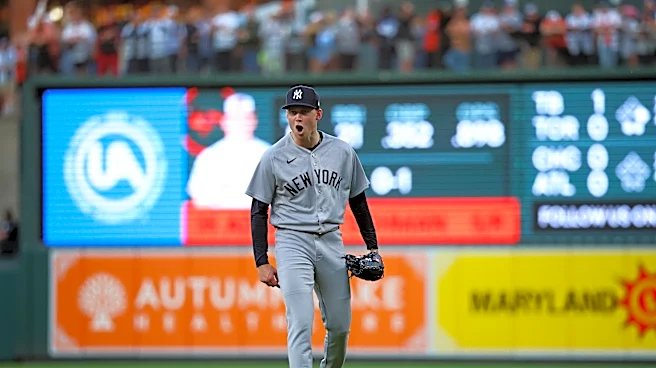

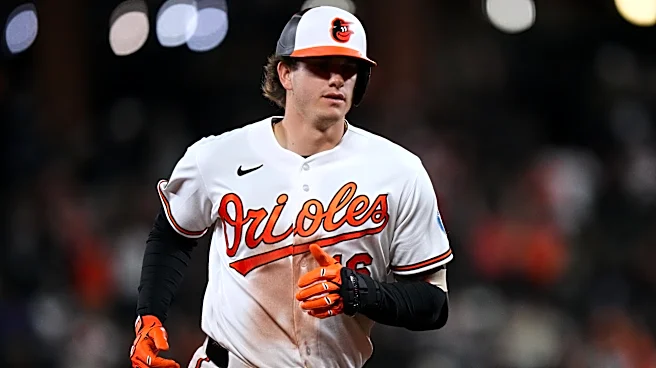
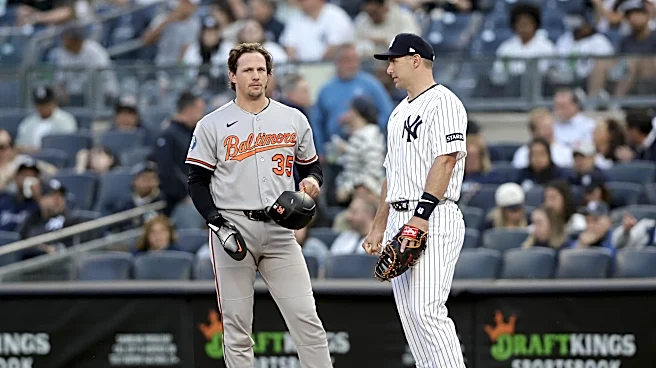
We’re going to try something a little different this time around on Sequence of the Week. Normally, we select a single at-bat or plate appearance from a given game to highlight the sequencing and execution from a Yankees pitcher. However, there were two encounters from the Yankees’ most recent win against the Orioles on Tuesday that stood out as the combined most pivotal moment from that game. Will Warren Houdini’d himself out of a huge jam by getting Taylor Ward to fly out and Adley Rutschman to ground
into the inning-ending double play, so I thought we could look at the back-to-back ABs in a single analysis.
We join Warren with no outs in the bottom of the third. The offense just spotted him a 6-0 lead after scoring five in the top half of the frame, but some lousy defense is on the verge of handing it all back. Coby Mayo drew a leadoff walk, and consecutive throwing errors on ground balls by Jeremiah Jackson and Gunnar Henderson resulted in the bases being loaded with no outs — Ward and Rutschman the next two batters due up. We’ll start with Ward.
After getting traded from the Angels to the Orioles in the offseason, Ward transformed from a 36 home run power hitter into the most passive hitter in MLB. He generally will not swing unless a pitch is over the middle of the plate, which has led to Ward placing in the 100th percentile in walk and chase rates. The flip side of this extreme selectivity is that you can steal quite a few called strikes on either side of the plate as the opposing pitcher. Warren tries to leverage this tendency with a first pitch sinker. If Warren can start a sinker down the middle, he should bait Ward into swinging, allowing the pitch’s break down and in to move the ball away from the barrel and induce weak contact if not a whiff.
Unfortunately for Warren, he starts this pitch too low — an aiming point that isn’t going to tempt Ward into a swing. Ward leaves the bat on his shoulder as the sinker falls harmlessly below the zone for ball one.
Warren and Wells stick with a similar process of setting up down the middle and allowing the pitch’s movement to do the work. This time, they opt for a sweeper — if Warren can adjust his aiming point a little higher, they might be able to fool Ward into swinging this time, only for the pitch to break in the opposite direction as the previous sinker.
Instead, this pitch exits Warren’s hand aimed in off the plate meaning Ward decides not to swing early, only to watch the absurd foot-and-a-half of glove-side break sweep the pitch all the way across the plate to whisper across the outside edge for a called strike.
Given the execution of the previous pitch, Warren chooses to double up on the sweeper. Perhaps if he can start this one a little more over the plate, he’ll be able to extract a very rare chase from Ward.
Warren throws a pretty similar pitch to the prior sweeper, this one just a little higher and farther outside. However, given that it exits his hand looking like a ball above the zone, Ward once again eliminates the pitch early and earns the ball two call.
By this point, it seems like Warren and Wells have caught onto the fact that Ward simply is not going to offer at anything except something down the middle. It appears they change tack from getting Ward to swing to trying to pepper the fringes of the zone for called strikes. The first selection of this new strategy is to try backdooring a four-seamer for strike two.
Warren is just a couple inches away from the perfect pitch, but this four-seamer doesn’t quite have enough arm-side run to bring it back into the zone and the result is ball three.
Warren is one ball away from walking in a run. Ward and everyone else in the ballpark know what is coming here — a fastball in the zone. However, even with the count leverage firmly in Ward’s favor, Warren knows that if he can land a heater in the zone but away from the heart, it should result in a called strike.
That’s exactly what transpires, Warren dotting the inside edge of the zone for strike two. He once again uses Ward’s selectivity against him. Whereas other hitters might look to pull this pitch, Ward leaves the bat on his shoulder as it exits Warren’s hand aimed inside rather than down the middle.
Warren has done well to work his way back to a full count. He and Wells look to replicate the previous pitch and punch Ward out looking.
Instead, Warren throws the first meatball of the encounter, and Ward finally swings. Luckily for Warren, Ward is a little late and works underneath this four-seamer, sending a lazy fly out to right too shallow to get the runner in from third. This is where Warren’s offseason work to improve the shape of his four-seamer pays off. Last season, this pitch would have fallen off its vertical plane and likely resulted in an opposite field extra-base hit. However, with Warren adding induced vertical break to the four-seamer, this pitch holds its plane above the barrel of Ward’s bat and thus avoids damaging contact.
Here’s the full sequence:

That’s the all important first out, but Warren still has his work cut out for him. Stepping to the plate is the resurgent Rutschman, back to his best after two years in the wilderness. He’s the Orioles’ best player at the moment and spells double trouble for Warren given he can bat from the left side as a switch hitter.
The book on Rutschman says that you can reliably steal a first pitch called strike. Since his debut in 2022, Rutschman has the second-lowest first pitch swing rate in MLB behind only Steven Kwan at a paltry 12.7 percent. Particularly if you start him off with a breaking ball that begins as a ball, you’re pretty much guaranteed strike one.
Wouldn’t you know it, that’s exactly what Warren does here. He starts a sweeper aimed at the opposite batter’s box, Rutschman gives up early, and the glove-side movement breaks it pretty much to the middle of the zone for a backdoor called strike one.
One of the core tenets of pitching is to make strikes look like balls and balls look like strikes. Warren employed the former approach with the first pitch sweeper and now goes to the latter approach with this 0-1 changeup.
It’s a perfect pitch, looking like a fastball down Broadway before its late downward movement drops it off the table. Rutschman swings early and over the top, pounding the changeup on the ground to second for the desperately needed inning-ending double play to strand the bases loaded.
Here’s the full sequence:

I love how these two sequences showcased the homework that Warren, Wells, and I’m sure the rest of the Yankees pitching room does before every game. They exploited the Ward’s general selectivity and Rutschman’s passivity on the first pitch to get into better counts. With Max Fried departing Wednesday’s start early with elbow discomfort and Carlos Rodón and Gerrit Cole coming off elbow surgery rehabs, the Yankees need all the starting pitching depth they can get. Warren has been a top-20 pitcher in the league by FIP so far, giving the Yankees not only depth but a bona fide impact starter in the rotation.