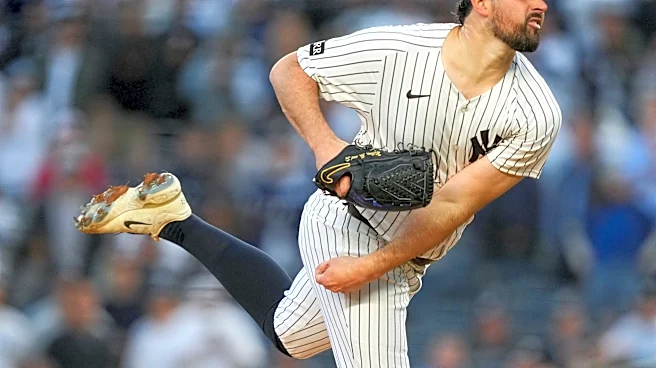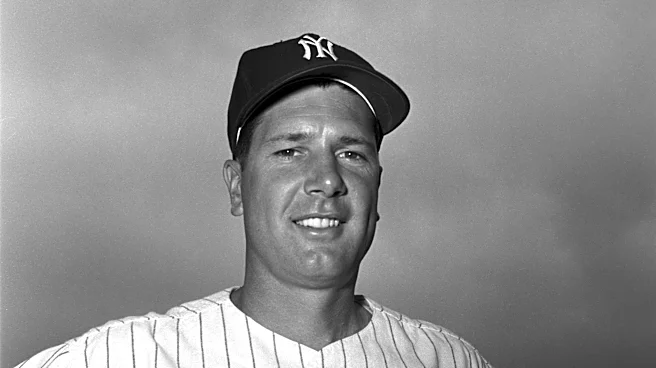


Art Ditmar’s career sits in a space that baseball history does not always spotlight. He was not the headline name on the Yankees teams he played for, but he fits perfectly into the fabric of Yankees history because he was part of one of the most competitive and talent-filled eras the organization has ever seen.
Arthur John Ditmar
Born: April 3, 1929 (Winthrop, MA)
Died: June 11, 2021 (Myrtle Beach, SC)
Yankees Tenure: 1957-61
Born in Massachusetts in 1929, Ditmar worked his way into professional baseball
through steady development rather than overwhelming expectations. Like many players of his era and the eras before them, his career was shaped by more than just baseball. Ditmar served in the United States Army during the Korean War, missing the 1951 and 1952 seasons. He was part of a generation of Yankees connected by service, alongside names like Whitey Ford, Don Larsen, Billy Martin, Johnny Kucks, and even future owner George Steinbrenner.
When he returned from service, Ditmar resumed his climb through professional baseball, refining his command and approach on the mound. He made his major league debut in 1954 with the Philadelphia Athletics, beginning a career that required patience and persistence. During the 1954 season Ditmar won the final game ever played by the Philadelphia Athletics before their relocation to Kansas City. Early results were uneven as he worked to establish himself at the highest level, but the foundation of his game was clear.
In 1957, Ditmar was part of a large trade that brought him to the Yankees midseason, placing him in the middle of a roster filled with established talent and championship expectations. The Kansas City Athletics sent pitchers Art Ditmar, Bobby Shantz, and Jack McMahan, and infielders Clete Boyer, Curt Roberts and Wayne Belardi to the Yankees. In return they received pitchers Mickey McDermott, Tom Morgan, Rip Coleman and Jack Urban, outfielder Irv Noren, plus infielders Billy Hunter and Milt Graff — the ultra common six for seven player swap.
The Yankees’ pitching staff already featured names like Whitey Ford and Don Larsen, and roles were far from guaranteed. Ditmar began carving out a role as both a starter and a reliever. He finished the year with a 7–3 record and a 3.25 ERA, quietly establishing himself as a dependable option on a team that went on to win the American League pennant. Even in a limited role, he showed the traits that would define his time in New York: throwing strikes, limiting damage, and giving his team a chance to win.
Ditmar become a more consistent part of the pitching staff in his first full season in pinstripes. He went 9–8 with a 3.90 ERA, working primarily as a starter while continuing to shift roles when needed. That flexibility mattered on a Yankees team that would go on to win the World Series.
The 1959 season saw Ditmar take on a heavier workload, and he responded with one of the best seasons of his career. He went 13–9 with a 4.33 ERA, providing innings and stability on a Yankees team that fell just short of another pennant.
Next year marked the peak of Ditmar’s career. He went 15–9 with a 3.06 ERA in 1960, delivering the best season of his time in New York and helping lead the Yankees back to the World Series. It was the kind of performance that earned trust, and that trust led to one of the most debated decisions in franchise history.

Manager Casey Stengel chose Ditmar to start Game 1 of the 1960 World Series over Whitey Ford, a move that has been questioned ever since. Ditmar struggled in that outing and again later in the series, placing him at the center of a moment that has lingered in Yankees history.
It is the kind of situation that can shape how a career is remembered, even if it does not fully represent the player. Because Ditmar was more than those games. He was a dependable pitcher who earned his place on a roster filled with talent, expectations, and constant pressure to win. He was part of a pitching staff that helped sustain the Yankees’ dominance during one of the franchise’s most successful eras.
Ditmar’s role began to shift again in 1961 as the Yankees transitioned into another historic season, one defined by Roger Maris and Mickey Mantle chasing 61. Ditmar went 3–5 with a 5.74 ERA and was traded again midseason: this time back to the Athletics, marking the end of his time in New York. Ditmar would finish the 1961 season and appear in a handful of games in the 1962 season for the Kansas City Athletics before calling it a career.
Over five seasons with the Yankees, he won 47 games and became a reliable arm on multiple pennant-winning teams, including the 1958 World Series champions. He was not the focal point of those teams, but he was part of the foundation that allowed them to succeed. Whether starting or providing depth, he filled innings on a roster where every game carried weight.
By the end of his career, Ditmar had compiled a 72–77 record with a 3.98 ERA across nine major league seasons. Those numbers reflect what he was: not dominant, but reliable, and reliability has always had value in baseball, especially on teams built to win.
Like many players, his post-baseball life was quieter. He remained connected to his community, working in recreation and coaching before eventually retiring. Art Ditmar may not be the first name that comes to mind when thinking about Yankees history, but players like him are part of what made those teams what they were. Not every contributor is a star, but every championship team is built on players who find a way to fill their role.
He lived a long life, passing away in 2021 at the age of 92.
Happy birthday, Art Ditmar.
See more of the “Yankees Birthday of the Day” series here.