


We should start again by going back over where we have been and where we are going. Simply put, with the lockout coming up, there will likely be little movement in terms of trades, free agent signings, and other player news. I am doing a deep dive into the Hall of Fame Index. Obviously, it is not something for everyone, but the lab is a place where people that are more into analytics can go and get some more in-depth analysis than what you might typically find on the internet. It is also a place where people that don’t
know much about analytics can learn a little on the fly.
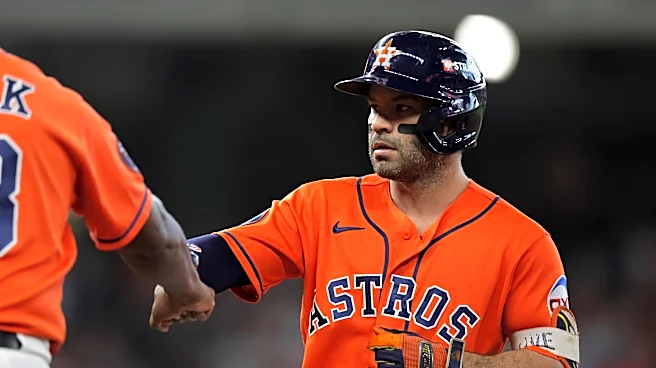
Admittedly, diving into the gritty details on baseball history and the Hall of Fame isn’t for everyone. What the index does is use a systematic approach to evaluating past and current players. We look at the index itself which we did in parts one and two. We look at more advanced offensive and defensive statistics. We are evaluating current players like Jose Altuve to the Hall of Fame average in this edition. The final edition will look at the more traditional counting numbers that casual fans like to look at.
Keep in mind that the Hall of Fame average excludes the very top and very bottom of the Hall of Fame register and focuses on the ten players in the middle. If we were to take the entire group the average might actually be similar, but we want to remove players that are not particularly relevant as points of comparison. The general idea is to identify who Jose Altuve (or Marcus Semien and Ketel Marte) are most similar to. Are those players Hall of Famers? If so, then the current player (Altuve in this case) should be a Hall of Famer.
Offensive Statistics
In many respects, these numbers are more meaningful than WAR and that is why we include these tests. Altuve looks like a Hall of Famer here. The only category he comes up significantly short in is base running runs (RBaser). We as Astros fans know where that comes from. Altuve is usually good for a base running gaffe every other week. Those add up over the course of a career. If you gave him those runs back then it is quite possible that both his offensive winning percentage and rOBA move even higher.
The reason why these numbers are compelling is the comparison between Altuve and his other contemporaries. Semien is just a cut below offensively. Now make no mistake, these numbers are in comparison to the league average overall. Most second basemen are a cut below that average, so Semien is a comparatively good offensive player. He’s just not Altuve. Marte looks a lot closer, but he also has not begun a decline phase yet.
This is where things get interesting for Altuve. With each passing season his overall career averages will drop. They could drop below the HOF average if he continues on for another three or four seasons. So, he will continue to add runs created, but he will also drop in the other areas. There is always a downside to continuing your playing career past your prime.
Fielding Statistics
Legacies are a complicated thing. When Altuve is voted into the Hall of Fame, he will be the worst defensive second baseman in the Hall of Fame. He will surpass Craig Biggio for that “honor.” That means he will be very similar historically to Derek Jeter. Both were gifted offensive players. Both were high octane postseason performers. Both will go down as the worst defender at their position in the Hall of Fame.
Looking at fielding is difficult when comparing old players with new players. Total zone and Ultimate Zone Runs really aren’t a thing anymore. Fangraphs has shifted to outs above average and fielding run value. The concept of the last column is still the same. The runs represent what they have done at second base alone. Fangraphs considers Altuve to be merely below average. It’s not historically awful, but we have to remember that most Hall of Famers are better than average defenders at their position at the very least.
Semien fits in defensively, so as we can see, different tests will tell us different things. We are looking for a preponderance of the evidence. Most voters would consider offensive contributions to be more valuable than defensive contributions, so everything is not created equal. At any rate, we should take a look at how each player has fared in the MVP voting and subsequent BWAR rankings.
MVP Test
Last time, we looked at why we are using this test. Essentially we want to compare how the voters perceived the player at the time versus what they actually produced. Given Altuve’s defensive struggles, it shouldn’t be a surprise that the voters overvalued him. He also has the 2017 MVP award and BWAR agreed he was the most valuable player in the league that season.
If you can imagine a checklist then this sort of test would appear on the list. Was the player ever the best player in the league? Were they the best at their position? Checking no is not meant to disqualify a player, but the more often you can check yes the better it ends up looking for him. Altuve checks both of those boxes even if he had only two such seasons where he was among the best ten players in the league in terms of value.
Semien has been underappreciated because most of his value comes from the glove. He has also been more inconsistent offensively which plays into this particular test. He has either been very good or very ordinary over the course of his careers. When he marries very good offense with very good defense he ends up finishing high in the BWAR rankings. When he isn’t then he doesn’t.
The Playoff Test
Playoff performance is a function of opportunity. There really is only one player in baseball history with a similar resume as Altuve. Derek Jeter ranks first in almost every category other than home runs. Altuve is second all-time in runs scored and second in home runs. He is also second in plate appearances. Do we give him extra credit for that? I suppose one could, but that means you take credit away from other players that didn’t get the same opportunity.
For instance, you could easily claim that Marte is a superior postseason player. He has a higher average, higher OBP, and higher slugging percentage. Obviously, he doesn’t have nearly the opportunities. With opportunities come moments like the walk off home run in the 2019 ALCS. It comes with two rings. These are things that are hard to put into numbers or to quantify. It applies the fame element of the Hall of Fame.
The problem comes when you compare an Altuve with an earlier player. Current MLB has four layers of playoffs. The earlier Hall of Famers had one. That’s not an apples to apples comparison. One could take just World Series numbers, but that would ignore some of Altuve’s biggest moments. There really is no satisfying way of doing it, but we include the test because it is unsatisfying to ignore it completely.