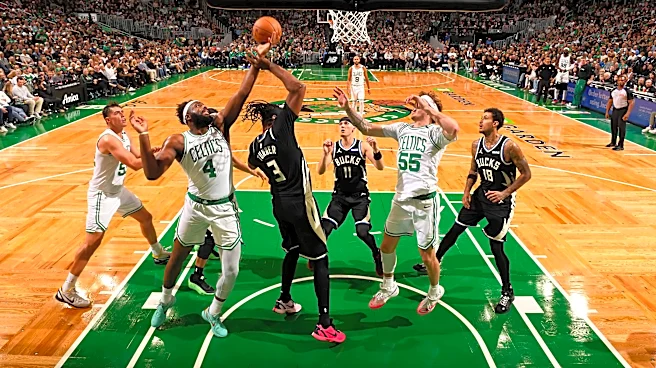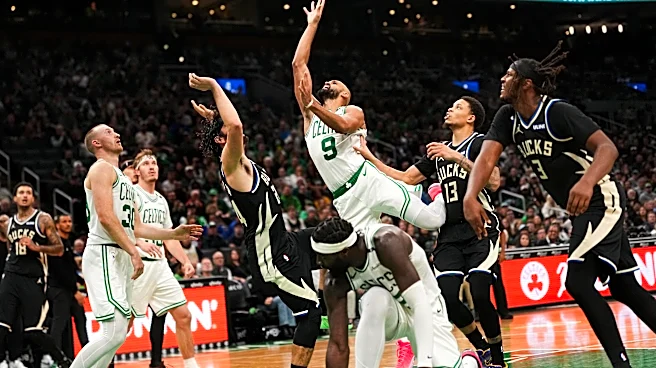



I had already started thinking about what a comfortable Celtics win over the Bucks might tell us about this team when Milwaukee decided to rewrite that narrative.
Boston led by as many as 22 points Wednesday night, held the Bucks to 14 in the first quarter and went into halftime up 62-41. Considering Milwaukee entered the game at 1-6, and the Celtics were playing without Jayson Tatum for the first time this season, things were looking awesome.
Then Tyler Herro caught fire, Boston’s offense went missing
and the Bucks somehow found themselves leading in the fourth quarter. Payton Pritchard had also left with an eye injury, leaving the Celtics without two of their most important offensive players.
Thankfully, Derrick White remembered how to score, Paul George continued being wonderful and a few Celtics made the kind of plays that deserve their own place in the box score.
Boston survived 109-102, improving to 6-2 on the season. Here are ten takeaways from a game that was significantly more stressful than it needed to be.
1. A 22-point lead remains a dangerous thing to give the Celtics
As noted NBA insider Jerry Seinfeld once observed, anyone can take a reservation. It’s holding the reservation that’s really the important part.
The same logic apparently applies to 20-point leads in Boston.
Against Chicago last Friday, the Celtics led by as many as 32 before winning by 14. Wednesday against Milwaukee, Boston was up 21 at halftime, had led by 22 at its peak and looked well on its way to a stress-free evening. By the middle of the fourth quarter, the Celtics were losing.
Now, the circumstances matter. Boston was missing Tatum, lost Pritchard during the second half and had to figure out some unproven lineup combinations on the fly. Milwaukee also shot the lights out in the third quarter, with Herro doing most of the damage.
Still, the Celtics helped create their own problems. Milwaukee scored 38 points in the third after managing just 41 in the entire first half. Boston’s offense became stagnant, turnovers gave the Bucks opportunities to run and suddenly a team that had looked completely overmatched was playing with all the confidence in the world.
Joe Mazzulla pointed to the offensive struggles as a major part of the defensive problem afterward. Boston wasn’t executing well enough to put consistent pressure on Milwaukee, and the Bucks took advantage.
Now, to Joe’s credit, the Celtics are 139-5 when leading by at least 20 points under his watch. That’s a 96.5 percent winning percentage, for anyone keeping track. But after watching Philadelphia erase significant deficits during last year’s playoffs, and now seeing these early-season scares, I understand why Celtics fans aren’t particularly comforted by a 20-point advantage.
The good news is that Boston found a way to win anyway. I’d just appreciate fewer opportunities to practice that particular skill.
2. Learning to play without Jayson Tatum
For the first time this season, the Celtics had to figure out what their offense looked like without Jayson Tatum. It was a useful test, especially considering how much of Boston’s early success has come from his scoring and playmaking.
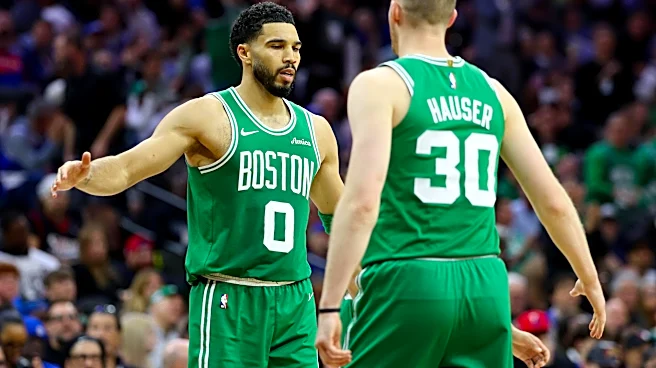
Hugo González moved into the starting lineup alongside Derrick White, Sam Hauser (his first start as well), Paul George and Neemias Queta. George took on more offensive responsibility, and Joe Mazzulla adjusted his substitution pattern to accommodate the change.
One of the more interesting decisions was George playing the entire first quarter. He returned midway through the second, then had his minutes managed differently after halftime so he could play the entire fourth.
Mazzulla explained afterward that he wanted George on the floor to close, particularly after some of Boston’s third-quarter lineups became stagnant. And that was before Pritchard’s injury complicated things further.
The absence of both Tatum and Pritchard became obvious when Milwaukee began mounting its comeback. Boston struggled to create clean looks, and there were stretches when every possession seemed to require George to manufacture something on his own.
But the Celtics also got meaningful contributions from players who might not normally have as much responsibility. Queta made plays with the ball in his hands, White took over late, and Baylor Scheierman helped create second chances when the offense desperately needed them.
Nobody should expect Boston’s offense to look equally comfortable without Tatum. The encouraging part was seeing Mazzulla find different ways to get contributions out of the rest of the roster.
3. I’d like to be president of the Paul George fan club
I wrote after the Bulls game that Paul George looks like he was meant to be a Celtic. Wednesday versus the Bucks only strengthened that belief.
George finished with 25 points, five assists and four steals, shooting 5-for-9 from three. He scored 10 points in the first quarter, helping Boston establish an early lead, and then spent much of the second half trying to keep the offense alive.
The responsibility looked different without Tatum. George was asked to initiate more possessions, create his own offense and operate as Boston’s primary scoring option for long stretches.
For the most part, he looked perfectly comfortable doing it.
There were some mistakes, including six turnovers and a pair of missed free throws in a tie game late in the fourth. But George also hit a massive step-back three with 1:23 remaining to put Boston ahead 107-99 and give the Celtics some desperately needed breathing room.
What continues to impress me is how easily he seems to move between roles. When Tatum plays, George can spend stretches operating without the ball, finding open space and making the extra pass. When Tatum sits, he’s more than capable of taking the wheel.
Mazzulla praised George’s defense after the game and talked about how important his versatility has become to the team’s identity.
“We need the best version of him for us to be a great team,” Mazzulla said.
I think we’re getting a pretty good look at that version already.
George has been an excellent teammate, a disruptive defender and a much more natural fit than I expected this quickly. If this keeps up, I’m going to run out of new ways to say how much I enjoy watching him play basketball.
4. Ah, there’s the Derrick White we’ve been looking for
There you are, Derrick!
The version who looks completely comfortable taking over an offense when the moment calls for it. The guy who doesn’t hesitate when the ball finds him late in a possession, and who occasionally seems to decree that he’s had enough of the other team scoring.
White finished with 24 points, seven assists, four rebounds and two blocks against Milwaukee. Eleven of those points came in the fourth quarter, when Boston needed them most.
After the Bucks tied the game at 97, White helped settle things down. He converted a crucial and-one after Queta and Scheierman kept a possession alive, then followed with a driving floater that pushed the Celtics’ lead to seven.
He also went 9-for-9 from the free-throw line.
The performance was especially encouraging because White’s offensive start to the season has been fairly underwhelming. Through eight games, he’s averaging 12.8 points and shooting around 29 percent from three.
In the offseason, White talked about improving his outside shooting after last season, and Wednesday’s 1-for-7 performance from deep didn’t do much to suggest he’s found the answer yet. But I’ve been waiting to see the confident version of White who could become Boston’s second offensive option when Tatum or Jaylen Brown missed games in previous seasons.
The Celtics will need more of this version of White if they’re going to make a deep playoff run. He doesn’t have to score 24 every night, but the willingness to attack and create offense when things get uncomfortable is going to matter.
Hopefully the jumper comes along for the ride.
5. Neemias Queta’s journey continues to amaze me
Think about where Neemias Queta was a few years ago.
In 2023, the Sacramento Kings waived him after two seasons in which he struggled to establish a consistent NBA role. Boston brought him in on a two-way contract, and he spent much of his early Celtics career trying to prove he belonged in the rotation.
Now we’re talking about him making critical plays down the stretch of NBA games, getting praised by his coach for his development and playing on a four-year, $56 million contract.
That’s pretty friggin’ cool.
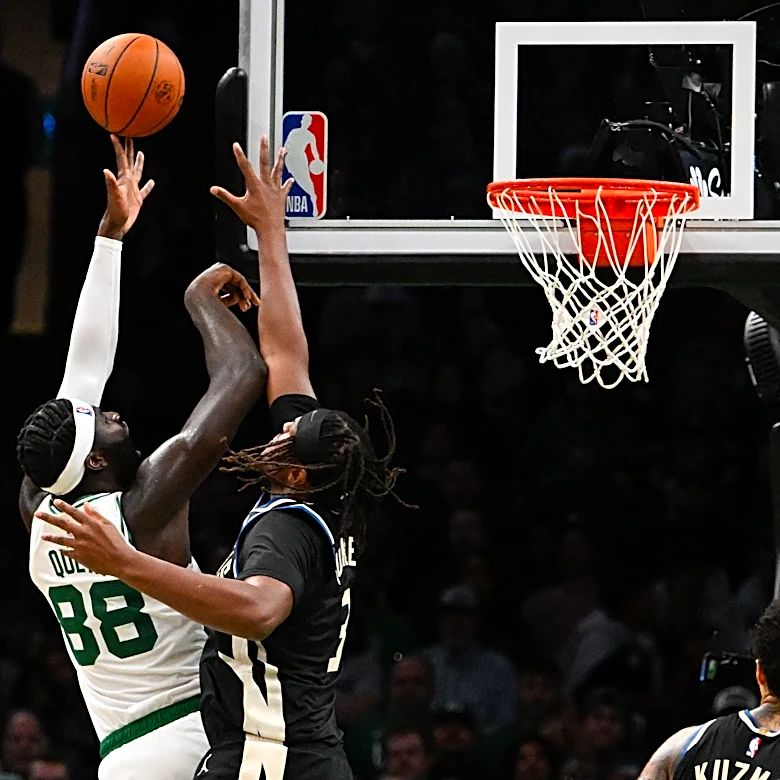
Queta finished Wednesday with nine points, 12 rebounds, three assists and two blocks in 29 minutes. His impact was especially important late, when Boston desperately needed someone besides George or White to make something happen.
With the score tied at 97, Queta scored on a driving layup off a feed from George. A little later, he battled Myles Turner for an offensive rebound after a White miss, helping keep the possession alive before Baylor Scheierman found White cutting for an and-one.
Those are enormous plays in a game that was slipping away.
Mazzulla pointed to Queta’s continued improvement after the game, particularly his ability to contribute as a playmaker and deliver defensively in important moments. He also noted that Queta has been showing those improvements consistently since the season opener against Detroit.
It’s easy to look at the Celtics’ current center rotation and start arguing about minutes and matchups. But I think it’s worth occasionally appreciating what Queta has built for himself. Boston’s player development program deserves credit, and Queta deserves even more for putting in the work.
The Kings decided they didn’t have a place for him. Three years later, the Celtics are counting on him to close games.
6. Baylor Scheierman is becoming allergic to the bench
I’m starting to think Baylor Scheierman’s greatest skill might be convincing basketballs to find him.
He grabbed 11 rebounds against the Bucks. Eleven! From a wing coming off the bench.
Three came on the offensive glass, and he added nine points on 3-for-4 shooting from deep. Boston was plus-11 in his 29 minutes, the best mark among the Celtics’ reserves. But the thing that jumps out when watching Baylor is how frequently he seems to be involved in possessions that have already become a complete mess.
A missed shot bounces toward the baseline? Baylor’s there. Someone gets a hand on a loose ball? Baylor’s already moving down the court. A rebound starts ricocheting between players? There’s a decent chance Scheierman ends up with it.
Noa Dalzell made a good observation after the game that some of Baylor’s most valuable hustle plays didn’t even register as rebounds. He was constantly involved in securing loose balls and keeping possessions alive.
The best example came late in the fourth, when Queta and Turner battled for a rebound and the ball eventually found Scheierman. Baylor immediately located White cutting toward the basket for the and-one that helped Boston retake control.
That’s the kind of sequence Joe Mazzulla dreams about.
There’s still a crowded group of young wings competing for minutes, and I don’t think we’ve seen enough to declare a permanent rotation hierarchy. Hugo got the start Wednesday, while Baylor came off the bench and played significantly longer.
But Scheierman keeps finding ways to make his presence useful.
I described him recently as a dog who just heard the cheese drawer open. Watching him chase rebounds this year, I’m beginning to think someone has left the drawer open all season.
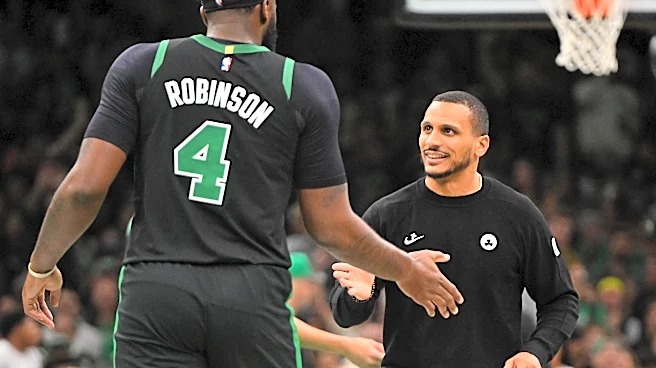
7. Mitchell Robinson finally looked like Mitchell Robinson
After many were disappointed with his early performances, I’m happy to report that Mitch gave us considerably less to complain about Wednesday.
Robinson finished with 10 rebounds in just under 20 minutes, including six on the offensive glass. He also had a steal and a block, and Boston was plus-five during his minutes.
He scored only three points on 1-for-8 shooting, so this wasn’t exactly a complete offensive performance. But the rebounding looked much closer to what Celtics fans expected when Boston signed him over the summer.
Mazzulla has talked repeatedly about the adjustment Robinson is making to Boston’s system. In New York, his offensive responsibilities were more narrowly defined. With the Celtics, he’s being asked to screen farther from the basket, handle the ball more and contribute in ways that take him away from his traditional rebounding spots.
After Wednesday’s game, Joe said Robinson’s rebounding process had been consistent even when the results weren’t there.
He also called Robinson one of the best rebounders of all time, which is quite a thing to hear your coach say when you’ve spent the first two weeks wondering why you aren’t grabbing more rebounds.
I’m still curious about Robinson’s fit alongside Queta and how Mazzulla plans to divide those minutes. But I thought Wednesday was a meaningful step in the right direction. This looked much more like the player Boston was hoping to get. Now the question is whether he can make it a regular occurrence.
8. Something enormous is approaching. I fear it may be…Garzilla.
Do you hear that?
There’s a faint rumbling coming from somewhere beneath TD Garden. Or is it above? My coffee is trembling on the table. A few pigeons just took flight outside my office.
Dear me.
IT’S GARZILLA.
First, I owe Luka Garza an apology. During my offseason analysis of Boston’s roster, I identified him as a break-glass-in-case-of-emergency option, assuming most of the meaningful center minutes would belong to Queta and Robinson.
Well, apparently Garza is the reason the other team needs to break the glass. He is the emergency.
Garza scored 11 points against Milwaukee, shooting 3-for-4 from three and grabbing five rebounds in 18 minutes. All three of his made threes came in the first half, when Boston’s offense was humming.
He’s now shooting 52.4 percent from deep through eight games, including nine made threes across his last three outings. That’s an admittedly small sample, but it’s becoming impossible to ignore.
Garza’s shooting gives Mazzulla something different from his other centers. Defenders have to respect him away from the basket, which creates some fun possibilities when he’s sharing the floor with a traditional interior presence.
We saw that against Milwaukee when Mazzulla paired him with Robinson, allowing Garza to operate farther from the basket while Mitch attacked the glass.
I still don’t know exactly how many minutes Garza should play when everyone is healthy, or how sustainable this shooting will be over an entire season. But the man is currently shooting better than half his threes, and I feel obligated to take that seriously.
The villagers outside of Boston have been warned. Garzilla is loose.
9. Can somebody please check Payton Pritchard’s head?
Payton Pritchard was getting treated like a crash test dummy last night.
First, he took a shot to the face that left his nose bleeding during the first half. Somehow, he kept playing and even managed to score while dealing with the aftermath.
Then, in the third quarter, he suffered another blow to the face and left the game with what the Celtics officially described as a right eye abrasion. He didn’t return.
Pritchard finished with 10 points and five assists in 18 minutes, shooting 4-for-7 from the field. He had entered the night dealing with a right shoulder contusion, too, so this was hardly the most relaxing evening for a historically durable player.
Afterward, Mazzulla said Pritchard seemed okay but acknowledged that he didn’t know the exact extent of the injury. Boston will have to monitor his status heading into Friday’s NBA Cup game against Charlotte.
Before exiting, Pritchard also found time to reprise his role as Smooth PP, the jazz pianist who has recently taken to using opposing defenders as unwilling dance partners.
Kyle Kuzma found himself involved in the latest performance.
The man is apparently capable of improvising an entire musical number while his face is being repeatedly rearranged. All jokes aside, hopefully Pritchard is okay. Boston missed his ballhandling and ability to create offense during the fourth quarter, especially without Tatum available.
10. Joe Mazzulla has some interesting new toys, but the second-half adjustments need work
One of the more intriguing developments Wednesday was Mazzulla’s willingness to experiment with lineups that we haven’t seen much of this season.
The Robinson-Garza pairing was particularly interesting.
Before the Bucks game, the two had shared the floor for only about two minutes. Against Milwaukee, Mazzulla gave them a longer look, and the early results were encouraging.
Robinson attacked the offensive glass while Garza provided spacing and perimeter shooting. By halftime, Robinson had nine rebounds and Garza had scored 11 points, making all three of his three-point attempts.
The combination made sense against Milwaukee’s first-half approach. Boston could control the boards without completely sacrificing the ability to space the floor. But things changed after halftime.
The Bucks began playing faster, spreading the floor with shooters and attacking Boston off the dribble. They shot 7-for-8 from three in the third quarter, and suddenly the Celtics’ bigger combinations weren’t nearly as comfortable.
Mazzulla acknowledged afterward that the double-big pairing worked better in the first half than the second. Milwaukee’s adjustments forced Boston to reconsider its lineups, particularly as the Celtics struggled to generate offense without Tatum and, eventually, Pritchard.
I actually appreciate Joe experimenting this early in the season. There’s a lot to learn about this roster, especially with so many new players being asked to take on unfamiliar responsibilities.

But Wednesday also showed how quickly a promising lineup can become a problem when an opponent changes its approach.
Boston won the game because its players made the necessary plays down the stretch. White took over, George hit the big three and the Celtics’ frontcourt helped secure some enormous possessions.
The win is what matters. But so does understanding why the team needed late-game heroics after leading by 22.
The Celtics are 6-2, and I still think we’re only beginning to understand what this version of the team can become. Wednesday offered plenty of reasons to be excited about its depth, even if the road to discovering that depth involved nearly losing to a 1-6 Bucks team.
Maybe next time we can conduct the experiment without involving everyone’s blood pressure.