

Editor’s Note: We are extremely excited to announce another new addition to the Canis family, Troy Asseln! You may recognize his name with his work in other Wolves spheres, but we are blessed to have him here as well. Give him a follow on BlueSky as well @bigmeatyclaws!
“There are certainly things that we can lean into, that we haven’t done, that haven’t necessarily fit our previous rosters.”
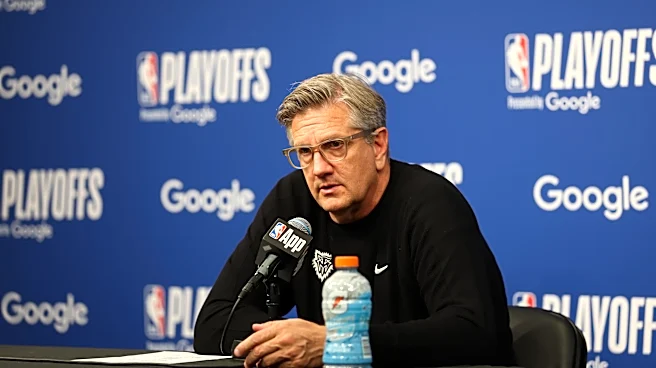
These are the opening remarks of Minnesota Timberwolves head coach Chris Finch while speaking at the team’s media day press conference on Monday, September 28th. Responding to a question from The Athletic’s own Jon Krawczynski regarding expectations and outlook for the reconstructed team, Finch was excited to immediately dig into the X’s and O’s of how different the Timberwolves are going
to look this year.
Faster. Small ball. Pick and roll actions. More defensive aggression.
“There’s nothing taken for granted with this team.” These are glowing endorsements for the talent, mentality, and expected level of play that Finch will aim to extract from the Timberwolves.
As we have seen, the offseason content surrounding the new-look Wolves has been nonstop. Media coverage analyzing the prospective on and off-court fit between incumbent superstar Anthony Edwards and newcomer LaMelo Ball has been a peak discussion point for all fans, from the most casual Wolves supporters to those of us that are watching and analyzing every game.
Credit president of basketball operations, Tim Connelly, for keeping these offseasons engaging. His work ensures that any time I am out in public wearing my Timberwolves cap, there is a non-zero chance that a stranger will approach me and ask how I’m feeling about our team’s chances this upcoming season. A recent unsolicited conversation with a Costco employee tells me that much, at least.
Perhaps lost in the discourse about the upcoming season is what this complete roster overhaul means for Finch.
Despite being the winningest coach in Wolves history, he has often come under fire from fans for his apparent “lack of willingness to adjust” and “inability to develop the young guys.” The stellar careers and development of Edwards, Jaden McDaniels, and Nickeil Alexander-Walker (including, to a lesser extent, Terrence Shannon Jr. and Jaylen Clark) apparently not being enough to quiet the doubters, there is a real case to be made that this season will be the one that entrenches Finch among the league’s elite (we’ll get to the in-game adjustments later, I promise).

While Connelly has had a tendency to zig when the league is zagging in terms of his roster building, this most recent iteration of the Wolves gives Finch the vision and flexibility needed to properly lean into his strengths as a coach.
This is not to say that the previous Timberwolves teams under Connelly have been “bad” by any stretch of the imagination or mathematical aggregate of talent, though it would be disingenuous to say there were no constructional and fit issues and that the team did not have to work meticulously to overcome them.
Regular season and playoff success for Finch’s Timberwolves, in spite of these disjointed rosters, has been overshadowed by the insidious “championship or bust” culture that permeates social media rhetoric and discourse. We as fans have certainly had our share of highlight moments (more Patrick Beverley tears and Rudy Gobert turnaround fadeaways, please), though this has seldom transferred into public-relations success for the franchise and the players/coaches who comprise the soul of the team.
To begin this digression, we must first conceptualize who Finch is, has been, and is supposed to be as a leader. Minnesota fans are well aware of Finch’s reputation as a players’ coach that prioritizes the “free-flowing offense” and sticking with the hot hand.
The premise is simple: provide abbreviated scaffolding and structure based upon the scouting report and preferred matchups, and from there he allows his players to make their own (informed) decisions and play themselves into the flow of the game. Yet, he is known as a firm presence who is not afraid to hold his players accountable. These are the marquee characteristics that prompted former Timberwolves president of basketball operations Gersson Rosas to hire him outright as a full-time replacement for the mid-year head coach departee Ryan Saunders in 2021.

Prior to his arrival to the Timberwolves, Finch’s most recent experience was – in order – as an assistant coach with the Toronto Raptors, New Orleans Pelicans, Denver Nuggets, and Houston Rockets. Throughout this time Finch has had no shortage of superstar talent surrounding him. From the acquisition and subsequent ascent of James Harden, the rapid arrival of Nikola Jokić, and the orchestration of the briefly dynamic duo of Anthony Davis and DeMarcus Cousins, he’s spent his fair share of time with stars.
These experiences encapsulate a wide array of roster constructions that each utilized different approaches to team success. Finch has coached a guard-heavy heliocentric offense with Harden, which explains the rapid development and ascent of Edwards. Finch also made the double-bigs approach work with Davis and Cousins, which invariably paved the way for the Karl-Anthony Towns and Rudy Gobert pairing to work.
The post-pandemic results in Minnesota speak for themselves, Finch can make it work with just about anybody.
This sentiment of “making it work” has been a prescient theme throughout much of Finch’s tenure in Minnesota. He somehow took the 2021-2022 Timberwolves, a team featuring key rotational minutes from players like Beverley, D’Angelo Russell, Malik Beasley, and Jarred Vanderbilt (who are all now either out of the league or on their way) to the playoffs.
That’s no small feat.
What that team lacked in on-court identity they made up for in aggression and intensity, and much of that mentality can be attributed to the ways in which Finch empowered his players. That attitude was not enough to overcome the initial acquisition struggles that accompanied Gobert’s arrival to Minnesota the next season, but the result of the fit next to Towns and Edwards eventually and obviously bore fruit in the form of two straight conference finals appearances.
However, making the Gobert experiment work did not come naturally. The ideas of Finch’s idealized “free flowing offense” and Gobert do not fundamentally mix, at least on the offensive end of the floor. Gobert, for all of his accolades, cannot create for himself without teammates and a game plan that are on the same page. Finch accomplished this, and the hard work put in during Gobert’s first couple seasons will allow this new-look roster with Ball next to Finch in the driver’s seat to further unlock whatever latent offensive potential is left in the Frenchman’s tank.

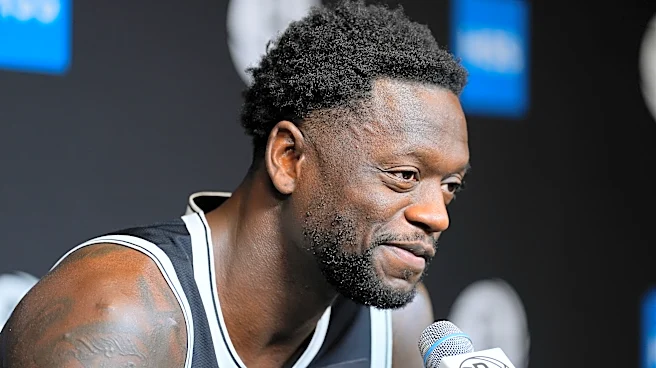
A similar idea can be applied to the recent tenure of Julius Randle, a former all-star caliber player that was used to being a #1 option on an otherwise beleaguered New York Knicks team that was forced to take a backseat when he came to Minnesota.
It’s been well-documented that Finch had to “manage egos” over the last few seasons, and Randle is one of the premier names that fit that description. Even beyond the personality clash, there were obvious on-court differences between the way Randle’s “bully ball” mentality showed up versus the superior floor spacing and ball movement that Towns had previously offered the squad.
It is a testament to Finch’s acumen, intuition, and ability that he was able to lead the Timberwolves to the Western Conference Finals in consecutive years with two teams that had dramatically different approaches to the game.
Of course, the upcoming season brings another challenge with the new personnel, though there is little evidence to suggest that Finch will not find a way to make this roster shine.
Going back to Finch’s desired “free-flowing offense,” there are few players better suited to maximize that vision than Ball. Few of the rotating cast of point guards over the years have been as complete of a player. The on/off statistics from Ball’s season with the Hornets last year were no fluke – he will raise the floor for every player regardless of lineup. Finch will be in a bit of uncharted territory in regards to the Timberwolves never having a floor general as talented and gifted as Ball, though if Finch’s desired offensive philosophies are to ever be fully actualized, these next few seasons with Ball should give credence to Finch’s directions and intent.
The Western Conference is once again brutal, though if last season’s playoff performance had any silver lining, it is that Finch can make a competitive team out of any assortment of players. If Finch can bring the Hospital Wolves to the Western Conference Semifinals and take Victor Wembanyama’s San Antonio Spurs to six games, who knows what he’ll be able to do with a fully stacked and complementary roster.

Even last year’s experiment with Edwards playing at the point should prove to be fruitful as it has provided him with additional experience seeing the floor in a different way as he reverts back to his natural position at the two. With looming injury concerns centered around the prospective health of Ball, Wolves fans should take solace in the fact that Finch has a proven track record of maximizing the talent on the roster no matter the circumstances. If (and when) the wins start rolling in, expect to see Finch’s name firmly entrenched in the Coach of the Year conversations.
I get it – Minnesota fans are used to malaise. Criticism flows from the tongues of the North as easily as a ball rolls down a hill. During the adverse stretches, coaches are often the first target of said criticism. Their contributions are rarely as eminently viewable as a made three or a loud block.
I myself will never claim to have not criticized some of his moves and lineup combinations, though at the end of the day there is a reason he’s a franchise-leading head coach of a professional basketball team and I am sitting at my computer desk. While concerns about this iteration of the Timberwolves have validity in regards to durability and the timeline of prospective chemistry development, all the tells are there to suggest that we may see some of the best of Finch moving forward. During his media day press conference, Tim Connelly said it best, and outlined appropriate expectations for Finch this season:
“He’s way smarter than I am…he’s the best coach in the league.”