
Until the WNBA and WNBPA agree to a new collective bargaining agreement (CBA), there will be plenty of explanations from both sides on why an agreement has yet to be reached.
The fact is, the prior CBA
ended on Oct. 31, 2025—and we are nearing February 2026 without a new deal. This extended stalemate is why, last week, I argued that a strike would be the best route for the players to get as close as possible to what they want in a new CBA.
However, the best-case scenario is that everything gets done without any work stoppages. So, how realistic is that, and where do things currently stand?
According to a source with knowledge of the situation, the latest proposal by the league includes a revenue-sharing model that would provide players up to 70 percent of net revenue. This model would increase the average salary to above $530,000, which is a 340 percent increase from the current $120,000 average. These numbers are for the first year of the deal. The average salary then is projected to grow to more than $780,000 during the duration of the agreement, sources say.
The max salaries would also get a significant boost, starting at $1 million in the first year. Depending on the revenue sharing figures, maximums could rise to as much as $1.3 million. And during the duration of the deal, the max salary could rise as high as $2 million, with the opportunity for multiple players on a team to earn the max.
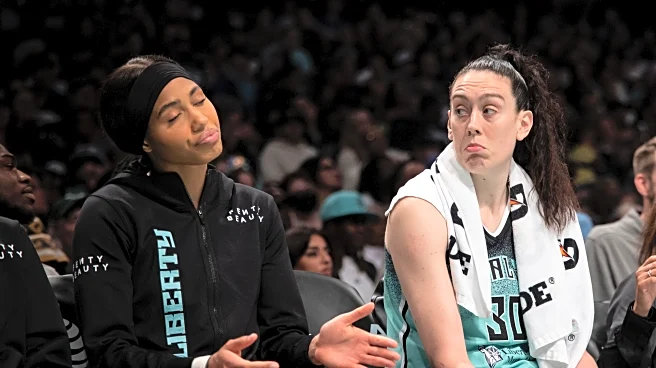
Recently, Breanna Stewart, a WNBPA vice president, told Front Office Sports that she was “just starting to see” the light at the end of the tunnel in these negotiations.
That sounds good, and the numbers the league is reportedly offering are a substantial improvement, but a deal still has yet to be reached.
One significant obstacle is what the players and the league are sharing. The WNBA is offering the aforementioned 70 percent net revenue, while the players want 30 percent gross revenue. The big difference here is that net revenue is the money left after expenses are deducted, whereas gross revenue is the determined before deducting the cost of running the league.
According to ESPN’s Alexa Philippou’s latest assessment of the negotiations, “the owners are unlikely to significantly yield on their revenue sharing position, though there is wiggle room at the cost of other expenses they’d incur under the players’ current proposal.”
Player salaries also remain a point of disagreement between the two sides.
Back in December, Philippou reported that the union proposed an average player salary of $1 million, with a maximum of $2.5 million. Of the proposal, which the players shared with the league in November, Phillippou wrote:
According to a document obtained by ESPN that was shared with players, the WNBPA proposed a compensation system last month with a projected salary cap of approximately $12.5 million in 2026, over eight times the 2025 cap. That Nov. 28 proposal also included approximately a $1 million average player salary and maximum player salary of $2.5 million, 20 percent of the proposed salary cap—altogether marking the first reported salary figures from the players’ side of the bargaining table.
Philippou further reported that the players subsequently proposed a lower team salary cap number of $10.5 million. According to a source with knowledge of the situation, the league is currently proposing a team salary cap of $5 million.
Last Friday, FOS’ Annie Costabile first reported that “the players’ union was still waiting on a response from the league to a proposal it sent nearly a month ago.” On Wednesday, ESPN and Philippou confirmed that the WNBPA “is still awaiting an official response from the league since sending it a proposal a month ago.”
The WNBA, according to Philippou, “believes the proposal didn’t warrant a response, since it wasn’t that different from the past ones the union has submitted.” League sources told ESPN that they were “waiting for the players to submit what it would consider a more ‘realistic’ proposal.”
So, maybe that light at the end of the tunnel that Stewart is starting to see is not that bright?
With the WNBA already setting the start of the season for May 8, the time is now to reach an agreement.
Strike? Compromise? Keep negotiating?

What are your thoughts on the current state of CBA negotiations? Do you just want things to get done, anyway and anyhow? Are you worried about missing games? Is there anything you’re confused about? Share your thoughts, questions and more on The Feed.
If both sides can compromise a bit, a deal can still be reached without disrupting WNBA action. The sport is growing rapidly, and killing that momentum at this critical juncture could prove costly for everyone involved. Per Costabile, those with knowledge of owners’ perspectives “have repeated that [owners] have no interest in invoking a lockout,” and while the players voted to authorize the executive committee to initiate a strike, they did so as “a measure of preparedness and not an indication of if or when they would strike.”
Balancing all this is easier said than done, but that’s what the current job entails for both sides. Hopefully, the new CBA is on the horizon, and Stewart is right: There is a light at the end of the tunnel, and a new day for the WNBA is about to dawn.






