
I was lucky enough to get to visit Memphis last year, and while out playing tourist, somewhere between Graceland and Sun Records, I found myself in the back of an Uber driving past FedExForum. It was one of the rare moments in my life when I wasn’t thinking about Gonzaga basketball at all. Mostly I was thinking about barbecue and Jerry Lee Lewis. And then I looked up and saw a face I knew.
Brandon Clarke. Twenty-five feet high, on the side of the arena.
“Oh hell yeah,” I said out loud. “That dude’s
a Zag.”
“A what?” my driver replied.
It felt impossible to explain to anyone who had never watched the 2018-19 Gonzaga Bulldogs, though the moment stuck with me, pulling into focus just how far this small basketball program from my hometown had traveled during my lifetime as a fan. Gonzaga had already risen into national relevance by the 2018-19 season, but that particular team pushed the program into a different tier of visibility and belief, and as he always did, Brandon Clarke stood right at the center of it all.
Waking up yesterday to the news of his passing was a type of gut punch I don’t think myself or any other Zag fan has experienced before. It didn’t make any logical sense. I couldn’t get past the sheer nonsensicality of it to even access the sadness I was supposed to be feeling.
Like many fans in my position, I stared gobsmacked at the news on my phone.
What do you mean Brandon Clarke is gone? I just saw him. Twenty-five feet high on the side of a building.
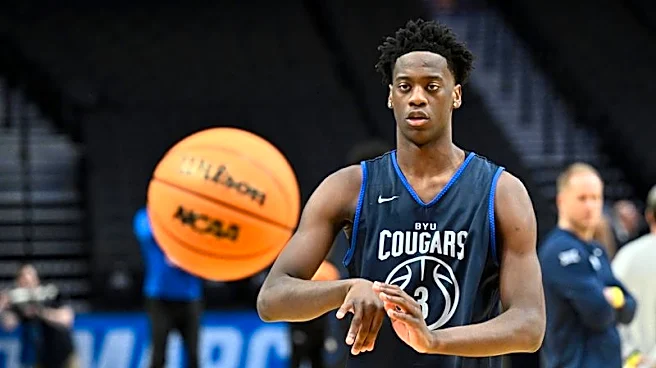
Brandon Clarke was born in Vancouver, British Columbia, to a Canadian mother and a Jamaican father who put a basketball in his hands practically from birth. His family moved to Phoenix when he was three. He grew up there, attended Desert Vista High School, led them to the Arizona state championship game, and then graduated without a single offer from a program that mattered, totally overlooked in a state loaded with talent that year. He ended up at San Jose State, where nobody outside the Mountain West was paying attention, and became one of the best players in that league anyway. All-Conference. All-Defensive Team. Averaging 17 points and nearly three blocks a game as a sophomore. Then his head coach resigned and Clarke decided it was time to find out what he could do somewhere bigger.
He visited Gonzaga, cancelled his planned trip to Oregon, and committed two days later. The scouting report for Clarke was simple: incredible athlete, makes things happen around the rim, but his shot is broken and cannot be fixed. Few looked past it, fully recognizing that any deficiency in the dude’s jumpshot was not going to negate the talent and athleticism he showed on tape. Clarke’s stepfather Bryan, who grew up in Pullman and had always wanted Clarke at Gonzaga, said when the transfer came through he “just about lost it.”
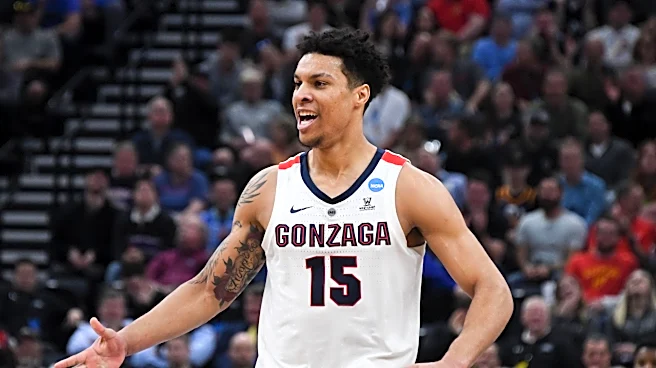
Nobody who watched that team needs reminding of just how good Brandon Clarke was. An absolutely insanely gifted pure athlete with a basketball IQ to match. An interior defensive specialist who held everything together on one end and then delivered highlight reel offense on the other. A player who competed with such intensity and such obvious joy that you couldn’t take your eyes off him even when the ball was nowhere near him.
The numbers he put up that season still don’t look real. 16.9 points. 8.6 rebounds. 3.2 blocks per game. A field goal percentage of nearly 70%. He scored in double figures in all 37 games he played. He had 13 double-doubles. He led the entire NCAA in blocks with 117 on the season, setting a Gonzaga single-season record that wouldn’t be matched until Chet Holmgren came through three years later.
And then there is the stat that stops every conversation cold: Brandon Clarke had exactly as many blocks that season as he had missed field goals: 117 each.
I encourage any Zag fan who hasn’t watched it in a while to pull up the 2018 Maui Invitational championship game against Duke. The whole game is on YouTube. Skip to the 14-minute mark of the second half, because what happens next is the most concentrated single minute of Brandon Clarke basketball you will ever see.
The 16-point lead Gonzaga built in the first half is down to single digits and Duke has all the momentum. The Zags cannot get anything going offensively and can’t buy a stop on the other end. To make matters worse, Clarke is on the bench with foul trouble. Few sends him back in, anyway. Immediately, the Zags run a set that ends with a Perkins alley-oop that Clarke finishes with a thunderous jam. Then on the other end, Duke’s RJ Barrett drives towards the rim and Clarke swats his shot out of bounds. Then Duke’s Tre Jones attacks off the dribble and Clarke swats him from behind. Then Jones tries to drive again and Clarke pulls the chair on him, forcing a turnover. Then Clarke draws a key foul on the perimeter to push the Blue Devils into the bonus. And then he blocks Zion Williamson at the rim on the very next possession. One momentum shifting dunk, three stops on the same possession, a key foul drawn on the best player in the country, and then another block to top it all off. All of it inside sixty seconds.
Clarke finished that game with 17 points on 7-of-10 shooting, five rebounds, and six blocks in just 23 minutes of action. The Zags secured one of their biggest wins in program history.
And that wasn’t close to his best game of the season
We could spend all day on the highlights. The 36 points on 15-of-18 shooting against Baylor in the NCAA Tournament. The Tennessee block, which was called the best block at any level of basketball that year and which Clarke humbly described afterward as “a really cool highlight,” (which tells you everything you need to know about the guy). The 27 and 10 against Creighton, the 18 and 12 against Texas Tech. The way he played every one of those games, with full intensity, total focus, not a mean bone in his body, just pure joy at getting to compete at that level after everything it took to get there.
Brandon Clarke was the best player on a team with seven future NBA players on its roster. He was that good.
Following the end of the season, Clarke declared for the draft and was selected 21st overall. He arrived to the Memphis Grizzlies the same summer as Ja Morant and wasted no time in announcing himself: four double-doubles at Summer League, MVP of both the tournament and the championship game, the first player in Summer League history to win both in the same year.
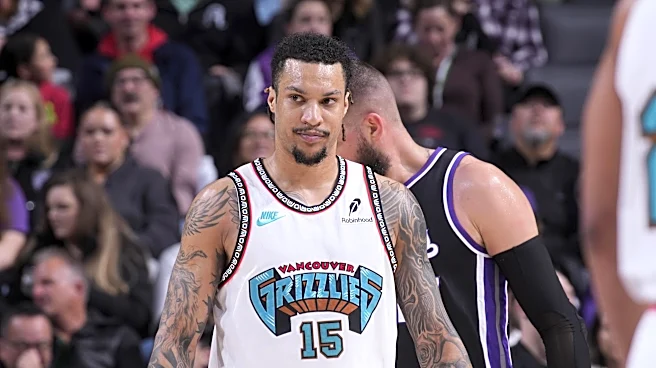
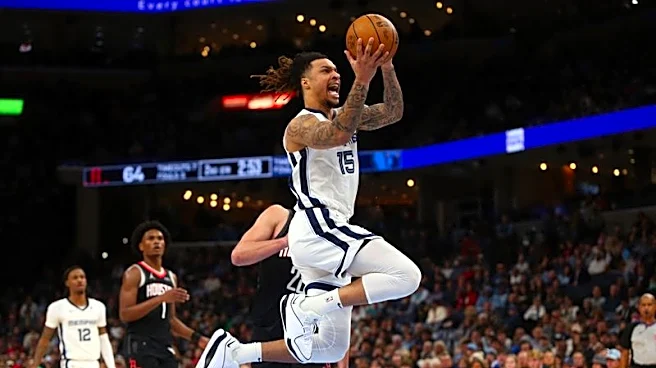
His rookie season confirmed that the Summer League buzz was legit.. Twelve points, six rebounds per game, fourth in Rookie of the Year voting, All-Rookie First Team alongside Morant. He spent the next several seasons as one of the most important complementary pieces on a Grizzlies team that was becoming one of the most exciting young rosters in the league. He was a defensive anchor, an efficient scorer, the kind of player whose impact shows up in every column on the stat sheet and is felt even more outside of it. In October 2022 the Grizzlies gave him a four-year, $52 million extension.
It felt like the beginning of something.
Then the injuries came.
Clarke suffered a torn Achilles in March 2023. Then a PCL sprain that ended his 2024-25 year early. Then knee surgery in the offseason. Then a calf injury in December that cost him the rest of this season after just two games back. For a player whose entire identity was built around what his body could do — the explosiveness, the verticality, the timing that made the blocks and the dunks and the putbacks possible — it must have been a particular kind of hell to take up bench space for that long. He never said so publicly.
In his absence, the Grizzlies failed to make the playoffs this season. He was expected to return next season.
But there was much more to BC than basketball.
In 2025 he launched the Brandon Clarke Foundation, focused on improving childhood literacy in Memphis. He spent his 29th birthday visiting a second-grade classroom and donating $3,500 to their literacy program. A local reporter who was there wrote after his death: “A good dude through and through.”
That’s the sentiment that keeps showing up online from the people who got to know BC in the last few years: just a great dude.
Mark Few’s statement on the loss of Brandon Clarke is worth quoting here in full: “We are devastated to hear the news about Brandon. He had such a kind, gentle and warm soul, and I will always remember the great smile he had on his face whenever you were around him. BC was one of the most easygoing players we have ever had, and he was part of one of the greatest teams in our program’s history. Brandon was a spectacular player and competitor, and a phenomenal teammate to all. He was a true legend who will never be forgotten here at Gonzaga. Please keep his wonderful family in your prayers. We miss you and love you BC.”
Every Gonzaga offseason, I find myself having the same conversation with the other Zag fans in my life: what does this team need to take the next step? We need stopping power on the perimeter. We need shooters. We need depth in the backcourt, etc. And every single year, without fail, I find myself saying the same thing to the same people: you know what we really need? We need to find another dude like Brandon Clarke.
Not just a shot blocker. Not just an efficient scorer. But a dude who could bend the entire shape of a game through sheer force of will and the joy with which he played the game. A fiery competitor and a true leader who made everyone around him better just by being on the floor. The kind of player who makes his own teammates play looser and freer because they know he’s back there behind him, guarding his yard.
The truth is, I’ll be saying that same thing every offseason for the rest of my life. Because players like Brandon Clarke don’t come around very often. If they did, every team would have one.
There is no way to spin the loss of Brandon Clarke into anything other than what it most nakedly is: an unbelievable tragedy. But it is not a story without its share of love and gratitude, as well.
Someone much smarter than me once said that grief is the feeling we encounter when the love we still have for someone no longer has any place to go. And if that’s true, then the grief pouring out of Memphis and Spokane and every corner of Zag Nation right now is a pretty remarkable testament to just how much love Brandon Clarke generated in his too short twenty-nine years on this earth.
He was extraordinary far beyond the court, carrying the same generosity, humility, and presence into every part of his life that he brought to the game itself. As a son, a friend, a teammate, a leader, a mentor, and a member of his community, he embodied everything Gonzaga basketball stands for. Every locker room, every city, every practice, every game, that dude was a Zag through and through. And he will be dearly missed.