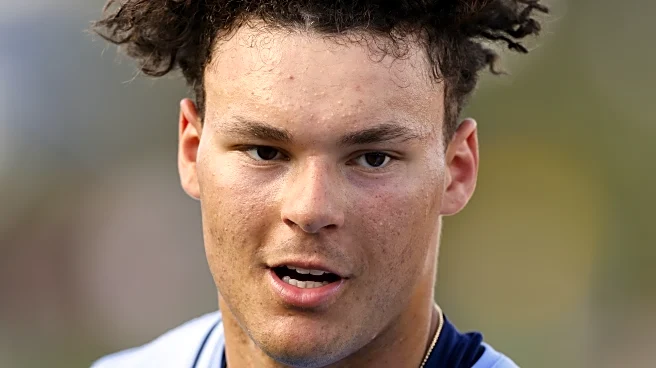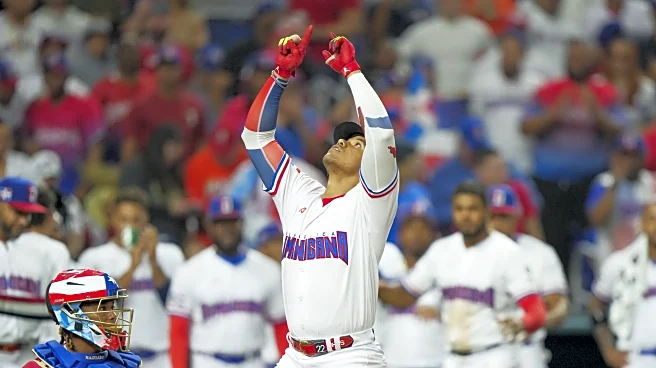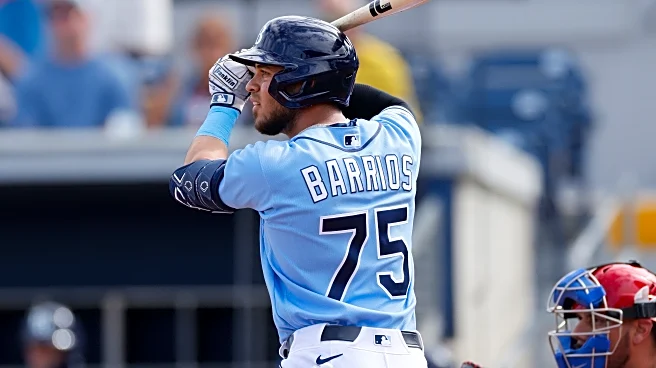

At this point in spring training, the starting second baseman remains a mystery, but Red Sox fans should be ready to go along for the ride. Bring an open mind and a hopefulness that comes from knowing that the Sox seem poised to get better contributions from the keystone position than they have been in some time. Instead of making assumptions and predictions, which Alex Cora himself has been discouraging, let’s lay out what we know.
What Do We Know About Second Base in 2026?
We know a lot, even if nothing is set in stone.
The first thing to
know: the Red Sox have lots of options. The two primary ones are Caleb Durbin and Marcelo Mayer. Durbin came over from the Brewers primarily as a third baseman, which is the position Mayer (a natural shortstop) temporarily took over during Alex Bregman’s absence last season.
Next, Alex Cora hasn’t made any promises to anybody. He’s deliberately played both Durbin and Mayer at second, as well as at third. He’s challenged Mayer publicly to step up his game and win a spot on the roster, without indicating where that spot could be.
Also, the Sox made a long-overdue institutional decision to strengthen their defense at all levels. This resulted in several offseason acquisitions of glove-first players, rather than the clear power bat most expected after Bregman’s departure. Clearly there isn’t room for all of these players in Boston (and maybe not even at the minor-league level), but the Red Sox have depth options now that they didn’t previously have. The infield is nothing if not deep, and most of these players can play other positions.
That segues to injuries. The Red Sox have already had two that affect the second base position directly: Romy González and new pickup Brendan Rodgers.
The trends so far for 2026 seem to be defense, versatility, and depth. A head-spinning array of options is just how Alex Cora likes it, and a deep bench and Triple-A team will proactively address injuries. The Red Sox weren’t prepared in past seasons and were forced to call up Quad-A players far too often for far too long.
The Starter
Well, we’re not sure yet. But that’s okay. As Alex Cora said earlier in spring training: “Everybody is competing for something here and I think the roster will dictate what we do.”
He has steadfastly refused to be pinned down about the infield, playing both Durbin and Mayer at second and third, and saying things like: “It’s not a given that [Mayer’s] second baseman or third baseman for this team.”
The Red Sox officially haven’t made any decisions yet, but there are clues all over the place…or are they red herrings? And some of the clues contradict each other. Both Durbin and Mayer are versatile: Mayer is originally a shortstop and covered third base for the Sox when Alex Bregman was injured last season. In that small sample size, he had 3 OAA. Durbin has played second, third, and short in the minors but was primarily a third baseman in Milwaukee. Comparing their time at third base (both relatively small sample sizes, as Durbin is only entering his second year in MLB), Avery Hamel notes that Mayer might be the more agile fielder, which could give him an edge at getting the job at second base.
The Bench

Romy González is injured, so we’ll put him aside for now. Look for him to return to his spot on the bench and to doing his share of mashing lefties when he’s ready.
For a short time, it looked as though Isiah Kiner-Falefa might be the starting second baseman, or at least platoon with González. Durbin’s arrival has changed the infield equation, and that’s to Izzy’s liking. He embraces his role as a super utility player and wants to be among the best there is in 2026. He’ll spend time at second, third, and short.
Andruw Monasterio is another Swiss Army knife, but his primary positions are second and third base. He’s had a good spring and likely positioned himself to take Romy Gonzalez’s spot on the bench, especially since he hit lefties well in 68 games with the Brewers. If not, he’ll spend significant time in Worcester, working on his pop—which hasn’t been a problem at all in spring training. If he goes to Worcester, he’ll be a spot call-up, and will also help in developing minor league players like Mikey Romero.
Though his primary positions are outfield and third base, don’t be surprised to see Nate Eaton slot in occasionally at second. There’s no denying his speed, versatility, and the way he contributed down the stretch in 2025.
Minor League Depth and Other Options

It’s hard to know if Nick Sogard will win a spot on the bench or begin the season in Worcester. With Monasterio’s hot spring, Worcester seems most likely for Sogard, but expect to see him as a callup at second base as needed.
Mickey Gasper is another utility guy, a switch hitter who is primarily a catcher but who has played second base in a handful of games at the MLB level. He’s had a good spring. Look for Cora to use his versatility with the glove and bat from time to time, but he’ll mostly be stationed in Worcester.
Anthony Seigler is yet another recent arrival who could play second or third. Craig Breslow has had only good things to say about Seigler, who performed well in Triple A last season for the Brewers.
Claimed off waivers as a glove-first guy, Tsung-Che Cheng is another insurance policy at various positions, including second base. He’s currently representing Chinese Taipei in the World Baseball Classic and came off the bench in their only game. With all of the options the Red Sox have available, Cheng will start 2026 in Worcester.
Vinny Capra is another versatile infielder who can play second, third, and short. He’s a glove-first player who doesn’t hit. He will help with developing young minor leaguers but won’t see much (or any) time at the big-league level.
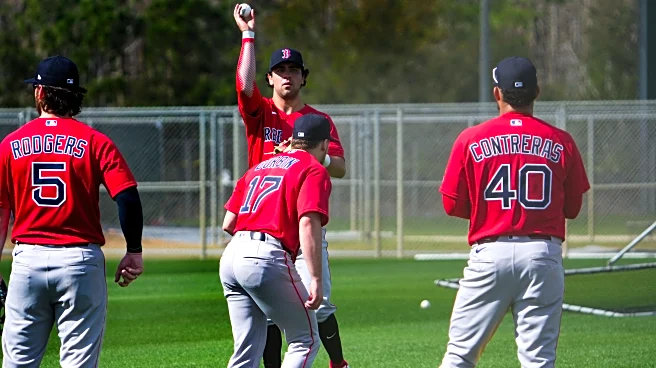
Although Cora praised Brendan Rodgers’ defense and expressed hope that he’d unlock some offense, the frequently injured Rodgers will almost certainly require surgery on his shoulder after a spring training dive went wrong. His future for the 2026 season, let alone at the MLB level, is uncertain at best. He signed a one-year contract with the Red Sox, and may never play for them outside of spring training.
The Future

The same theme emerges: versatile players who can play multiple positions. Mikey Romero and Franklin Arias seem to be the future of the infield in one way or another. Romero plays second, third, and short. Though he’ll probably start the season in Triple A, he is likely to see a callup in 2026 as another utility infielder. Arias is primarily a shortstop who occasionally handles second base. We won’t see him this year, but he is likely to anchor the Red Sox infield in some way down the line.
Who Definitely Won’t Play Second Base?

It’s useful to consider who won’t play second. Not only is this category easier to predict, but it’s also helpful to see the path the Sox have traveled to arrive at a point of much-needed depth.
The many second-base options at this point are partly a testament to kicking the tires in spring training, and also to Alex Cora’s devotion to moving players around and making aggressive moves with matchups. But these Not Second Basemen are worth noting:
- Thankfully, David Hamilton has returned to Milwaukee from whence he came, removing Cora’s deep and abiding temptation to get him into the lineup.
- We can also expect not to see Ceddanne Rafaela at second in 2026. Although this promise was made early in the offseason, it became a possibility again after Alex Bregman decamped to Chicago. However, the front office has worked hard to bring in needed depth. With the quantity of infielders and utility players who have arrived, Rafaela should stay firmly in center field where he belongs, and where he can help the team most.
- Less confidently, Kristian Campbell can be added to this list. After 2025, Campbell has most likely converted into an outfielder/first baseman. He looked awkward at second, and the experiment ultimately affected his play and confidence. The Sox may have learned a lesson about quick promotions and asking too much of a player, a very young one at that.
What About the Offense?
We don’t need a table to know that not a single one of these players are so-called big bats. They are glove-first, which will bring its own rewards like cleanly fielding all the ground balls generated by Garrett Crochet, Ranger Suárez, Sonny Gray, and Brayan Bello. Durbin consistently gets on base, so no matter what position he plays, look for him to do that and get driven home. Mayer has yet to prove what he’s capable of offensively. It’s still too early in his career to make any predictions there.
Don’t think the Red Sox have lost speed at second with Hamilton’s departure and González’s injury. Spring training has brought reports about Mayer’s speed, and Durbin is highly regarded for his speed but even more for his baserunning smarts. Eaton’s speed is a known quantity, should he get time at second (and is a lock to steal bases no matter where he plays). Given the likely roster makeup, look for an increased emphasis on manufacturing runs: out of Durbin’s singles, stolen bases, and turning on the speed to stretch out base hits.
Around the AL East

There’s been a lot of turnover at second base in the AL East since October; possibly only Jazz Chisholm, Jr. of the Yankees will look familiar as a regular. Jackson Holliday broke his hamate bone in spring training, so the Orioles will rely on depth to start the season. Like the Red Sox, the Toronto Blue Jays also find themselves considering multiple options, partly because of Ernie Clement’s red-hot 2025 postseason. Andrés Giménez, the primary second baseman last season, and Davis Schneider are in the mix too. Gavin Lux, offseason addition to the Tampa Bay Rays, is expected to be the primary second baseman as they return to Tropicana Field, but the team has taken a slow approach with him during spring training due to upper body soreness, so it’s difficult to say. He may share time with Richie Palacios. With all these unknowns, including for the Red Sox of course, it’s impossible to attempt any rankings at this point. Let’s put in a pin it for now and circle back later, after the Sox infield settles into some kind of groove.
Second base has gone from being a black hole in 2025 to the great unknown, and it’s exciting. Let’s go.