





As the WNBA playoff picture sharpens, star power alone won’t decide who’s still playing in late October.
Every contender has a role player whose presence, not just production, lifts their teams in ways the box score fails to fully capture.
These are the biggest X factors for each playoff team. In the comments, be sure to let us know if you agree, while also identifying the crucial players you’ll have a closer eye on this postseason.
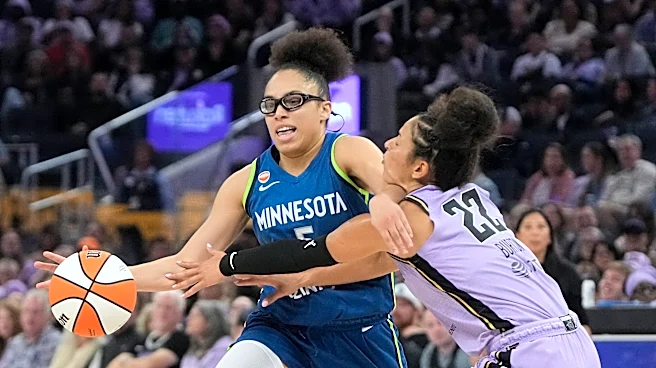
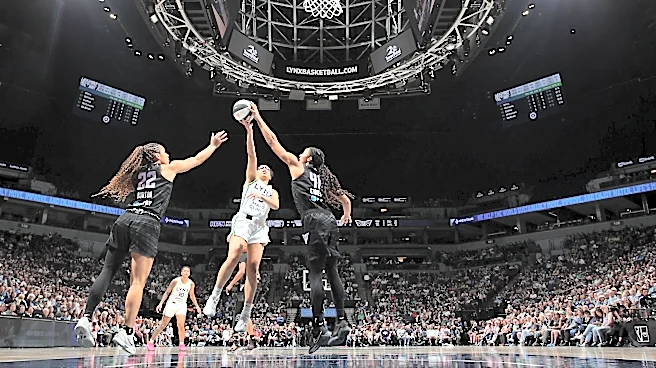
Minnesota Lynx: Nia Coffey

The Lynx have one of the most complete starting fives in WNBA history.
Not only are they talented, but they are synergistic in the way they play. The Lynx starting lineup since Napheesa Collier returned from injury has posted an insane +26.8 net rating in just under 200 minutes.
So what does this mean for Nia Coffey now that she is in a reduced bench role since Collier’s return?
Her vertical athleticism and ability to play in multiple frontcourt combinations will be crucial when Minnesota faces some of the most physical teams in the league. The Lynx have always struggled with defensive rebounding, given how small their team is. They will need her rebounding, in addition to her shot blocking, prowess to stave off taller teams. It’s a small sample, but the Lynx’s opponent offensive rebound percentage drops by almost five percentage points when Coffey replaces Collier in the lineup.
Golden State Valkyries: Kiah Stokes

There’s an argument to be made that Kiah Stokes has been the best per possession defender in the league.
Stokes has the lowest defensive field goal percentage in the entire league at 40.8 percent and the second-lowest points per possession (PPP) as the screener defender in pick-and-roll actions at 0.78. Every defensive metric possible has Stokes near the top, and she’s done a phenomenal job establishing an interior presence for the Valkyries team.
The biggest question will be if her lack of offense will affect her playing time.
The Valkyries offense is 15.6 points worse when Stokes is on the court versus on the bench, which is one of the biggest differences amongst qualifying players. If Stokes is unable to remain on the court because of her offensive struggles, it could have massive ripple effects on Golden State’s defense and rebounding against certain matchups. But if she can stay on the floor, it makes them one of the scariest teams.
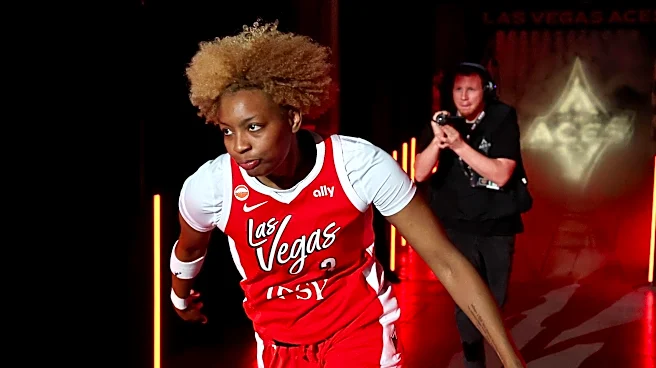
Las Vegas Aces: NaLyssa Smith

Las Vegas has one of the strangest roster builds I’ve ever seen. They lack a productive bench, which means they rely on their starting lineup a lot more than other teams to pull away in games.
As the starting power forward, NaLyssa Smith has been one of the best offensive rebounders in the league this year. The 2.2 o-boards she grabs per game doesn’t do her justice; the Aces have a 10 percent higher offensive rebound rate in NaLyssa’s minutes versus when she sits. That is a massive difference that could influence wins and losses in the playoffs where possessions are magnified.
Smith has also been one of the most efficient post scorers this season, posting a 1.31 PPP on those direct actions, which is in the 90th percentile. The crucial role Smith plays in the Aces offense as an extra possession generator and late clock scoring option can go under the radar, but both will absolutely be needed down the stretch.
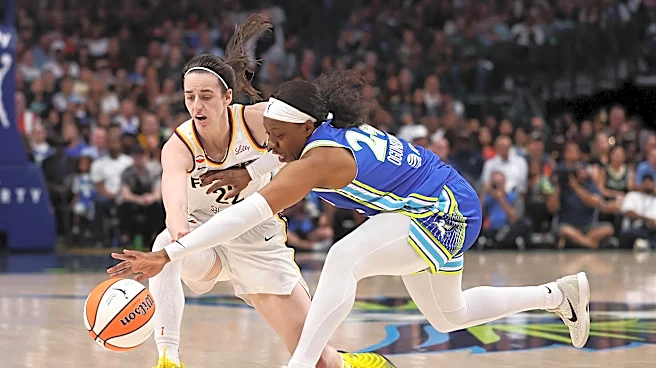
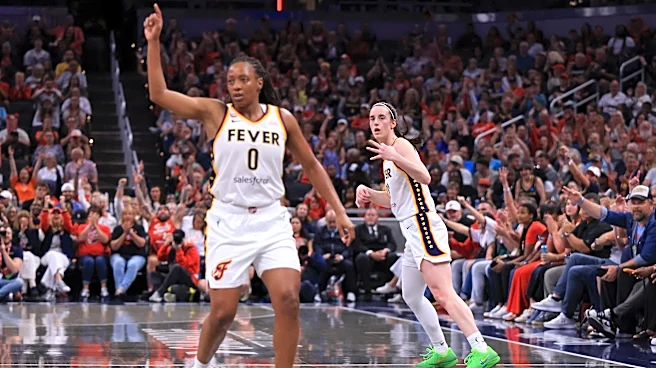
Indiana Fever: Makayla Timpson

Since Makayla Timpson entered the starting lineup for Indiana, the team has posted a ridiculous +28 net rating.
The sample is small and the numbers will almost certainly regress, but Timpson’s athleticism is undeniable and has been a blessing to a struggling defense. Teams are shooting 15 percent worse at the rim and 11 percent worse in the midrange in Timpson’s minutes. No, those numbers are not typos.
Offensively, her athleticism allows her to play this invisible role as a vertical spacer because of her ability to catch and finish close range shots while jumping higher than most defenders. This, in addition to the defensive impact, is a key difference between her and Monique Billings that sparked the lineup change.
It’s still too early to say what exactly Timpson’s true impact is until we see more minutes and the numbers start to stabilize, but if she can be another stifling defensive piece next to Aliyah Boston in the frontcourt, it raises the ceiling of this Fever team to another level.
Atlanta Dream: Jordin Canada

Jordin Canada’s absence was sorely missed in the Dream’s four-point overtime loss o the Fever last weekend, but not for the reasons you may think.
One of the biggest strengths of this Atlanta team is their ability to force turnovers, and without her in the lineup the Dream only forced nine giveaways, which put them at a huge disadvantage in the possession game because they don’t score efficiently. Atlanta forces 6.5 percent more turnovers on defense in Canada’s minutes this year.
Atlanta also lacks a reliable backup point guard, so the team needs Canada to help orchestrate the offense, determining where the ball goes by identifying mismatches and more. Those skills were missed last Sunday, but are so important for a team that relies on winning the possession battle most nights. Canada helps bring down Atlanta’s offensive turnover rate by 3.2 percent in her minutes. She also can take certain smaller matchups that her replacements can’t, while also doing so many little things on offense that help the team function in a smoother, more structured fashion.
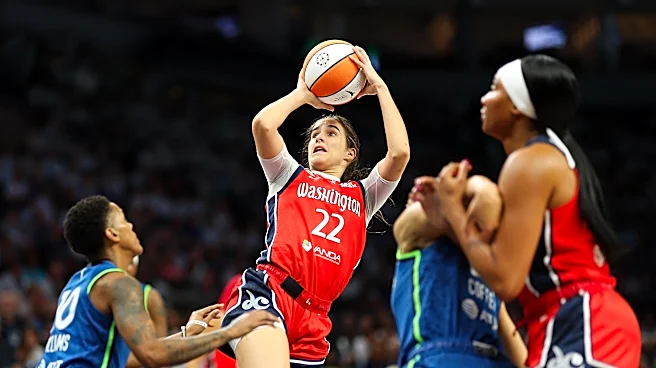
Washington Mystics: Michaela Onyenwere

Part of the reason one number metrics like RAPM (regularized adjusted plus-minus) rate Michaela Onyenwere so high isn’t because they think she’s the best player on the team, but because what she provides is irreplaceable.
The Mystics have the second lowest 3-point rate and worst 3-point percentage in the entire league. They don’t take a lot, and they miss a lot. Michaela is having a career year, shooting 40 percent from 3 on decent volume, which is why the Mystics’s offensive true shooting is 4.5 percentage points better when she’s on the court.
The other area that she has excelled at this season is offensive rebounding. Michaela has mentioned it being an intentional growth area in her game since coming to Washington and her offensive rebound percentage of 7.6 percent as a wing is absurd, which is another reason why the Mystics’s team offensive rebound rate jumps up 4.5 percent in her minutes.
That number isn’t just because of her; the Mystics have so many gifted rebounders on the roster. But, Onyenwere being an outlier rebounder for her position is a big deal, and combined with her amazing perimeter defense this year, it’s easy to see why her presence has swung so many games in the Mystics’s favor this year. The team’s offense is 11 points better in her minutes, tied with Sonia Citron for the largest swing on the team.
New York Liberty: Leonie Fiebich

If there’s one controversial take that probably shouldn’t be all that controversial, it’s that Leonie Fiebich is the second-most important player to this team behind Breanna Stewart. Labelling her an X factor, despite missing so many games, is really just a testament to how much she saves this team’s defense with just her presence.
The biggest thing that jumps out when looking at the Liberty in the games in which Fiebich has played this season is how game wrecking the pairing of her and Stewart is on the perimeter.
Because of a lack of athleticism, the Liberty guards struggle to stay in front of a lot of opponents; this resulted in the team running an absurd amount of zone earlier in the year in order to protect them. The massive wingspans of Fiebich and Stewie combined to make entry passes and skip passes almost impenetrable in their minutes, which is why the team’s 3-point defense improves by 8.8 percent when Leonie is on the court. She’s also valuable on the other side of the ball as a 43 percent 3-point shooter on decent volume, meaning she is too dangerous to leave open.
Everything about the Liberty’s season and what they can accomplish this year hinges on Fiebich’s health and her ability to be part of a stifling defensive tandem that teams can’t figure out.
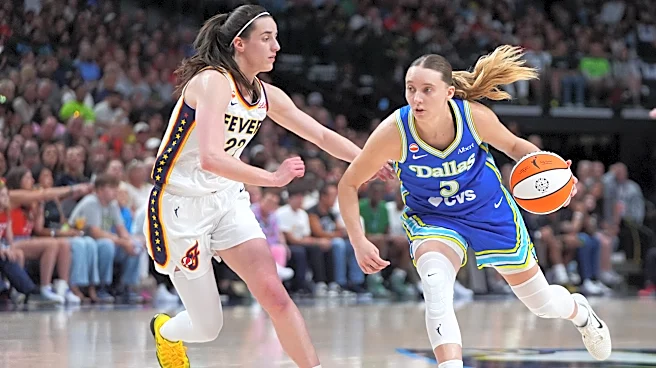
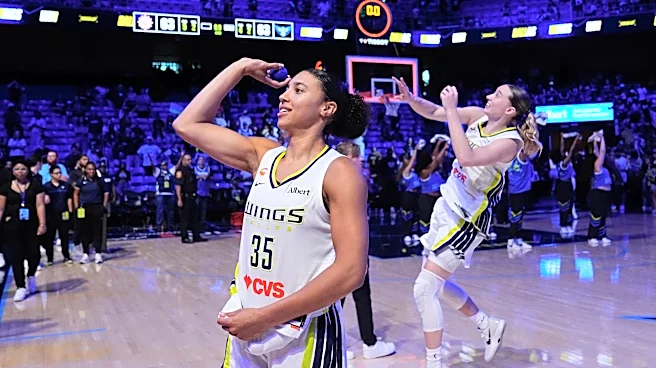
Dallas Wings: Awak Kuier

It’s shocking that it took Dallas so long to realize how important Awak Kuier is to the team’s defense, but it’s better late than never. Against the Fever on Thursday, she recorded seven blocks, essentially shutting off everything at the rim.
These signals have been hiding in plain sight all season. The Wings are 6.2 points better on defense in Awak’s minutes this year and teams are shooting almost seven percent worse at the rim, while also getting there at a much smaller rate when she’s on the floor.
There are some legitimate questions about how she can impact the game on offense, but she is clearly the team’s best defender and they will need her to play at least 25 minutes a night if they want to climb in the standings and make some noise in the playoffs.