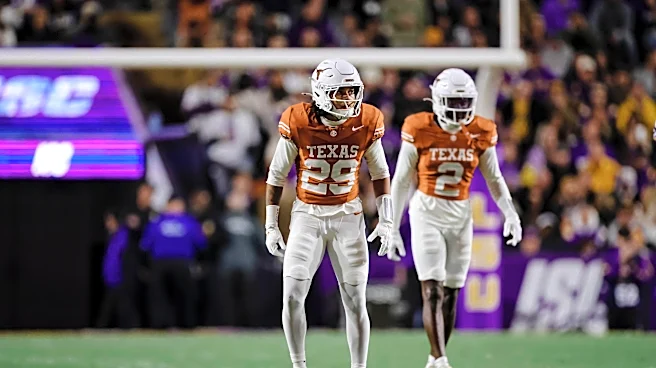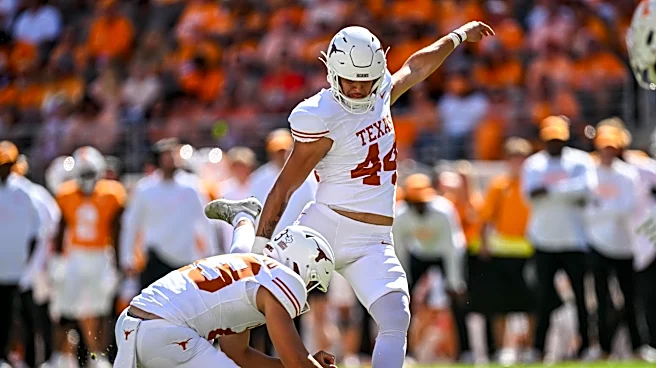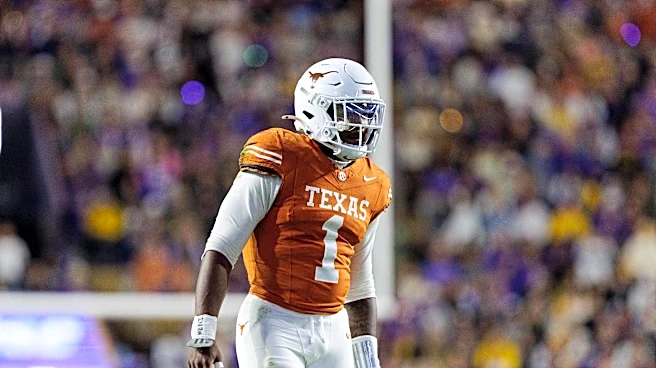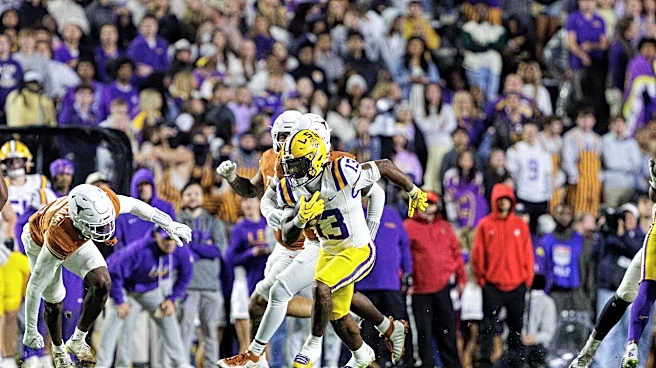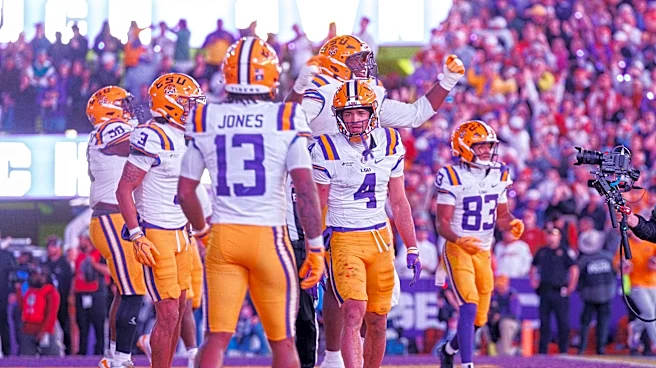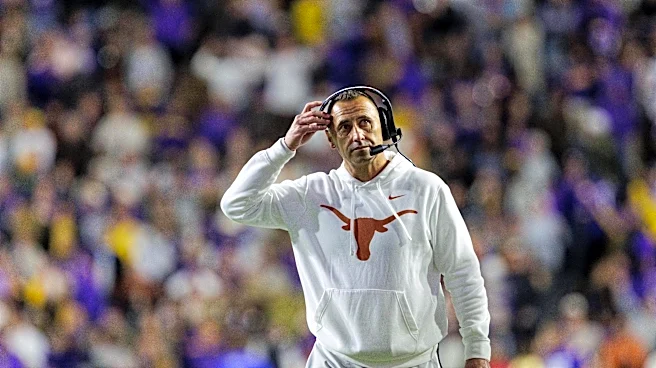

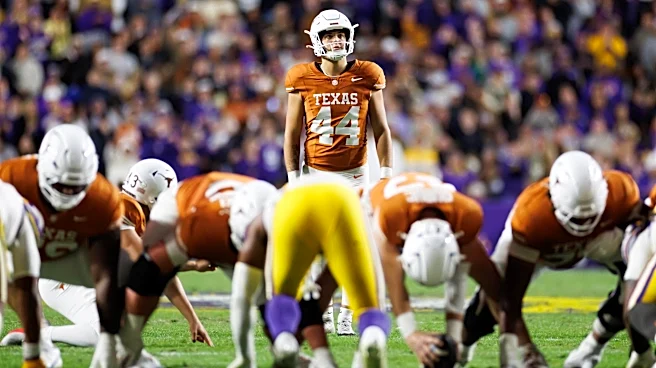
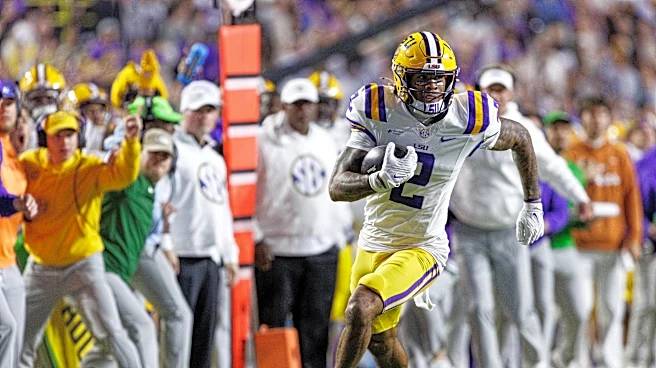
In a thrilling victory on the road against the No. 21 LSU Tigers, the No. 6 Texas Longhorns didn’t allow penalties to completely derail their performance. The Longhorns did make a few costly mistakes, but ultimately the outcome of the game was unaffected by flags against the Longhorns, especially when considering the impact penalties have had on previous games.
In total, the Longhorns were called for eight penalties, five of which were accepted, for a total of 50 yards.
Far from the worst performance
of the season.
However, this tally and the outcome of the game don’t completely exonerate Texas.
The Longhorn defense once again made life more difficult for itself with penalties while the offensive line put Texas behind the chains, two issues that have plagued the Longhorns this season.
One of the most costly flags was a holding on center Connor Robertson. On 2nd and 10 at the LSU 17 in the second quarter, quarterback Arch Manning gained three yards on a quarterback draw, but Robertson was flagged, pushing Texas into a 2nd and 20 rather than 3rd and 7. The drive resulted in a Longhorn field goal.
The penalty put Texas well behind the chains and essentially took a touchdown out of the equation. It also made the field goal more difficult than it needed to be.
Left tackle Melvin Siani was also called for a holding early in the game, but the penalty was declined. Had the Longhorns converted on the third-down play when it occurred, it would have taken a first down off the board.
Another consequential call was a roughing the passer on Texas defender Brad Spence. After getting pressure on LSU quarterback Sam Leavitt and forcing a throw away on third down, Texas had seemingly gotten off the field and given the offense a chance to drive down the field before halftime. However, Spence hit Leavitt high and was called for the penalty.
This kept the LSU drive alive with a free first down near midfield. The Tigers missed a field goal to end the half, taking Spence off the hook.
A similar story played out with a face-mask penalty on Lance Jackson, who was flagged early in the LSU drive, giving the Tigers a free 15 yards, but the drive ended with a Leavitt interception on the goal line.
For Jackson, it was his fifth penalty of the year, which leads the defense.
Other calls on the Longhorn defense included a declined pass interference on Bo Mascoe and an illegal substitution on Colin Simmons.
The play occurred on a touchdown, so Texas didn’t gain much from the flag. Mascoe has now been called for three pass-interference calls, a penalty that the Longhorn secondary as a whole has susceptible to this season.
A positive for the Longhorns was the lack of pre-snap penalties. The Longhorns were called for an illegal motion on a funky trick play, but ultimately lined up correctly and avoided false starts in a raucous environment.
As a whole, Texas’ penalty problems were considerably quieter against LSU.
A year ago, the Longhorns averaged 8.3 penalties per game, totaling 108 flags for 906 yards over 13 games, which ranked 134th out of 136 teams in total penalties and 132nd in penalty yards per game.
This season, Texas is 77th in penalties per game at 6.50 and 100th in penalty yards per game with 61.7.