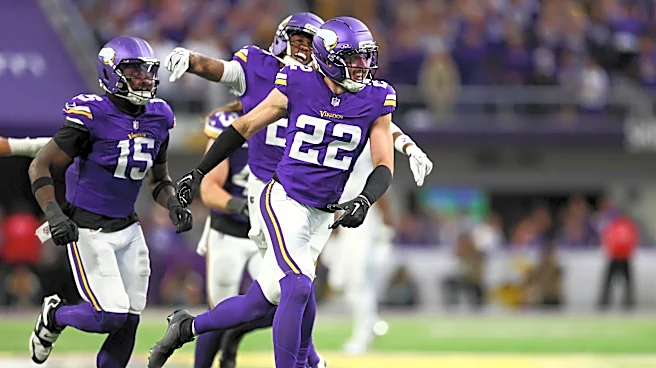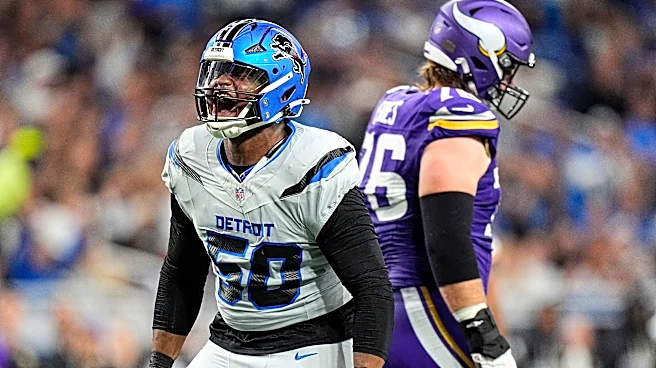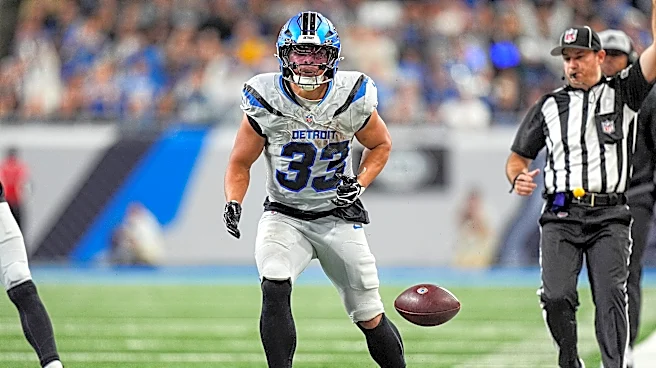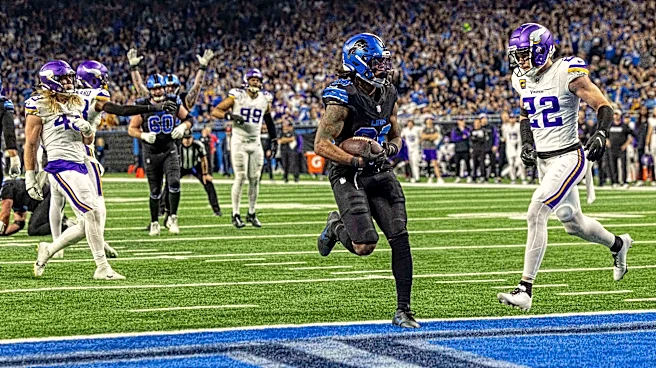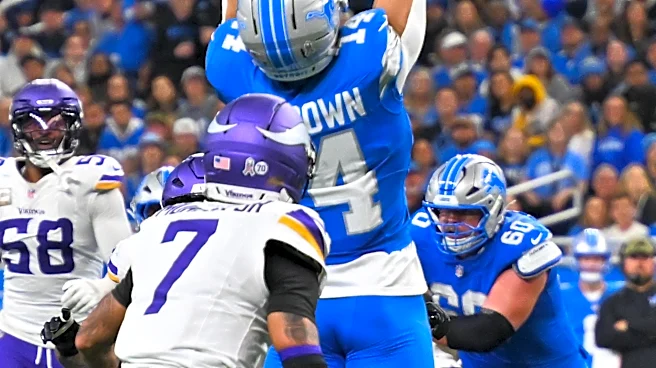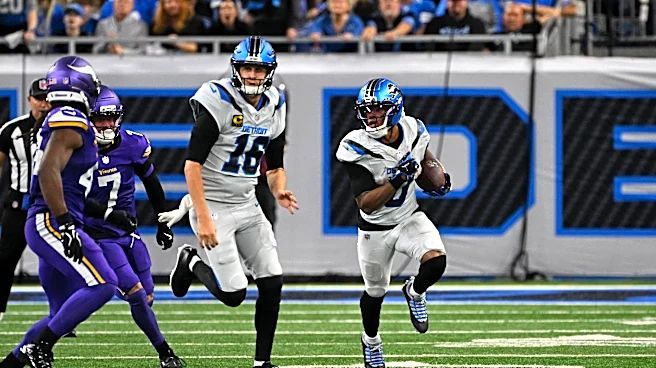


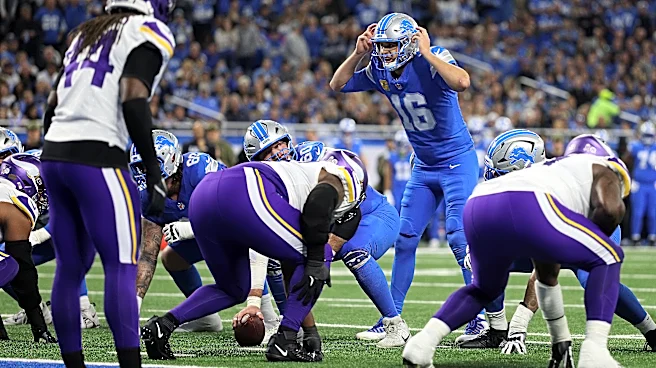

The Detroit Lions and Minnesota Vikings have been a litmus test for each other for a few seasons now. These NFC North divisional tilts have shed light on the true identity of each team. Last season, the Lions floundered against the Vikings defense on both occasions, while the Vikings offense did enough to eke out points for a win. In 2024, the Vikings and Lions duked it out for the division crown all season, yet it was a Week 18 Lions victory that ended the Vikings’ nine-game win streak. That Vikings loss
set the stage for their Wild Card exit.
How would the first leg of this rivalry play out in 2026? Could Detroit beat a defense playing at an elite level under one of the best defensive minds in the league? Could Minnesota legitimize their 6-0 start by beating a talented foe in decisive fashion?
The answer was thankfully in Detroit’s favor, but it was not always pretty. It was an emotional game for the Lions on multiple levels, but at the end of the day, they walked away with a win. Even before the season started, many viewed these games versus the Vikings as a challenge for the Lions. With the Vikings starting undefeated, there was an extra level of satisfaction by delivering them their first loss of the season.
Amid a game with plenty of impressive moments, what stood out the most to you?
Today’s Question of the Day is:
What was the most impressive part of the Detroit Lions’ victory over the Minnesota Vikings?
My answer: The adaptability of the offense under Drew Petzing.
This game started out rough. In the first half, here is a quick summary of each Lions offensive drive:
- Punt—Seven plays for 4 yards, including two sacks and a taunting penalty
- Field goal—12 plays for 57 yards, including a sack, another taunting penalty, and an overturned touchdown
- Interception—three plays for 2 yards
- Punt—six plays for 18 yards, including two false starts and a 2-yard loss on third-and-1
- Punt—three plays for 1 yard, including a sack
- Field goal—seven plays for 43 yards, including a holding penalty
Simply put, very little was working. Jahmyr Gibbs had little room to run, while Jared Goff had little time to throw. When the Lions can’t get those two going, things get rough for the offense.
Under previous coordinators like Anthony Lynn or John Morton, a slow start like this would have been a death sentence for the Lions. Those coordinators rarely managed a mid-game turnaround—if the offense started slow, odds are the offense would finish slow. Even when Ben Johnson was coordinating a high-flying Lions’ offense, they were a team that needed to avoid slow starts—that cost them in the playoffs against the Washington Commanders during the 2024 season. Part of that was due to the Lions fielding a porous defense, but it was also because the Lions have thrived by punishing their opponent by running the football and controlling the clock. Naturally, falling behind in games makes that more difficult.
Yet despite the rough first half, the Lions’ offense came to life in the second half. It wasn’t by airing it out for Jameson Williams, one of the Lions’ typical sparkplug plays. It wasn’t by forcing the ball to Amon-Ra St. Brown, the reliable right-hand man of Goff. Instead, things started working because Petzing learned from his earlier failures and adapted.
In the first half, the Vikings were bringing a ton of blitzes and crashing towards the line of scrimmage. That led to two things: there was little time for the deep routes to develop and there was very little room to move laterally. Early on, the Lions tried running towards the perimeters a fair bit—normally a strength of Gibbs—but because of the Vikings playing so many players close to the line, there was nowhere for him to move.
In the second half, Petzing used the Vikings’ hyper-aggressiveness against them. No room to get St. Brown moving in space? Dial up a creative play where he lines up 20 yards back to get a sprinting start on the screen. The Vikings are crashing the edges often? Run more Iso plays up the middle against a weaker Vikings interior with Brock Wright leading the charge (Wright played a season-high 55 snaps on offense with 17 of those coming in the backfield). A lot of the Lions’ success in the run game came with at least one player operating as a fullback:
Look at the run direction (largely up the middle) and look at the clock—most of these clips are from the second half. I have admittedly not re-watched the game yet, but I strongly suspect that play designs like these were not happening in the first half. Early in the game, Petzing’s offensive approach was not working, but he demonstrated his ability to change on the fly based on what Minnesota was showing him. I also think adding Sione Vaki to the running back rotation gave the Lions an extra wrinkle (and a breather for Gibbs too).
Of course, not to be forgotten was the impressive outing from Kelvin Sheppard’s defense. Complementary football sealed this victory for the Lions. Despite the slow start, Detroit remained in the game because the defense was holding firm—after a touchdown early in the second quarter, Minnesota would go scoreless until the middle of the fourth quarter. As mentioned before, the reason why the Lions of the past struggled with early deficits was because the defense could not stem the bleeding. Petzing’s crew had a phenomenal turnaround in the second half, but that might not happen if the defense doesn’t keep the Vikings at bay. A hat tip to Sheppard after a difficult start to the season.
With Petzing helming the offense, this team looks like it can run the football at any moment—and best of all, succeed while doing it. Those final two drives were prime Lions football—they ran the ball down the throat of the Vikings and won themselves this game.
The Lions demonstrated a lot of grit against the Vikings in their pivotal NFC North victory. What part of the team stood out the most to you? Let us know in the comments below.