
The 2019 Minnesota Twins were a veritable superteam, boasting a powerful lineup that battered teams into submission. Right in the middle of that success was outfielder Max Kepler, who swatted 36 home runs
and 32 doubles while providing quality defense in both center field and right field. His performance, in fact, was so good that some national reporters looking to stir the pot and generate clicks even tried to compare him favorably to Aaron Judge.
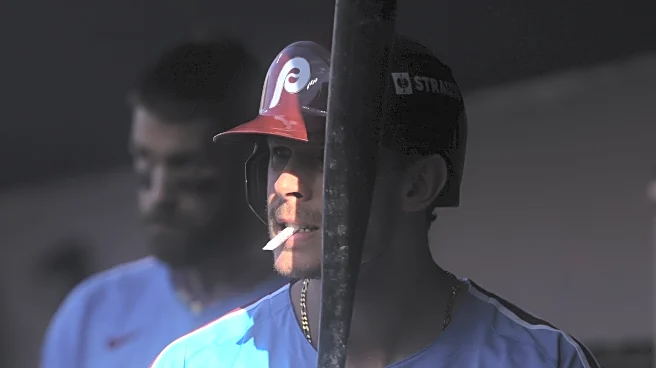
The benefit of six years’ hindsight has shown that, much like the 2019 Twins, Kepler was a juiced-ball merchant. Despite that — and a series of injuries — he has put together a nice career for himself as a platoon bat, and he now hits free agency for the second consecutive season after spending 2025 with the Philadelphia Phillies.
2025 Statistics: 127 games, 474 PA, ..216/.300/.391, 18 HR, 19 doubles, 52 RBI, 90 wRC+, 1 DRS, -1 OAA, 0.1 rWAR, 0.6 fWAR
2026 FanGraphs Depths Charts Projections: 112 games, 483 PA, .238/.313/.401, 16 HR, 56 RBI, 98 wRC+, 0.9 fWAR
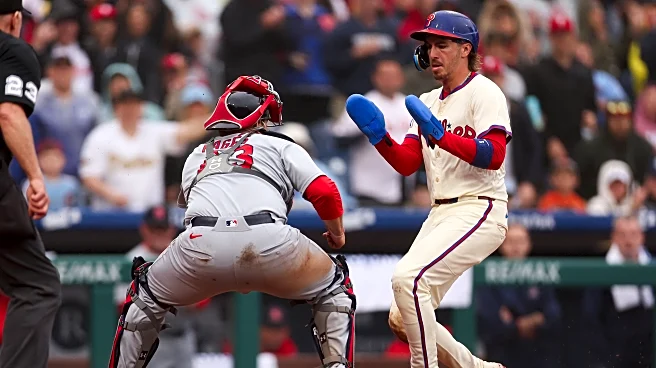
When the Phillies signed Kepler last December, Phillies president of baseball operations Dave Dombrowski envisioned that the left-handed hitter would be his team’s everyday left fielder, noting that he “hit left-handers better [in 2024], but he’s traditionally been a better hitter vs. right-handed pitching.” That plan would, ultimately, fail to materialize, as the eventual NL East champions had to scour the trade market at the deadline in order to retool their outfield on the fly. By season’s end, Kepler was back in the role he had filled throughout most of his Twins career, serving as a platoon bat against right-handed pitchers.
Unsurprisingly, Dombrowski made it clear as the winter began that he had no intention of bringing Kepler back, as they look to completely reconfigure their outfield alignment. And at first glance, it’s easy to see why. In his sole season in Philadelphia, Kepler put together the worst season of his career. Worse than that, although he did underperform his expected metrics and thus is likely do for some positive regression (e.g., .430 xSLG vs. .391 actual SLG), he didn’t have a single elite tool in 2025. Sure, that’s not inherently a bad thing — especially when you consider the fact that his metrics represented a marked improvement over his injury-filled 2024 — but it is something to take note of when discussing a player entering his age-33 season.

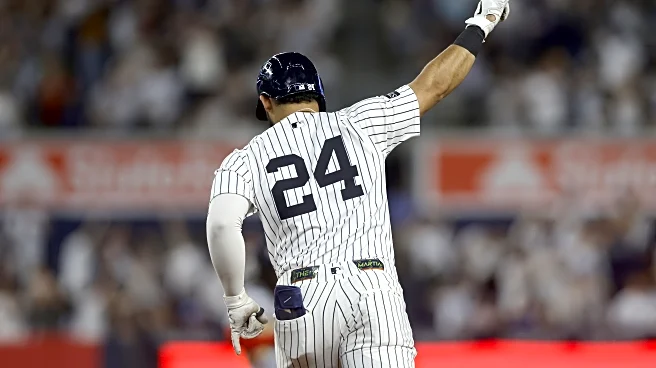
Last winter, Kepler on a short-term deal may have made sense for the Yankees, who were looking for an outfielder — preferably one who hit from the left-handed side of the plate — to fill the hole vacated by Juan Soto. While the Yankees could still use another outfielder, Kepler seems like a bit of a difficult fit. Trent Grisham and Jasson Domínguez, the two outfielders currently slotted for everyday roles alongside Aaron Judge next season, hit right-handed pitchers much better than they do southpaws (144 and 116 wRC+ against righties, 88 and 63 against lefties). In 76 plate appearances against lefties last season, Kepler posted just a 71 wRC+, while posting 93 when facing righties. In other words, he’s a corner outfielder capable of faking it in center field who can’t hit lefties — not exactly something the Yankees are in dire need of.
For what it’s worth, Kepler’s market doesn’t seem all that robust, and the offseason is nothing if not unpredictable. Should his market collapse entirely, or should the Yankees use the Martian and/or Spencer Jones as trade chips without re-signing Bellinger, or should an injury change the calculus, then perhaps Kepler might fit the Bronx. For now, though, expect the Yankees to go hunting elsewhere.