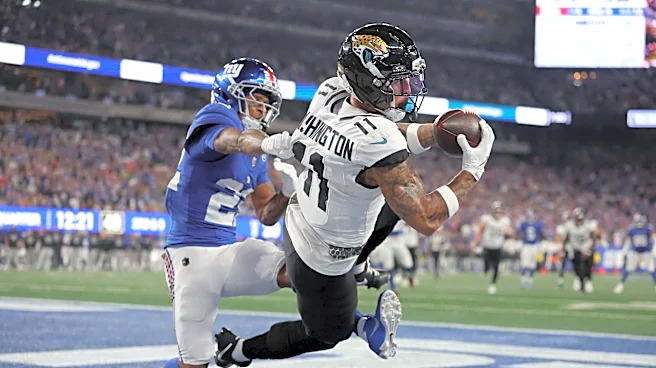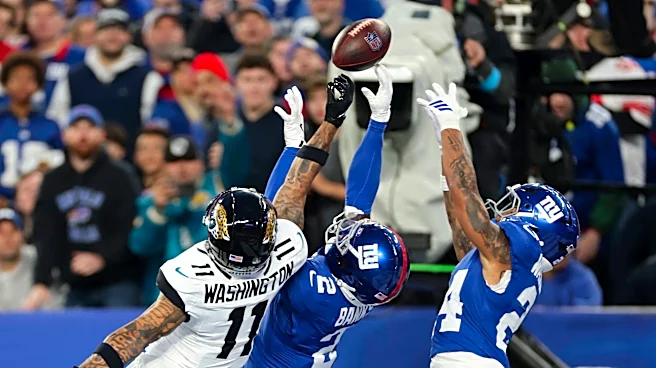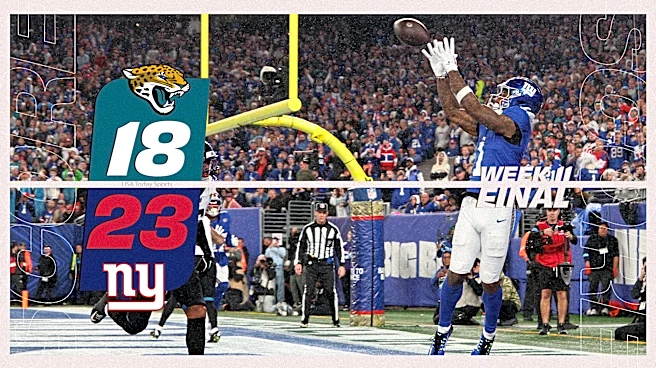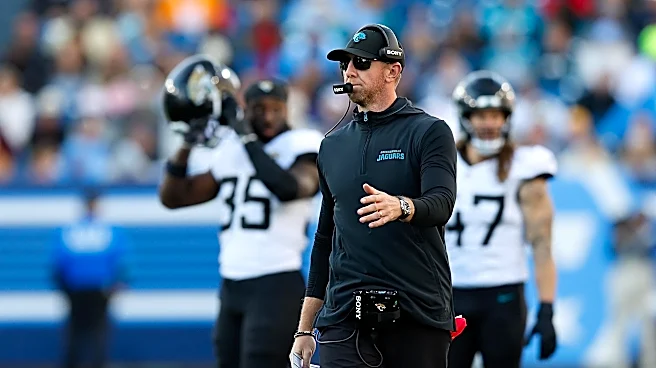



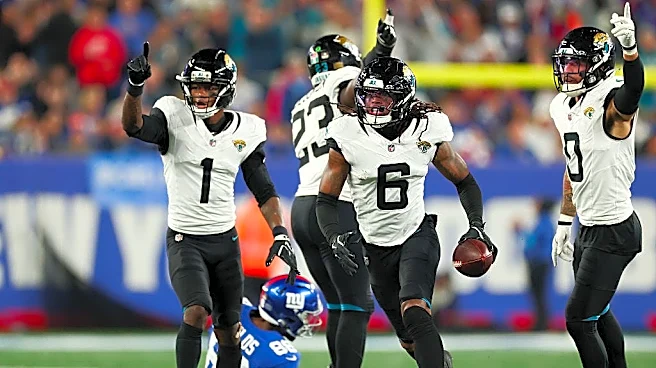
The Jacksonville Jaguars lost 23-18 to the Giants on Sunday in a frustrating but familiar way. After the team clawed its way back in the fourth quarter, Liam Coen had a chance to play it safe or try to steal the game. Both decisions at issue came in the fourth quarter. Jacksonville went for two after Brian Thomas Jr.’s touchdown with 6:39 left, then kicked a field goal from the Giants’ 8-yard line on fourth-and-goal with 3:40 remaining. The two-point try failed.
The loss makes it tempting to call
the decision to go for two the game’s turning point. However, the numbers say the story is slightly more complicated.
What The Analytics Say
For such a complex combination of factors, the logic seems pretty simple. A team has better odds of converting one two-point try than of failing two in a row. A made try means the second touchdown needs only an extra point to win. A miss still leaves a second try to tie. ESPN summed it up this way: “two extra points maximize the chance of reaching overtime, while the two-point try maximizes the chance of winning.” ESPN’s game-management guidance says to go for two when down eight starting roughly midway through the third quarter. A Northwestern student analytics group modeled an average team with a 50% overtime win rate, finding about a 60% chance to win by going for two, against roughly 46% by kicking.
The 2-Point Play Discussion
ESPN Analytics called going for two the correct call, estimating that it added 1.4 percentage points of win probability. Jacksonville needed only about a 35% conversion chance to justify going for it, and the league average is roughly 48%. The edge was real but minimal, and a failed try doesn’t exactly make the call wrong. The part that many are missing is that most of the criticism treats the two-point try and the field goal as separate choices. The decisions were clearly linked, because the earlier choice to go for two changes the later fourth-down math.
But Consider The Alternative
Had Jacksonville kicked the extra point at 6:39, the team would trail by seven. When the game later reached fourth-and-goal from the 8, a field goal would leave them down four and still needing a touchdown. With nothing gained that the touchdown wouldn’t already supply, in that world, I’d argue you go for it on fourth down every time. A touchdown ties the game, and a field goal doesn’t get you close enough to matter. Four-down football also changes the play-calling on the drive, as Coen could call first through third down knowing a fourth-down opportunity is a possibility. The offense would have the freedom to take different risks to avoid it.
Going for Two Changed Everything
The two-point try left Jacksonville down eight points, later adding a field goal to cut the deficit to five. That left a touchdown able to win if the Jaguars got the ball back. The two-point try bought the field goal option, and that option has some value. However, it’s also the choice that essentially decided the game, because the risk of not getting the ball back is exactly what happened. The Giants ran out the clock with two first downs.
Was The FG The Wrong Call?
The models don’t seem to indicate it. ESPN’s model rated kicking and going for the touchdown at a nearly identical win probability, about 13.7%. It estimated a 32% chance of converting the fourth down, and even a conversion would still have required a successful two-point try to tie. However, the additional context of having Cam Little as your kicker has to somewhat change that math, no?
It clearly changes the way that the offense would then attack your defense. Say, Jacksonville went for it and scored, but missed the two-point try. The fact remains that there would be a stadium-wide understanding that Jacksonville could potentially win the game with a 70-yard field goal. Yes, the defense will still need to get the ball back. But the kicker is that New York would likely be uncomfortable just running the ball at that point. And with a 10-for-24, 107-yard second-half performance from JJ McCarthy, the odds of success squarely rested with the Jacksonville defense there.
Coach Coen’s postgame read was slightly bleaker. He guessed the success rate for converting at under 5%, noting that the Giants were zero-blitzing, and called it a “hope” play. His offense had converted just once in six red-zone trips, so that viewpoint is somewhat understandable.
Bottom Line
By ESPN’s numbers, going for two was right, and the fourth-down choice was a coin flip, so the strategy didn’t “doom” Jacksonville. The two-point try did, however, commit them to the path that ended with a field goal, a five-point deficit, and a defense that couldn’t get the ball back.
The computers say going for it was the way to go, but they also don’t have skin in the game. They have no mortgage, no job on the line, no context for this specific matchup, nor the opponent.
So, is the AI correct? Should Jacksonville have kicked the extra-point field goal with under four minutes remaining, down by 8? Should they have gone for two? Drop your thoughts in the comments below, Duval.