

OK, it didn’t look great.
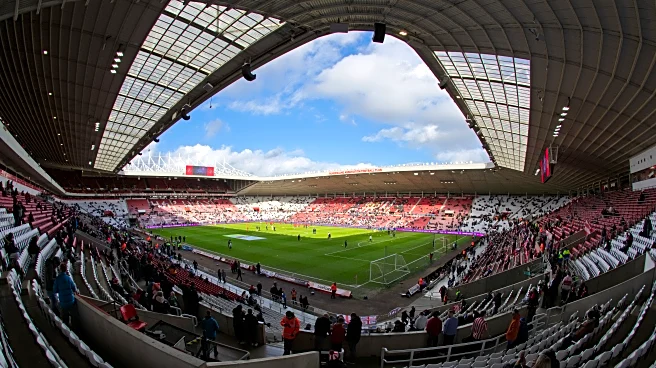
In fact, it looked terrible as Sunderland were hit by a late Fulham counter attack as they sought an equalising goal during Sunday’s chastening affair, with Alex Iwobi finishing off a slick move and prompting swathes of home fans to make for the exits, leaving a sea of red and white plastic seats in their wake.
The exodus had begun perhaps five or ten minutes earlier but at 1-2, there was still a glimmer of hope that the Lads could somehow haul their way back onto level terms
— yet it seemed obvious that the fans didn’t believe that, and they evidently decided to vote with their feet.

Was it fair? That depends on who you ask, even if you could understand why the players would potentially feel disheartened at the sight of a rapidly-emptying stadium.
Was it unexpected? Sadly not, and at a time when an expanded capacity is very much on the agenda, it felt even starker. Indeed, if we’re brutally honest, 49,000 is more than enough at this stage, lest we end up “rattling around like peas in a drum” for the less appealing fixtures.
As the final whistle blew, the only cheers you could hear were from the Cottagers’ fans; the seating bowl was more or less empty and my exit route from the lower tier of the North West Corner was almost as free of pedestrian traffic as the A690 is of cars at 11:00pm.
A downcast walk to the interchange and a fairly miserable bus ride home followed amid much grumbling about team selection, tactics and the lack of atmosphere — a bad day subsequently made even worse by the foul post-match abuse suffered by Romaine Mundle, and not the kind of experience any of us would’ve hoped for.
And yet, my frustration wasn’t really the result of many supporters leaving early— it was mainly based on the team failing to perform to the standards they’ve set for themselves this season and into which we’ve all bought.
Of course, you always want to see everyone stay until the last kick of the game, but occasionally you just accept that it’s not going to be your day and that some may decide to skip the final knockings, either for a beer and some craic or the warmth of home.
Is that exclusive to Sunderland? I don’t think so.
The reality is that behind every supporter’s love of their club, there’s an individual story and personal circumstances. I’ve never been fond of sitting in judgement of fellow fans’ backing of the Lads when we lose games, but it’s easy to point fingers when things unfold as they did on Sunday.

Since opening its doors to us almost thirty years ago, the Stadium of Light and its patrons have often shared something of a turbulent relationship.
In contrast to the mystical and iconic Roker Park, the feeling both inside and outside this utilitarian, Ballast Wiltshier-constructed bowl has often been far more unstable, to say the least — and I don’t mean structurally.
When it’s been good (and I’m thinking of 1998/1999, 1999/2000, 2000/2001 and 2006/2007, as well as moments such as Dan Ballard’s roof-raising header and Nick Woltemade’s generational own goal during the most recent derby), it’s been superb, but when apathy and dismay kick in, it can be a lonely, dispiriting and occasionally unpleasant place to watch a game.
I believe that the scars of the past decade — the result of relegations, mismanagement, atrocious recruitment and worldwide humiliation — have yet to fully heal and that when the Lads are struggling at home, it can become a bit too much for some supporters to deal with. It’s as if we’re convinced that the next disaster is imminent, the heady times can’t last and the good moments are merely outliers amid a sea of stress, tension and concern.
That’s a mentality issue.
It can be resolved with time, but the only way it’ll be resolved is if and when our club truly establishes itself at this level. There should be zero “novelty” factor about Sunderland being a Premier League club, but it’s down to the players, the coaches and the directors to ensure that we continue to move in the right direction — towards that goal.
It’s also worth highlighting that early exits from the Stadium of Light — or any top flight stadium, for that matter — are not a new occurrence.
They’ve always happened but in the social media age, during which videos and pictures can be used to dig out early leavers and the blue tick accounts on X chase clicks for fun, it’s undoubtedly been amplified and perhaps turned into a bigger issue than it deserves to be.
Supporting Sunderland at home is often akin to walking a tightrope without a pole to keep yourself balanced.

It requires faith, an iron nerve, and the willingness to trust a hell of a lot to external factors. This season, we’ve seen the power of a packed Stadium of Light as the likes of Manchester City and Arsenal were put firmly to the test, but Sunday was the other side of the coin; a reminder that when the air goes out of the balloon, the outcome can be pretty grisly.
In my view, “fan-cams” and foghorns — as well-intentioned as they might be — don’t make an atmosphere. As the Stadium of Light seeks to regain and retain its status as a location that opposing teams fear to visit, a team playing with confidence, aggression and attacking intent is far more effective, and that’s what we need to strive for.
Maybe this is just how it is. Perhaps there are simply no practical or enforceable solutions to the issue of people heading for the exits before the game is over.
I think we may have to accept that, but if we can pick up positive results against Bournemouth and Leeds, we’ll doubtless welcome Brighton to Wearside amid an atmosphere that’s far more upbeat and optimistic. This is the Sunderland way, after all: a couple of duff performances and results, and the roof’s caving in, but if we perform as we know we can and win games in the process, things always look better.
Never a dull moment, eh?