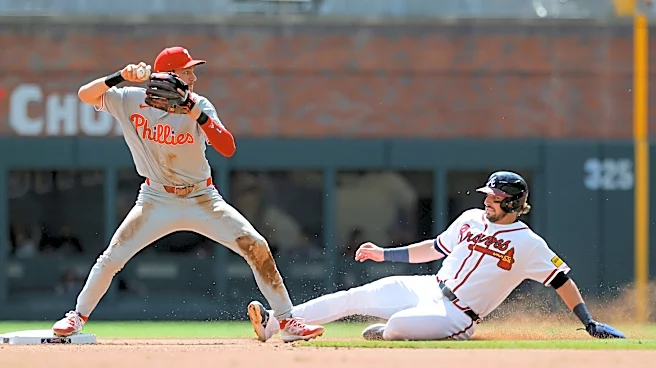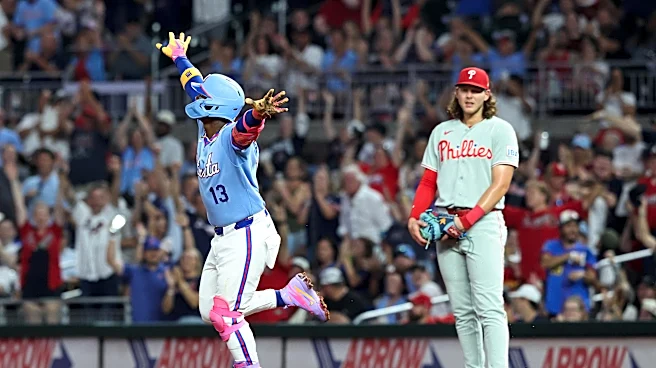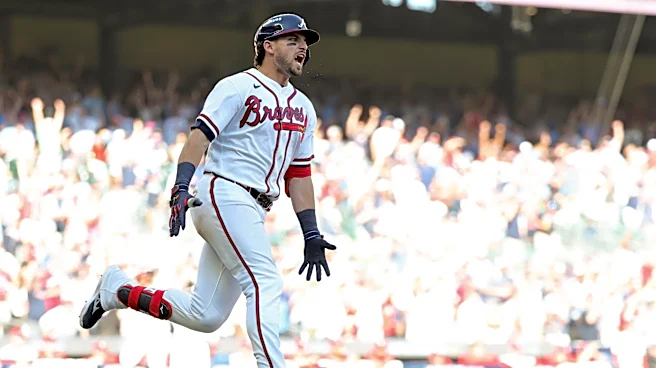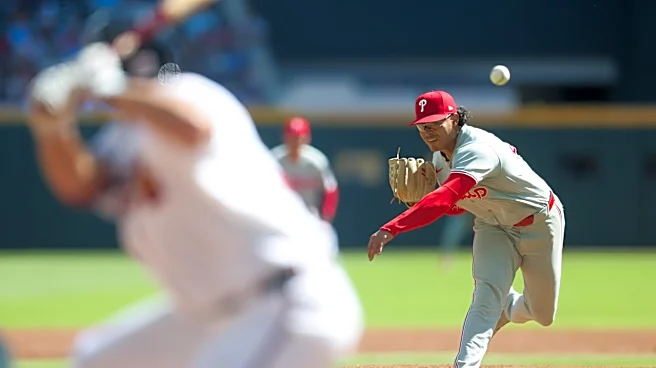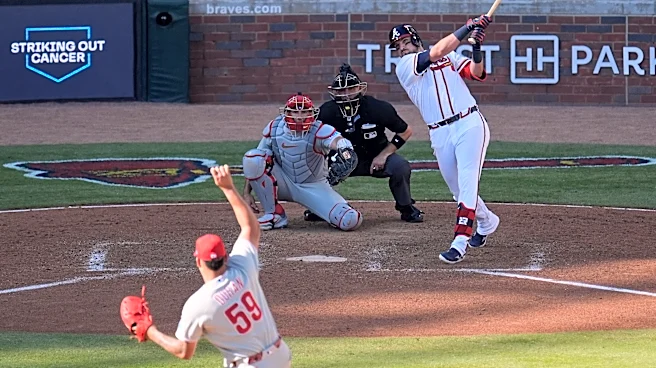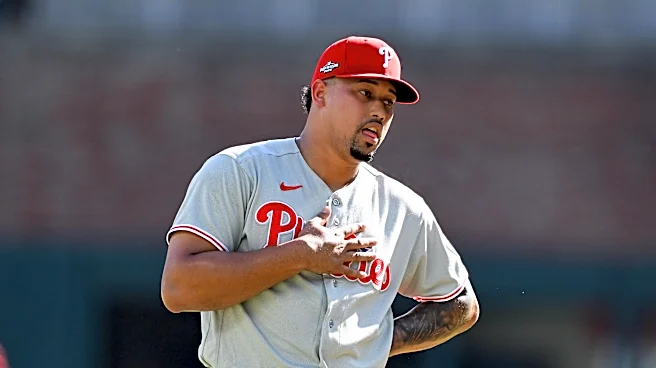

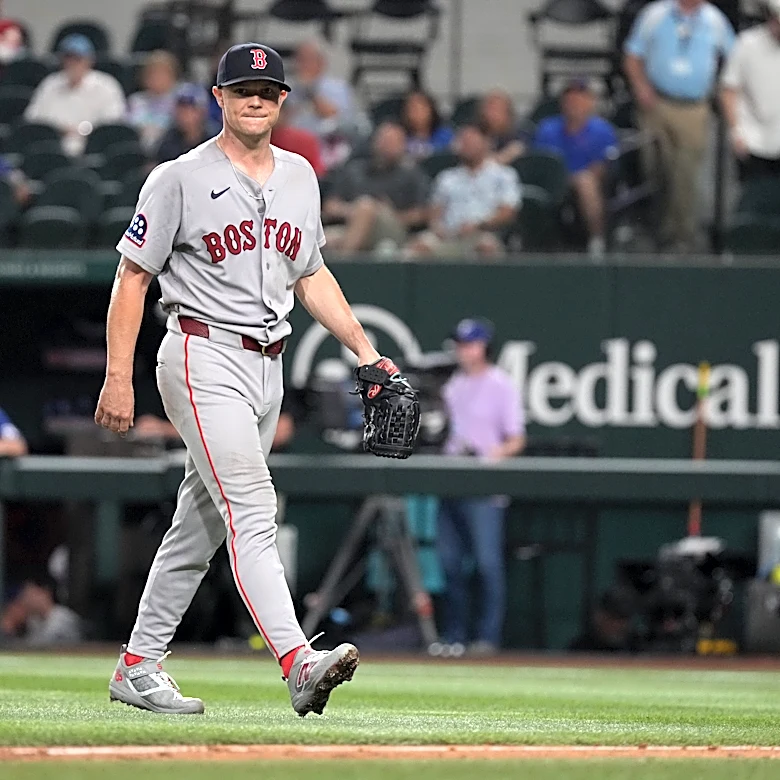

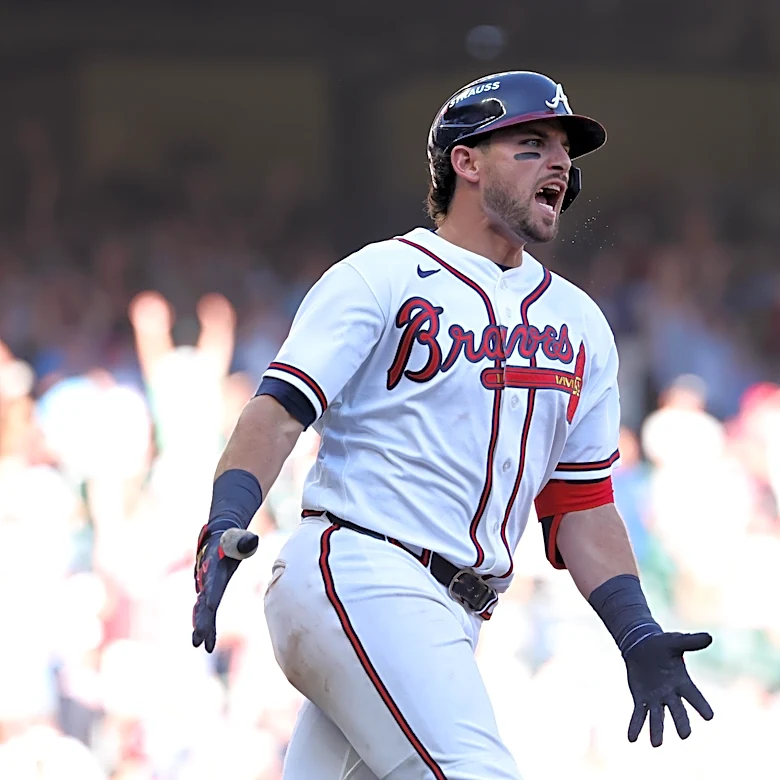
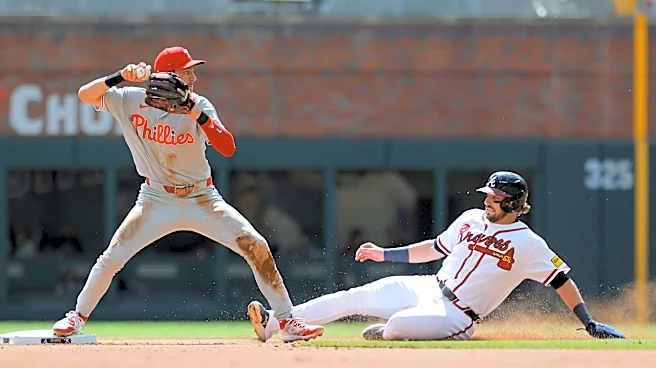
No one should have been surprised when Austin Riley connected on a nearly 100 mph fastball right down the heart of the plate from Phillies closer Jhoan Duran in the 8th inning of the Phillies’ 5-3, Game 1 loss to the Braves yesterday in Atlanta.
Sure, Duran is the Phils’ lone reliable relief pitcher, a closer with truly unhittable stuff most of the time. And Austin Riley, who hit .219 with a .654 OPS this season, didn’t seem the likeliest of guys to play home run hero, but there were mitigating circumstances.
Duran was being asked to somehow get the Phillies across the finish line following five gutsy innings from Jesus Luzardo and one inning from rookie reliever Alex McFarlane. After breezing through the first five outs, Duran’s command wavered and the Braves made him pay.
It’s a fundamentally terrible idea to ask someone to do something difficult they’ve rarely ever been asked to do before in the most high pressure situation imaginable. One should not reasonably expect that to work very well. While Duran had pitched multiple innings in the past, those instances were rare and, not recent. He had only worked more than one inning in one instance this season, and twice last year, both with Minnesota.
Should Duran have been able to escape the 8th inning without allowing a crushing homer? Sure, but it shouldn’t have surprised anyone that he didn’t.
But Don Mattingly had little choice. There was no one else he trusted to protect a 3-2 lead to secure any of the remaining nine outs needed once J.T. Realmuto put the Phils ahead with his clutch two-run triple a half-inning before. Injuries and poor performance robbed him of any wiggle room, which is why Riley’s three-run blast in the 8th inning was shocking, but not surprising.
You could argue Mattingly should have used Duran for more multi-inning save attempts in September, but the Phillies’ final month struggles likely rendered those plans moot.
Let’s also not gloss over the fact that, had the Phillies not dithered around in the final two weeks of the season, Zack Wheeler would have started this game and, potentially, pitched a bit deeper than Luzardo was able to. Or that, if the bats had shown more of a pulse against Chris Sale in Game 1, they could have provided some cover to a substandard relief corps.
Actions have consequences, as we all saw in Game 1’s final three innings.
It’s easy to point the finger at Dave Dombrowski and his bullpen construction. Clearly, the team didn’t have the arms they needed. In hindsight, believing in Orion Kerkering, who was optioned to AAA two weeks before the end of the season following last year’s meltdown in Los Angeles, was a mistake, as was hitching their wagons to Jose Alvarado, whose struggles in 2026 mirrored those of ‘25 and were indicative of a reduction in his stuff during the course of the year.
But there is also a slew of bad luck thrown into the mix here.
Brad Keller looked to be a tremendous off-season free agent signing. Signed to a two-year, $22 million contract, Keller had a 4.02 ERA in 31.1 innings until he was shut down for the season with an ailing elbow. Tanner Banks, who had become one of the team’s most trusted left-handed relievers after a stellar 2025 season, missed much of the second half after posting a 6.19 ERA in 36.1 innings. Kyle Backhus was never supposed to be a major contributor, but his 4.95 ERA in 20 innings was a disaster.
The only pleasant surprise in the relief corps this year was the emergence of rookie right hander Alex McFarlane, who is the only other arm in the ‘pen that Mattingly trusts right now. And he also gave up a key run on Tuesday, an RBI triple to Ozzie Albies that briefly gave Atlanta a 2-1 lead.
That the Phillies were not able to reach down into the minors for additional help is certainly an indictment of Dombrowski and the farm system, but the general manager did attempt to mitigate that with a couple more arms at the trade deadline.
Brooks Raley was supposed to become an important left-handed, late inning option after his acquisition from the Mets. Over the last four seasons, Raley had ERAs of 2.68, 2.80, 2.45 and 1.96 in 52.2 innings with the Mets this year. No, he never had great stuff, but he was consistently excellent for New York since 2022. After the trade, Raley’s 7.94 ERA in 16 appearances forced Dombrowski to leave him off the wild card roster.
Caleb Kilian, acquired in the Luis Arraez trade, got hurt almost as soon as he arrived. So, Dombo’s two trade deadline acquisitions to improve the struggling bullpen both turned out to be useless. Were other top-tier closer-type relievers traded? No, but that doesn’t mean had Dobrowski been better at developing prospects that they couldn’t have overpaid for something better than Kilian or Raley in August.
But even if a handful of these pitchers had turned out to be productive, it may not have mattered. That’s because once you put on a Phillies uniform, you are unable to secure late leads in the postseason.
Here are all the instances, dating back to Game 3 of the 2023 NLCS, in which the bullpen was unable to secure a save, eight blown saves in all.
- Game 3, 2023 NLCS: Orion Kerkering, holding a 1-0 lead in the 7th, allows a leadoff single and RBI double to blow the lead. Craig Kimbrel then gave up the walk-off single in the 9th for a 2-1 loss.
- Game 4, 2023 NLCS: In what was a full-on bullpen game, Kimbrel entered the 8th inning with a 5-3 lead, but surrendered a game-tying, two-run home run to Alek Thomas and then, a few batters later, an RBI single to Gabriel Moreno, handing the Phils a 6-5 defeat.
- Game 1, 2024 NLDS: Entering the 8th inning with a 1-0 lead, Jeff Hoffman blew the save but was ably aided by Matt Strahm and Kerkering in allowing five 8th inning runs in an eventual 5-2 defeat.
- Game 2, 2024 NLDS: This game the Phillies actually won! With a 6-4 lead in the 8th, Strahm gave up a game-tying two-run blast to Mark Vientos to tie the game 6-6. The Phils walked it off in the bottom of the 9th, of course.
- Game 4, 2024 NLDS: Entering the 6th inning with a 1-0 lead, Phillies closer Carlos Estevez served up a grand slam to Francisco Lindor that sealed the Phillies’ fate in a series-ending 4-1 loss to the Mets.
- Game 1, 2025 NLDS: Holding a 3-2 lead in the 7th, Matt Strahm allowed a two-out, three-run home run to Teoscar Hernandez in a crushing 5-3 defeat to the Dodgers.
- Game 4, 2025 NLDS: With a 1-0 lead entering the 7th, Jhoan Duran walked in a runner with the bases loaded and two outs to tie the game at 1-1. Kerkering would finish the choke job with his game-ending error in the bottom of the 11th.
- Game 1, 2026 Wild Card: Duran gives up the three-run homer to Austin Riley, with four outs left to get, in a 5-3 defeat.
Seven playoff defeats. Eight blown saves. The Phillies have not successfully executed a save situation since Game 1 of the ‘23 NLCS. And this list doesn’t even count Game 6 of the 2022 World Series in which Alvarado served up a go-ahead home run to Yordan Alvarez in the 6th inning of an eventual 4-1 loss.
At the end of the day, Tuesday’s blown save by Duran was the result of trusting the wrong players and a lot of bad luck. No one knows how Mattingly would have handled the 9th inning had Duran escaped the 8th, but the fact he was put in the position of having to manufacture an elaborate plan to secure the final nine outs of the game is an indictment on the relievers in his ‘pen and an offense that continues to provide the pitching staff with little room for error.
Even if the Phillies figure out a way to win Games 2 and 3 against Atlanta, how do they piece together an additional three series victories over the next three weeks and win a title? How can they do that with only two relief pitchers they trust?
Watching Riley’s home run sail over the right field wall was an incredible moment. How could it happen again? How could this team blow another Game 1 in a tight playoff series?
It’s just what they do.