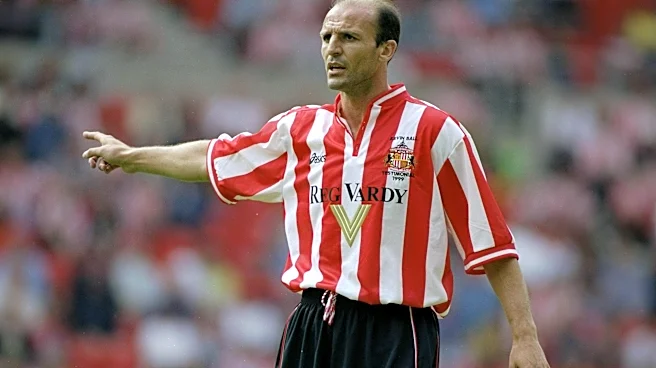





I was personally really sad to see Dennis Cirkin leave this summer. Not only because he’d been with us on our journey to European football, but because whenever he seemed to be looking like he could go to the next level, an injury would find its way to him.
After the 24-year-old finally hung up his wrist brace on Wearside, and with the seemingly imminent departure of Arthur Masuaku, it leaves Reinildo Mandava as the Lads’ only true left-back. That is, barring a Lazarus-esque development from Leo Hjelde
or Aji Alese.
Similarly to Xhaka, who I looked at in my prior piece, the Mozambican is the wrong side of 30 and will need rotating to be at his best next season. On the surface, this looks to be the one area of squad planning that has seemingly been neglected since last year’s promotion.
Melker Ellborg seems to be the heir apparent to Roefs. The January additions of Angulo and Ta Bi strengthened our depth on the wings. Should Ghisolfi decide to stop playing hard to get with Geertruida, then we have plenty of options at right-back. I’ve been really impressed with how the recruitment team have been proactive in fleshing out our squad so far.
I’m going to try to do my part for Florent here and discuss some potential options at left-back that could learn from, and cover for, Mandava next year. We’re going to look at this from a numerical point of view, but also try to identify some potential market opportunities if they’re out there.
Before looking at Reinildo’s numbers from last season, I want to take a look at the Lads as a whole. This will give us an idea of what Le Bris values in his full-backs, whilst providing context for the desirable traits of a new signing in that position.
If you didn’t know how last season went for us, you could easily be convinced it was far less fruitful than reality. Low possession and a low number of possessions won in the final third indicate that we’re not a particularly high-pressing side. RLB prefers to sit back in a deeper block, discouraging man-to-man engagement in favour of holding shape. Going forward, we’re looking to counter-attack quickly and take minimal touches to progress the ball once we’ve cleared it.
Now let’s see how Reinildo fits into this system.
You don’t need me to tell you this, but in an age of inverting full-backs and flying wing-backs, Mandava is an old-school, defence-first warrior. He’s not making a significant number of touches or passes, sitting in the bottom 22nd and 51st percentiles for those metrics amongst Premier League full-backs respectively. But where he shines is going backwards.

He sits at just over 7.5 defensive contributions per 90, made up of 1.78 tackles, 1.42 interceptions, 0.64 blocks and 3.7 clearances. That puts him in the top 25% of similar players for those numbers. Only 35% of full-backs are dribbled past more often, and if you want to try your luck in the air, two-thirds of the time he’s winning those duels.
We don’t really have anyone else in the squad to provide a comparison, so if we look at a number of different Premier League full-backs from last season we can get more context for how he stacks up against the opposition.

Luke Shaw is closer to the Sunderland man in terms of his lack of on-the-ball touches. Even so, he is a more proficient passer.
Hall and Maatsen are more progressive left-backs, but still contribute defensively. Their tackle volumes are higher, although this is more likely a product of their field position. Being given licence to roam up the flank means you’re more likely to be involved in defensive duels than being in a position to block or intercept the ball.
So the question really is whether to stick or twist. Do we go for a full-back who contributes more in attacking areas and in progressing the ball upfield? This could prove valuable if RLB aims for a greater share of possession next term, or even if he chooses to operate with a back three.
Alternatively, do we go for a player who mirrors Reinildo’s defensive prowess, assuming we continue to sit deep and hit teams on the counter? Below are a few options worth considering.
Joaquin Seys (Club Brugge)

Let’s start with Joaquin Seys. The 21-year-old is currently across the pond with Belgium’s World Cup squad, although he is yet to make an appearance. In Belgium last season, he made 39 appearances, scoring two goals and providing five assists for the eventual champions.
On a side note, if you’re lacking a bit of excitement in your life, I can’t recommend trying to figure out how the Belgian Pro League works highly enough. Seriously.
But back to the matter at hand. I liked the look of Maxi Araújo at Sporting, but with Manchester United reportedly quoted €50 million for the Uruguayan, Seys looks like a far more affordable option.

In terms of being a direct replacement for Mandava, you can’t really go wrong with Seys. Profiling similarly in his tackle and interception numbers, he’s shown a real eagerness when contributing defensively. Overall, you would expect his defensive contributions, and the number of times he is dribbled past, to be lower given Brugge averaged around 60% possession.
Like our No. 17, he’s not making a significant number of dribbles, but he is keen to get on the ball, making around 15 more passes per 90 at a higher success rate. He’s a really progressive full-back, averaging just under 17 progressive passes and around two progressive carries per 90 minutes, ranking him in the top 25% and 35% amongst full-backs for those metrics respectively.
Perhaps where he could improve – and differentiate himself from Reinildo – is in the final third. His expected assists (xA) sit at around 0.14, and his cross accuracy is around 30%. Reinildo’s numbers are similarly low, but for the Belgian to offer a different option, he could focus on developing these areas.
At 21 years old, there is plenty of time for him to round out his game, but he has already shown an ability to adapt, with 19 of his last 50 appearances coming at right-back. Djed Spence has impacted national blood pressure enough at the World Cup to suggest this should be avoided, but it’s definitely another string to his bow.
He’s been linked with teams around the top end of the Premier League, with Manchester United, Arsenal and Aston Villa all reportedly interested at around €30-35 million. I reckon if we act quickly after the World Cup, we could join the race.
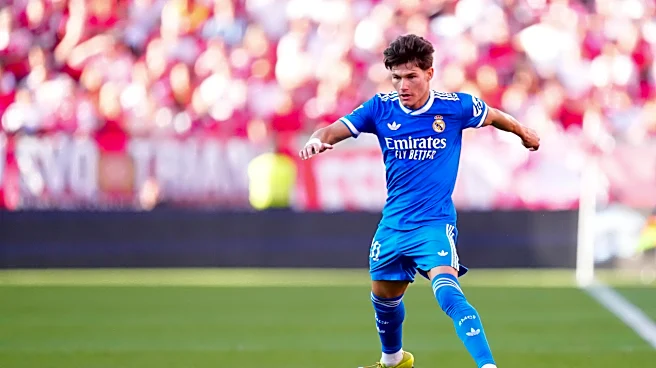
Fran García (Real Madrid)

I’m being punchy here, and I’ll openly admit it. But I think there is a serious market opportunity here – so let’s get carried away!
Before looking at García’s profile, let me explain why I think this is a feasible option. Mourinho has arrived at Madrid and has already started to shake things up, bringing in Denzel Dumfries and Bernardo Silva. Another name linked with the Santiago Bernabéu is Marc Cucurella. That would leave Madrid with four left-backs in the squad.
Álvaro Carreras was only signed last season for £43 million and, at 23, will continue to develop. Ferland Mendy is now 31 and has spent around 720 days injured during his Madrid career. He still has two years remaining on his contract and, with Transfermarkt valuing him at €4 million, Madrid may simply retain him as a back-up.
That leaves García. At 26, would he really be content warming Mourinho’s bench, especially for a manager renowned for sticking with his trusted players? Moreover, his contract expires next summer, so if Madrid want to cash in on their academy graduate, now is their last chance.
It’s not as though García hasn’t played for Madrid. He’s made 69 appearances for Los Blancos, with only 20 coming from the bench. The Athletic reported that he asked to train alone after a loan move to Bournemouth was blocked in January, suggesting the Spanish international is open to a move to England.
Now to the numbers – with some important caveats. Madrid’s dominance in La Liga naturally inflates possession figures and reduces defensive actions. Likewise, supplying players such as Mbappé, Vinícius Júnior and Bellingham inevitably boosts metrics like key passes, xA and chances created.
With that in mind, the most suitable comparison is against full-backs from other dominant sides, such as Alejandro Balde (Barcelona) and Marc Cucurella (Chelsea). Comparing them with Reinildo also allows us to see how García profiles against our current left-back and other similar players.

For me, the numbers suggest García could be an excellent signing. Comparing his defensive metrics – particularly tackles, interceptions and overall defensive contributions – he profiles closer to Cucurella than Balde. That suggests that, despite playing for a title-challenging side in a weaker league, he hasn’t neglected the defensive side of the role.
This may be partly due to the lack of defensive support offered by a winger such as Vinícius, but it still demonstrates that García is comfortable defending against opposition wide players. Going forward, he profiles similarly to the player seemingly brought in to replace him.
His pass completion rate of 89% is outstanding, even if his overall passing volume is lower than his fellow Spaniards. He’s getting plenty of touches on the ball, although he appears to favour passing over dribbling, with even Reinildo attempting more dribbles per 90. Looking deeper, he only completes around a third of his dribbles whilst ranking in the top 16% of full-backs for pass completion, so perhaps he’s simply making the right decisions.
I believe García is ready to become a first-choice left-back elsewhere. He’s clearly capable of contributing defensively in much the same way as Reinildo, whilst offering Sunderland more going forward. Somewhere between £15-20 million could potentially secure a peak-age full-back from one of Europe’s biggest clubs.
Jordan Bos (Feyenoord)

Two missed penalties ultimately led to the Socceroos’ exit from the World Cup – a tournament in which they more than held their own. One of the big beneficiaries of their performances is likely to be Jordan Bos, and by extension Feyenoord.
The 23-year-old contributed to 11 Eredivisie goals last season, scoring four and providing seven assists. For reference, Enzo Le Fée registered the same number of goal contributions for us last year. One thing that immediately stands out about Bos is his blistering pace – almost like some sort of Lightning McQueen – Mad Max hybrid – with the mullet-sporting full-back clocking a top speed of 22.8mph at the tournament.
Currently under the guidance of Robin van Persie, Bos has developed into one of the outstanding full-backs in the Eredivisie, being given far greater attacking licence than he enjoyed previously at Westerlo.
Take a look at his percentile rankings amongst Eredivisie full-backs last season:
Playing in a side that generally deploys a back four, Bos’ attacking numbers indicate excellent progression through both passing and dribbling. He looks like a genuine two-way full-back who could operate in a back four if RLB wants to attack games, or as a wing-back in a back three.
Whilst he sits only in the top 37% of Eredivisie full-backs for defensive contributions, that may simply reflect playing for a side that finished second and qualified for the Champions League. At 5ft 11in, the Australian is no slouch physically either, winning over 63% of his aerial duels. For comparison, Reinildo won just over half of his. On the ground, Bos ranked seventh in the league for tackles won, making more successful tackles than Noah Sadiki, Marc Guéhi and Djed Spence.
The one caveat is the injury he suffered late in the first half of Australia’s Round of 32 defeat to Egypt. He was substituted before later being seen on crutches with a knee brace.
He’s no stranger to the treatment room either, missing a total of nine games last season, including spells out with hamstring injuries. Perhaps sharing the role with Reinildo could lighten the load on the 23-year-old and help him stay fit. Transfermarkt currently values him at €12 million, so I believe around £15 million could secure his services. He’s still young enough that there is time to see how his body develops, and at that price I think it’s a risk worth taking.